The Family Homestead Build Order: What to Prioritize When You’re Doing This for Your Kids and Grandkids
Article 5 of 8 — The WholeStead™ Framework Series from UpRooted Greens
By Tihamtu Chaos-Dragon | UpRooted Greens
I bought Silkie chickens.
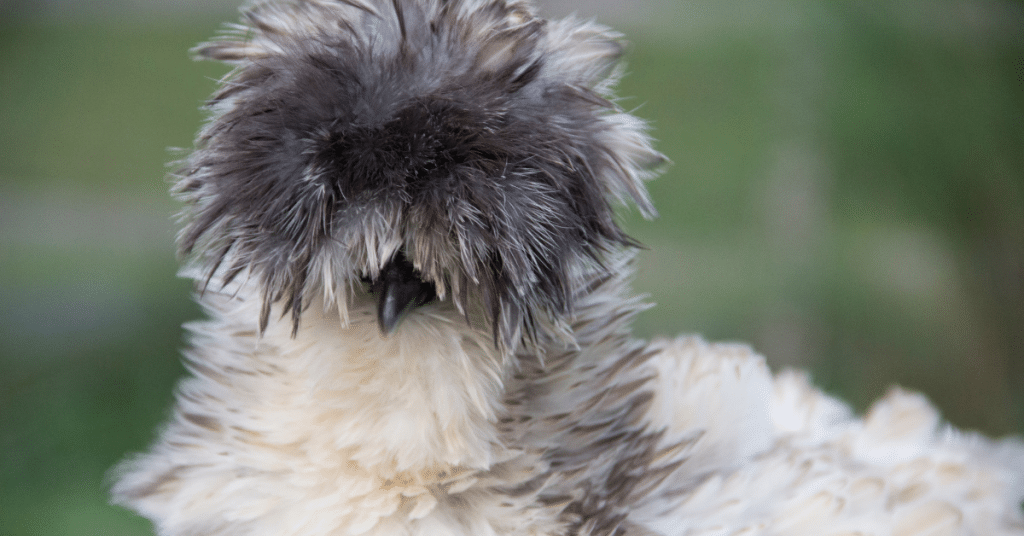
If you know anything about chickens, you already know that Silkies are not a production bird. They are not high egg layers. They carry so little meat that processing one would barely justify the effort. By every practical homesteading metric, they are the wrong bird. Any serious poultry resource will tell you to start with Rhode Island Reds, or Australorps, or Black Sex-Links — birds bred for production, efficiency, and output.
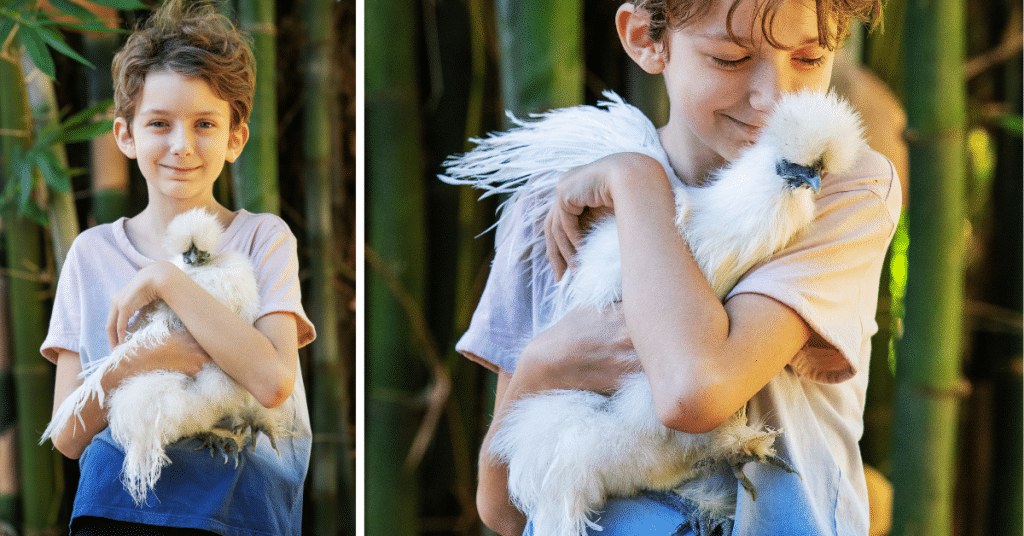
I bought Silkies because they are extraordinary broody hens, endlessly patient sitters who will go broody and commit to a nest as soon as they are physically capable of it. And because with their soft, fur-like feathers and round fluffy bodies, they are genuinely, undeniably adorable. My girls took one look at them and were completely in love.
That was the point. Not eggs. Not meat. My daughters.
We are still in Phase 0 and Phase 1 of the WholeStead™ Framework — learning, practicing, experimenting in our subdivision yard while the land and the full build are still ahead of us. We do not need these chickens to feed us right now. We have income. We have a grocery store. The production metrics do not matter yet. What matters right now is that my girls are developing a bond with living things that depend on them, learning what it means to be responsible for something that cannot advocate for itself, and beginning to understand that food does not originate in a package on a shelf.
That education is worth more than any number of eggs.
I keep going because of them. Not for me. For them. The world I see coming looks nothing like the one most people are still planning for, and I intend for my daughters to be ready for it in a way that makes them safe, sovereign, and capable of showing others the way through. That is not a hobby. That is the whole point.
When the Children Are the Reason, the Build Order Changes
The WholeStead™ Framework — the integrated build sequence that organizes all five homestead pillars in their most effective order — does not change when children are the motivation. The sequence is what it is because of how the systems depend on each other, and those dependencies do not shift based on who you are building for.
What changes is the priority weighting within each phase, the timeline expectations, and the meaning you attach to every decision along the way. When you are building for yourself, a delayed phase is a frustration. When you are building for your children and your children’s children, a delayed phase is still just a delayed phase — because the timeline you are working on is not five years. It is fifty.
A homestead built for generational legacy is not optimized for speed. It is optimized for permanence. Every decision you make — what to plant, how to build, which systems to prioritize, how to structure the income — should be evaluated against a simple question: will this still be serving my family in fifty years? That question filters out a remarkable amount of the noise in the homesteading content space, where the conversation is often about what is trendy, what is cheap, or what works right now rather than what endures.
What Your Children Actually Need from This Build
Before we talk about build order, let us talk about what a family homestead is actually trying to give the next generation. Because the answer is not just food security, water security, and power independence — though it is all of those things. The deeper answer is competence. Sovereignty. The knowledge and the practiced skill to sustain human life without depending on systems that may not be available or reliable when they need them most.
The most valuable thing you can leave your children is not land. It is not a paid-off structure. It is not even a producing food forest, though all of those things are extraordinary gifts. The most valuable thing is the knowledge encoded in their hands and their minds — the ability to grow food when no one else can, to purify water when the infrastructure fails, to generate power from the sun and the wind, to build and repair and adapt.
In a world where those abilities are rare, they are not just survival skills. They are position. The family that can grow food when the shelves are empty does not beg. The family that has water when the municipal system fails does not negotiate from weakness. The family whose home generates its own power when the grid goes down does not go dark. Competence, at this level, is a form of sovereignty that no external force can revoke.
That is what you are building. Not a farm. Not a lifestyle. A position of permanent security for the people you love most, that holds regardless of what the world outside the property line decides to do.
The Education Layer: Building the Curriculum Into the Homestead Itself
A family homestead built on the WholeStead™ Framework is not just a property. It is a living curriculum. Every system on it teaches something. The garden teaches biology, patience, observation, and the relationship between soil health and human health. The water system teaches engineering, hydrology, and the discipline of conservation. The power system teaches physics, energy management, and the relationship between consumption and production. The livestock teaches responsibility, biology, the emotional complexity of caring for something you may one day eat, and the systems thinking that comes from managing living creatures that interact with every other system on the property.
Children raised in this environment do not have to be taught to think in systems. They grow up inside one. They develop an intuitive understanding of how things connect, how inputs and outputs flow through an integrated structure, and what happens when one component of a system fails to receive what it needs. That kind of thinking is extraordinarily rare and extraordinarily valuable — in homesteading, in business, in every domain that requires navigating complexity.
This is why the education layer belongs in Phase 0 and Phase 1 of the family WholeStead™ build — not as a school subject, but as a lived experience that begins wherever you are right now. Silkie chickens in a subdivision. A rain barrel on a downspout. A raised bed in a corner of the yard. These are not compromises while you wait for the real homestead. They are the first chapters of a curriculum your children are living inside.
The Family WholeStead™ Build Order: How Legacy Weighting Shifts the Priorities
The six-phase WholeStead™ sequence — Learn, Practice, Water, Power, Food, Shelter, Income — holds for family builds exactly as it holds for individual ones. The sequence is determined by system dependencies, not by who the system is serving. What shifts for families is the emphasis within each phase and the decisions made at each phase’s branch points.
Phases 0 & 1: Learn and Practice — Include the Children From Day One
For a family build, Phase 0 and Phase 1 serve a dual purpose: you are learning what you need to know to plan the homestead, and your children are beginning the lived education that will carry them through the rest of their lives. These two things happen simultaneously when you involve your children in the learning and practicing from the beginning.
The Silkie chickens are Phase 1 for my daughters as much as they are for me. The girls feed them, watch them, worry about them when they are broody and not eating much, celebrate when something changes. They are not observing the homestead from a distance. They are participants in it, at a scale appropriate to their age and with stakes small enough that their mistakes — and mine — are recoverable.
Start where you are. Whatever your current setting permits — a container garden, a small flock, a rain barrel, a compost bin — bring your children into it as active participants, not spectators. The knowledge that transfers through their hands in Phase 1 is the knowledge that will still be in their hands in fifty years.
Phase 2: Water — The Non-Negotiable Foundation for Every Life on the Property
Water is first in the build sequence for every homestead, and it is first for family homesteads with particular urgency. Children are more vulnerable to dehydration and waterborne illness than adults. A family’s daily water requirement is substantially higher than a solo homesteader’s. And the comfort and health of your children during any extended grid disruption depends more on reliable water access than on any other single system.
For a family build, water infrastructure should be sized generously from the beginning — not to current family size but to the family size you expect over the next decade, plus the livestock and garden load that will develop alongside them. Undersizing your water system and expanding it later is always more expensive than building it right the first time. On a family timeline, build for growth.
Phase 3: Power — Built for the Long Term, Not the Current Moment
A family’s power needs evolve over time in ways a solo homesteader’s do not. Children become teenagers who have devices and lighting and schedule demands. Teenagers become young adults who may be running businesses or workshops from the property. The power system you build for your current family of four needs to have a clear expansion path for the family of eight it may become when your children bring their own families home.
For a family legacy build, the power system architecture matters as much as the initial capacity. Choose components that can be expanded without replacing the core system. Build the battery bank to the size you will eventually need, even if you are not initially filling it completely. Design the system for the homestead you are building toward, not just the one you are starting with.
Phase 4: Food — Perennials First, Production Second, Abundance Third
For a family legacy build, the food system has a layer that individual homestead builds often skip: the perennial foundation. Annual vegetables are productive and important, but they require replanting every year and fail completely if a season is missed. A food forest of fruit and nut trees, berry shrubs, and perennial vegetables is an investment in the family’s food security that compounds over decades and requires progressively less labor as it matures.
Plant the perennial foundation as early as possible in Phase 4 because these systems take time — often five to ten years — to reach full production. A fruit tree you plant this year is a food source for your grandchildren. That is the legacy mindset applied to the food system: plant now for the harvest your children will take for granted because it has always been there.
Livestock for a family build should be chosen not just for production but for their role in the children’s education and the homestead’s integrated system. Animals that the children can safely interact with, learn from, and eventually take responsibility for are worth more to a family WholeStead™ than the most productive breed that keeps the children at a distance. The Silkies are not the most efficient chickens I could have chosen. They are the right chickens for this phase of this build.
Phase 5: Shelter — Designed for Multiple Generations, Not Just the Current One
A WholeStead™ shelter built for generational legacy is not a house. It is a compound in the making — a primary structure designed to age gracefully and expand gracefully, with the infrastructure in place to add secondary structures as the family grows. The young adults who grow up on this property and choose to stay do not leave because there is no room for them. They stay because the property was designed from the beginning to hold multiple households within one integrated system.
The structural and systems decisions made in Phase 5 — building orientation, material choices, passive solar design, thermal mass, the integration of heating and cooling systems — should all be evaluated through the lens of a fifty-year horizon. What will still be serving this family well in 2075? What will need to be replaced or upgraded, and how easily can that happen without disrupting the systems built around it? Build for permanence at every decision point where permanence is available.
Phase 6: Income — The Structure That Makes Everything Permanent
For a family legacy build, the income system is not about covering the mortgage. It is about creating a financial structure that survives you — that continues generating value for your children and your grandchildren without requiring your daily presence to function.
This means thinking about income in layers: immediate income from what the homestead produces right now, medium-term income from value-added products and services built around the homestead’s output, and long-term legacy income from structures — trusts, land agreements, teaching platforms, documented knowledge — that transfer value to the next generation in a form they can hold and build on.
The knowledge encoded in a WholeStead™ — how every system works, why every decision was made, what every failure taught and how it was corrected — is itself a form of generational wealth. Document it. Teach it. Build it into the curriculum your children are living inside. In fifty years, that knowledge may be worth more than the land.
What I Am Building Toward: A Frank Accounting
I want to be honest with you about why I am doing this, because I think the honest answer is more useful than the polished one.
The world I see coming down the pike does not look like the one most people are planning for. I see a trajectory toward widespread resource scarcity, systemic fragility, and the kind of social pressure that emerges when large numbers of people lack the basics of what they need to survive. History is very clear about what human beings become under those conditions. They become capable of things they would never have imagined in comfort.
I do not say this to frighten anyone. I say it because it is my honest read of the trajectory, and because it is the reason I have been building for ten years on less than a thousand dollars a month without stopping. I am not building this for me. I need to build this for my girls.
In fifty years, when the consequences of the choices humanity has been making collectively become undeniable and unavoidable, I want my daughters sitting on top of a system that feeds them, waters them, powers them, and shelters them completely independently of whatever is happening outside the property line. I want them to have the knowledge to grow food when no one else can — because in that world, that knowledge is the highest form of sovereignty available. If you can grow food when no one else can, you are at the top of the food chain. No one hurts the person who can feed them.
And beyond their own security, I want them to be the ones who can show the people around them a different way. A way that is bountiful and sustainable and free from the grinding exhaustion of a conventional life built on systems that were never designed to serve the people inside them. That is what a WholeStead™ built for legacy can become: not just a family’s refuge, but a demonstration of what is possible when someone decides to build a life that actually works.
That is worth ten years. That is worth whatever it takes. That is worth the Silkie chickens.
If You Are Building This for Someone Else, You Already Have the Most Important Thing
If you made it through this article, you are probably not building a homestead for the lifestyle. You are building it for someone — your children, your grandchildren, the generation that will inherit what you make with your hands and your decades. That motivation is the most durable fuel in the entire process. It survives the years when nothing seems to be working. It survives the financial pressure, the failed experiments, the losses, and the long stretches when progress is invisible from the outside.
What it cannot survive alone is building in the wrong direction. A family legacy built on an incomplete plan, with disconnected systems and no income structure, will exhaust itself before it reaches the generation it was meant to serve. The sequence matters. The integration matters. The income planning matters. These are not bureaucratic details. They are what makes the difference between a homestead that thrives for fifty years and one that was abandoned in year three.
Before you commit the next dollar or the next season to your family build, take an honest look at which of your five homestead systems is your most vulnerable right now. That is the gap that will cost your children if it is not addressed. That is where the plan needs to be strongest.
The free 10-Point Homestead Vulnerability Assessment inside UpRooted Greens gives you that honest picture. All ten critical systems. Clear assessment of what is solid and what has gaps. A map of where your effort and your investment will protect your family most in the phases ahead.
Take the free 10-Point Homestead Vulnerability Assessment
uprootedgreens.com
About the Author
Tihamtu Chaos-Dragon is the founder of UpRooted Greens, a total self-sufficiency education platform built around the WholeStead™ Framework. She is building a fully integrated, net zero+ homestead for her daughters — and for their daughters — because she believes that the ability to grow food, manage water, generate power, and build shelter independently is not a lifestyle choice. In the world she sees coming, it is the only choice that matters. She has Silkie chickens. They are very broody and very fluffy and completely worth it.