
Building a Homestead on a Tight Budget: The Order That Saves You From Expensive Mistakes
Article 3 of 8 — The WholeStead™ Framework Series from UpRooted Greens
By Tihamtu Chaos-Dragon | UpRooted Greens
Everything I have built toward my homestead vision has been done on less than one thousand dollars a month.
I am still in a subdivision. I still live in town. My prawn are thriving going on two years now — and they are big — in a tank in my home. I have fish tanks I never paid a dollar for, IBC tanks sourced secondhand, aquaponic and hydroponic systems I built and tested and rebuilt. I have chickens, I had quail, I have a garden that took 18 months to naturalize and now produces abundantly. I have an aquaponics system. I experimented with hydroponics. I did all of this while developing a curriculum of over 320 courses and building the business that will fund the land and the build.
I am telling you this not to impress you but to establish something clearly: the budget is not what is stopping you. The sequence is what is stopping you. People with limited money make the most expensive mistakes when they buy things in the wrong order, build things before they are ready to build them, and let impatience override strategy.
The same dollar, spent in the right order, on the right things, at the right time, goes three to five times further than the same dollar spent with enthusiasm and no plan. That is not a motivational statement. That is math. And this article is going to show you exactly how to run it.
The Budget Principle Nobody Says Out Loud: Sequence Is Savings
Every homesteading mistake has a financial cost. Every piece of infrastructure built in the wrong order has to be moved, adapted, or replaced. Every animal that arrives before its housing is secure costs you in emergency construction, stress, and sometimes in the animal itself. Every system purchased before you understand your actual needs costs you in oversizing, undersizing, or buying the wrong thing entirely.
The WholeStead™ Framework — the integrated build sequence that organizes all five homestead pillars in the right order — is not just a philosophical approach to self-sufficiency. For anyone building on a limited budget, it is a financial strategy. When you build in the right sequence, each phase prepares the ground for the next one and prevents the most common and most expensive mistakes in the phase that follows.
When you build out of sequence, you pay twice: once to build the thing, and once to fix what it broke or replace what it missed. On a tight budget, paying twice is not inconvenient. It is sometimes fatal to the whole project.
So before we talk about where to find cheap solar panels and how to source free fish tanks — and we absolutely will talk about those things — let us establish the foundational principle: your most powerful budget tool is building the right thing at the right time. Everything else is optimization on top of that.
Budget Sequencing: What to Spend Money On and When
The WholeStead™ build order — Learn, Practice, Water, Power, Food, Shelter, Income — is also a spending order. The phases that cost the least come first, which means you are building knowledge and skill while saving capital for the phases that require serious investment. That is not an accident. That is the design.
Phase 0 & 1: Learn and Practice — Lowest Cost, Highest Return
The learning and practicing phases cost almost nothing compared to what they save you. Books, courses, library resources, YouTube deep dives, conversations with experienced homesteaders — none of this requires significant capital. The small-scale practice systems you build now — a raised bed, a rain barrel, a small container flock, a starter aquaponics setup — cost a fraction of what the full-scale versions will cost, and every mistake you make at this scale costs you a fraction of what the same mistake costs on your land.
This is also the phase where your purchasing calendar begins. You are not buying infrastructure yet. You are building the knowledge to know exactly what infrastructure you will need, at what scale, with what specifications — so that when the right buying opportunity arrives, you know exactly what to purchase and you do not waste it on the wrong thing.
Phases 2 & 3: Water and Power — Plan Now, Buy Smart, Buy Once
Water and power infrastructure represent your two largest capital investments. A well, a cistern system, a solar array with battery storage — these are not trivial purchases. On a tight budget, these are the phases where your purchasing strategy matters most, because the difference between buying strategically and buying reactively can be thousands of dollars on a single line item.
By the time you reach these phases, you should know your exact specifications: how many gallons of water per day your household and livestock require, how many kilowatt-hours per day your homestead will consume, what battery capacity you need to carry you through three days without sun. You get those numbers from Phase 1 tracking. You buy to those numbers, not to a guess, not to a YouTube recommendation, and not to what looked good on sale.
The Purchasing Calendar: Making the Sales Calendar Work for Your Build
Here is one of the most practical pieces of budget strategy in this entire article, and almost no homesteading resource talks about it: the retail discount calendar is predictable, and your purchasing plan should be built around it.
If you know — from your Phase 0 and Phase 1 planning — that you will eventually need twenty 400-watt solar panels, you do not buy them when you need them. You buy them on Black Friday, when solar equipment routinely sees its deepest discounts of the year. The savings on a purchase that size can fund an entire other phase of your build. But you can only take advantage of that discount if you already know exactly what you need, at what specification, before the sale arrives.
That is the strategic logic: the plan tells you what to buy. The calendar tells you when to buy it. Together they give you maximum purchasing power on a minimum budget.
Key points in the annual purchasing calendar for homestead infrastructure:
- Black Friday and Cyber Monday: deepest discounts of the year on electronics, solar equipment, batteries, tools, and most hardware. This is when to buy your largest infrastructure items if you can time it
- End of season garden sales: late summer through fall, nurseries and garden centers clear perennial stock, seeds, and soil amendments at 50 to 75 percent off. This is when to buy for next year’s planting plan
- January tool sales: many retailers discount power tools heavily after the holiday season. If you need tools for your build, January is often better than Black Friday for that category
- Spring livestock sales: early spring is when hatcheries and breeders have the widest selection at the lowest prices. If you plan your livestock acquisitions for spring, you have the longest growing season ahead of you and the best selection to choose from
- Tax return season: if you receive a refund, treat it as a planned infrastructure purchase and not a windfall. Know before it arrives exactly what phase item it is going toward
One more purchasing note: if a company sells on Amazon and also has their own website, go to the website first. Manufacturers and vendors typically offer better pricing direct than through Amazon, because they are not paying Amazon’s seller fees. The item is identical. The price is often meaningfully different.
The Secondhand Economy: Where Your Best Deals Are Not on Any Website
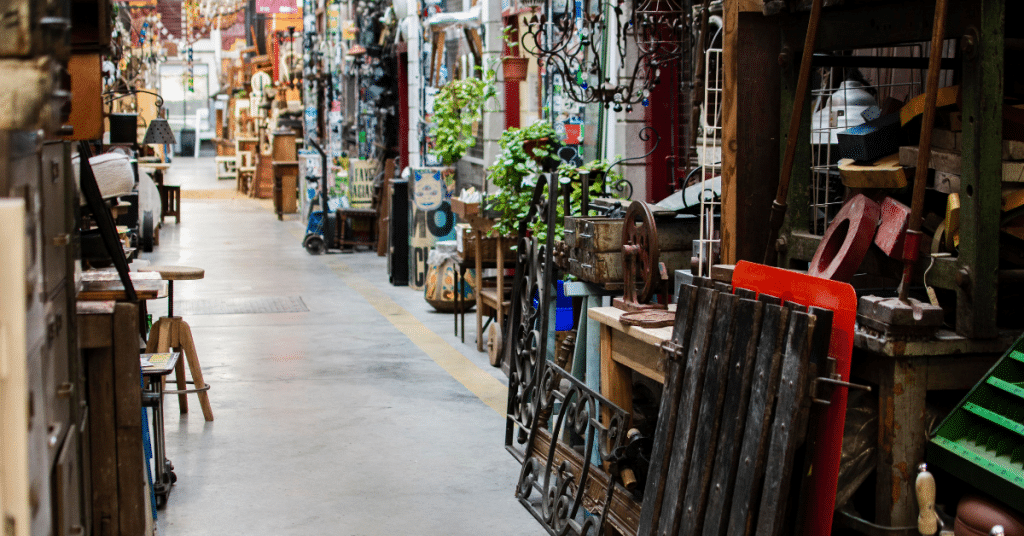
I have never paid for a fish tank. Not one. Some of my tanks are enormous. Every single one of them came to me through the secondhand economy — people who were done with them, downsizing, moving, or simply wanted them gone and were happy to let someone come take them.
My IBC totes — the large intermediate bulk containers that form the backbone of serious aquaponic and water storage systems — came secondhand. The only rule I applied: verify what they held before. An IBC that held food-grade liquid is a treasure. One that held industrial chemicals is a liability regardless of how many times it has been rinsed. Always ask. Always verify. The cost of that conversation is zero. The cost of skipping it can be everything in the system you build with it.
The secondhand ecosystem for homestead supplies is larger and more accessible than most people realize, especially in suburban and semi-urban areas where people regularly discard things that still have significant useful life in them.
Where to look:
- Your local waste transfer station, dump, or disposal site. It goes by many names depending on your county. In well-off areas especially, people discard items that look nearly new. Lumber, hardware, containers, fencing, tools, furniture that can become infrastructure — all of it shows up regularly. Make it a habit to check
- Facebook Marketplace, Craigslist, and Nextdoor free sections. The “please come take this” category of listing is real and active. Set alerts for the items you know you will eventually need
- Thrift stores, estate sales, and rummage sales. Tools, canning jars, food preservation equipment, and garden supplies show up constantly. Prices are a fraction of retail
- Buy Nothing groups and local community boards. These operate on pure gift economy and can produce surprising finds, particularly in suburban neighborhoods
- Restaurant supply auctions and agricultural equipment auctions. When food service businesses close or farms sell off equipment, the prices are dramatically below retail. These auctions are publicly listed and open to anyone
The secondhand economy rewards people who know what they need before they find it. That is another reason the planning phase is not optional: you cannot recognize a great deal on something you have not yet decided you need.
DIY Is Not a Compromise. It Is a Compounding Asset.
The homesteading content space sometimes treats DIY as the budget option — what you do when you cannot afford to hire someone. That framing sells it short. DIY is not just a cost-saving measure. It is a skill-building investment that compounds over every project you take on for the rest of your life.
Every skill you develop — basic carpentry, electrical work, plumbing, welding, concrete work, solar installation — reduces the cost of every future project that requires it. The first time you build something from plans and materials, it takes twice as long as a professional would take and costs you some wasted materials in the learning. The second time, it goes faster. By the fifth time, you are competent. By the tenth, you are good. And every project from there on costs you only materials and your time.
People have been sold the idea that human beings can only be good at one or two things. That is not true. It is a story that benefits the people who charge you to do the other things. A homesteader who can do basic carpentry, wiring, plumbing, and fabrication is not a unicorn. That is just someone who decided to learn instead of outsource.
The formula is simple: research the skill thoroughly before you touch the materials. Buy quality tools once rather than cheap tools repeatedly — cheap tools fail during the job and cost you more in time and replacement than the good tool would have cost upfront. Build something small first, evaluate what you learned, then build the real thing. That sequence works for carpentry, for aquaponics, for solar installation, for food preservation, and for almost any other skill a homestead requires.
The Scientist’s Release Valve: How to Channel the “I Need to Do Something NOW” Energy Without Wrecking Your Budget
Here is something about the kind of person who builds a homestead: you are not a passive person. You think in systems. You see possibilities everywhere. You have a physical, almost restless need to be doing something toward the vision, and the longer the planning phase runs without something tangible to show for it, the harder that energy is to contain.
I know that energy intimately. I have aquaponics, hydroponics, prawn, chickens, and a fully naturalized garden in my subdivision yard not entirely because they were all part of a master plan. Some of them were because I needed to do something, and doing something small and contained was better than doing something large and expensive in the wrong direction.
The way to channel this energy without destroying your budget is to apply a scientific framework to your small-scale experiments. A scientist does not waste money on an experiment because they have proper expectations going in. They know what the experiment can and cannot tell them. They record what happens. They use the data to inform the next decision. They do not confuse the experiment with the actual build.
My approach to my backyard experiments is deliberately different from my approach to my planned homestead. In the yard, I plant annuals wherever there is room and see what happens. If they do well, great. If not, I do not put them there next time. I try things differently than the instructions say to try them, because the data from the unexpected approach is sometimes more valuable than the data from the expected one. I have proper expectations going in: some experiments fail. Failure is data. Data is worth something.
But — and this is the critical constraint — I approach experiments with a scientist’s mindset only after I have enough foundational knowledge to understand what the data actually means. An experiment without baseline knowledge produces noise, not information. You need to know enough about how a system is supposed to work before you can meaningfully interpret what happens when you run it differently.
The scientist’s budget framework for small-scale experiments:
- Learn the standard approach thoroughly first. Understand why it is the standard. Know what outcomes it is designed to produce and what failures it is designed to prevent.
- Define your experiment clearly. What are you testing, and what specific outcome will tell you whether it worked?
- Keep the scale small enough that failure is survivable. Your suburban yard is the laboratory. Your future land is not.
- Record what you do and what happens. Not in a formal research notebook if that is not your style — but in some form that you can reference later. Memory is not reliable data.
- Use the data to make a better decision next time. The experiment that fails and produces a clear lesson cost you almost nothing. The experiment that fails and leaves you with no idea why it failed cost you the same amount and gave you nothing.
My prawn are going on two years now and they are thriving. That did not happen because I followed a prawn manual perfectly. It happened because I observed them, adjusted when things were not working, and kept records of what changed each time I intervened. That is the scientist’s approach applied to livestock. It works for every other system too.
The Five Budget Mistakes That Kill Homestead Dreams
These are the patterns that drain budgets and stop projects before they reach completion. Every one of them is a sequencing failure in disguise.
- Buying for the homestead you dream of instead of the phase you are actually in. A 10kW solar system for a structure that does not exist yet. A tractor for land you have not bought. Infrastructure purchased years before it can be used depreciates in storage and consumes capital that could be building the phases that precede it.
- Buying cheap tools to save money on tools. A tool that fails on the job costs you the replacement plus the time lost plus sometimes the ruined material. Quality tools purchased once are cheaper than cheap tools purchased repeatedly.
- Building the exciting systems before the foundational ones. Food production is more visible and more emotionally satisfying than water infrastructure planning. But a garden with no reliable water source is entirely dependent on rainfall, which is not a system. It is a hope.
- Paying retail for items with a reliable secondhand supply. Canning jars, hand tools, fencing, containers, tanks, lumber from salvage — these categories have rich secondhand markets. Paying retail for them when you have not checked the secondhand sources first is simply leaving money on the table.
- Skipping the income planning phase. A homestead that cannot financially sustain itself will eventually consume whatever savings funded it and stop. Income systems are not the last thing you think about. They are the first thing you plan.
The Budget Is Not the Problem. Here Is What to Do Next.
If you have made it through this article, you now have the framework for building toward a self-sufficient homestead on a real-world budget — not a fantasy budget, not a YouTube budget, but the kind of budget most people are actually working with. Strategic sequencing. A purchasing calendar built around the retail discount cycle. A secondhand sourcing mindset. DIY as a compounding skill investment. And a scientific framework for channeling your impatience into productive experiments rather than expensive mistakes.
But here is the question that determines whether any of this actually works for you: which of your five homestead systems has the biggest gap between where it is right now and where it needs to be — and are you spending money in that direction, or in a different direction entirely?
Because on a tight budget, misallocated spending is not just wasteful. It is potentially the thing that stops the whole project. The gap that costs you most is not always the one you can see. Sometimes it is the one you have not looked at yet.
The free 10-Point Homestead Vulnerability Assessment inside UpRooted Greens is built to show you exactly that picture. It walks you through all ten critical homestead systems, shows you clearly which ones are solid and which ones have gaps, and gives you the honest map of where your effort and your dollars will have the most impact first. No fluff. No upsell in disguise. Just the clear picture you need before you spend the next dollar.
Take the free 10-Point Homestead Vulnerability Assessment
uprootedgreens.com
About the Author
Tihamtu Chaos-Dragon is the founder of UpRooted Greens, a total self-sufficiency education platform built around the WholeStead™ Framework. She has built toward her homestead vision on less than one thousand dollars a month, sourcing secondhand, building DIY systems, running small-scale experiments, and developing a 320-course curriculum along the way. Her prawn are alive and thriving. Her garden finally cooperated. The vision is still in progress — and that is exactly the point.