
Starting From Zero: What to Build First When You Have Land But No Plan
Article 2 of 8 — The WholeStead™ Framework Series from UpRooted Greens
By Tihamtu Chaos-Dragon | UpRooted Greens
I found them in the morning.
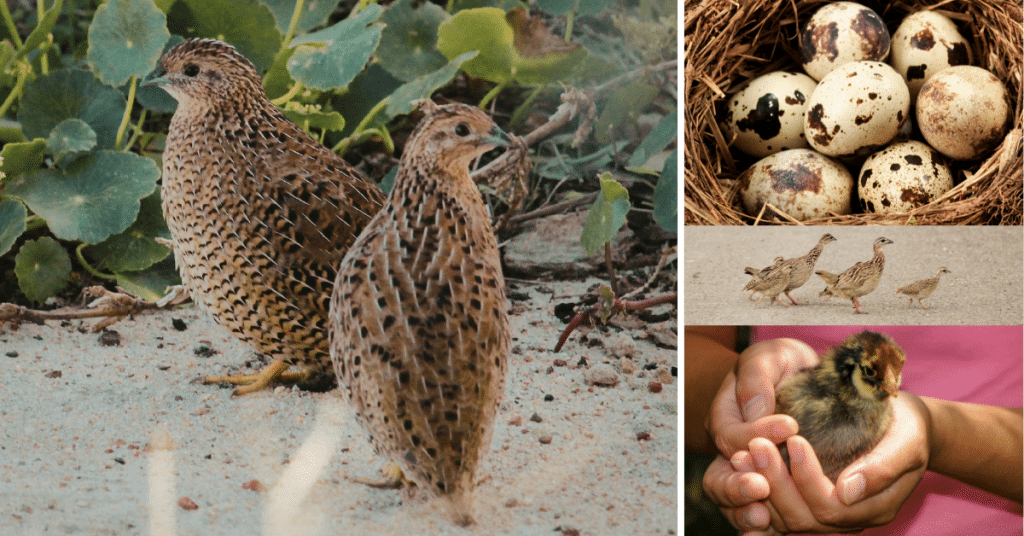
I had built a new outdoor cage for my quail a few months before — a solid wooden box with quarter-inch hardware cloth over every opening. I thought it was secure. I had thought it through. From most threats, it probably was secure. But something found the edge of one of those openings, used the seam for leverage, and ripped the hardware cloth apart. Ripped metal. That is not easy to do. Whatever it was, it had the strength, the patience, and the intelligence to find the one weakness in a structure I believed was solid.
All of my quail were dead. Not eaten. Killed. The predator had not even been hungry enough to stay.
There is a specific kind of grief that comes with losing livestock you have been caring for. It is not the same as losing a pet, though it carries some of that. It is closer to the feeling of having failed at something that was entirely your responsibility. Those birds depended on me to think through every angle of their security. I had thought through most of them. Most is not enough when you are dealing with a determined predator.
I tell you this at the opening of a beginner’s guide because I want to be clear about what “starting from zero” actually means. It does not mean starting simply. It does not mean starting cheaply. It does not mean starting with low stakes while you figure things out. Living things have high stakes from day one. Your plan needs to be good enough before the living things arrive — not good enough after.
Starting from zero means starting with the right foundation. And the right foundation is never a structure. It is always a plan.
The First Mistake Beginners Make: Building Before Planning
You just got land. Or you are about to. Or you have been dreaming about it long enough that it feels real even though the papers are not signed yet. The feeling that comes with that is a particular kind of electricity — part excitement, part terror, part the almost physical need to do something. To start. To build. To plant. To make the dream tangible before it slips back into being just a dream.
That feeling is real and it is good. Do not let anyone tell you that enthusiasm is the wrong place to start. But enthusiasm without a plan is not a beginning. It is an expensive rehearsal for the actual beginning, which will come after you have made enough mistakes to understand why the plan matters.
The single most common mistake in homesteading is starting to build before the plan is complete. Not before the plan is perfect — plans are never perfect, and waiting for perfect is its own kind of paralysis. Before the plan is complete. Before you understand how each system you are building connects to every other system on the property. Before you know what you do not know.
A fence built before you have decided where the garden goes may end up cutting off your best sun exposure. A well drilled before you understand the property’s water table may come up short or contaminated in ways a soil survey would have warned you about. A chicken coop built before you have researched your local predator population may be missing the very reinforcement that keeps your flock alive through the first winter.
The cost of an incomplete plan is always paid in what you have to undo, redo, or replace. Those costs are real dollars, real time, and sometimes real lives. Build the plan first. Then build everything else.
If You Cannot Build the Plan Yet, You Are in Stage Zero
Here is something the homesteading content world almost never says directly: not everyone who wants to build a self-sufficient homestead is ready to plan one yet. And that is not a failure. That is just where you are on the path.
Building an integrated, self-sufficient homestead requires you to understand water systems, power generation, food production, sustainable construction, livestock management, soil science, food preservation, income development, local regulations, seasonal cycles, predator behavior, and how all of these systems interact with each other under your specific climate and on your specific land. That is a substantial body of knowledge. Nobody is born with it. Everyone has to learn it.
If you sit down to plan your homestead and discover that you do not know enough to make meaningful decisions — you are not sure what size solar system you need, you do not know what your water requirements will be, you cannot evaluate a piece of land’s agricultural potential — that is not a sign to start anyway and figure it out as you go. That is a sign that you are in Stage Zero, which is the learning stage, and Stage Zero is exactly where you should be right now.
Stage Zero is not waiting. Stage Zero is the most active, most critical, and most undervalued phase of the entire process. What you learn in Stage Zero determines the quality of every decision you make in every stage that follows. The people who rush past it pay for it for years.
The good news: you do not have to learn everything before you start doing anything. Stage Zero and Stage One — the learning stage and the practicing stage — run simultaneously. You learn what water harvesting requires while you set up a rain barrel in your current backyard. You learn about soil biology while you build your first raised bed. You learn what predator proofing actually demands while the stakes are still a quail cage in your yard, not a full flock of laying hens on land you are paying a mortgage on.
What Stage Zero Actually Looks Like in Practice
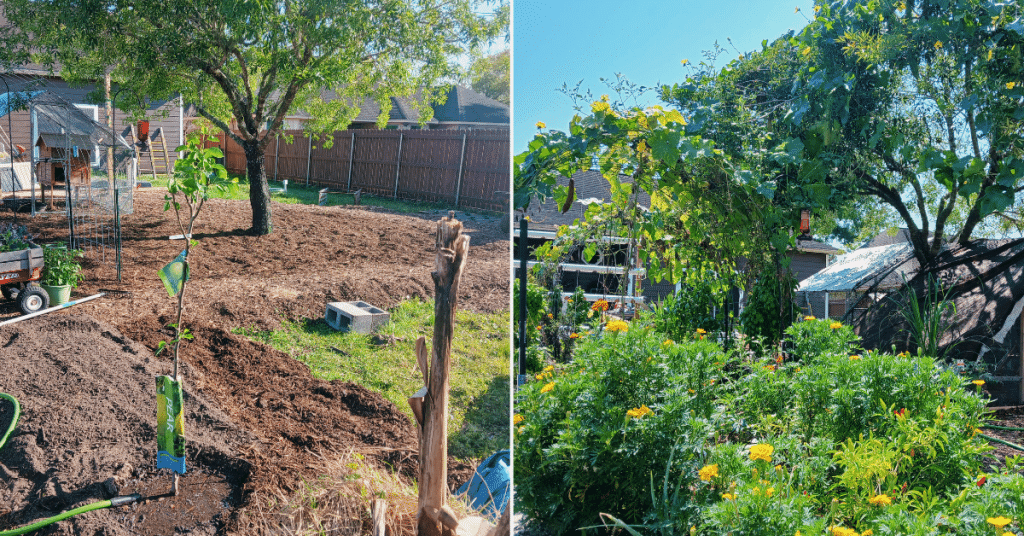
Stage Zero is not passive. You are not sitting with a stack of books waiting to feel ready. You are building knowledge with intention, across all five pillars of the WholeStead™ Framework — Food, Water, Power, Shelter, and Income — simultaneously, because these systems do not function independently and you cannot plan them independently either.
In Stage Zero, you are:
- Learning your local zoning laws, building codes, and water rights before you fall in love with a specific piece of land that turns out to prohibit what you plan to build on it
- Studying the specific animals, plants, and systems you plan to use in your specific climate — not just in general, but in the particular ecological and regulatory context where you live
- Tracking your current household’s actual water and power consumption so that when you design your off-grid systems, you are sizing them to real numbers instead of guesses
- Talking to people who have built what you want to build, and asking specifically what they would do differently — because the wisdom that lives in that answer does not appear in any course or book
- Researching the predators in your region and what each one requires to be stopped — before you have livestock that depend on you to already know this
- Planning your income streams so you know how this homestead pays for itself before you have committed to the land, the build, and the systems
You are also, in Stage Zero, learning to think in systems rather than in projects. A chicken coop is a project. A livestock security system that accounts for every predator in your region, every weak point in your construction materials, every seasonal shift in predator pressure, and every emergency scenario that could leave your animals exposed — that is a system. The WholeStead™ Framework teaches you to think in systems. Stage Zero is where that thinking begins.
Predator Proofing: The Lesson That Cannot Wait
My quail did not die because I was careless. They died because I underestimated. I had done research. I had built what I believed was a secure structure. I had used the right materials — quarter-inch hardware cloth is significantly stronger than standard chicken wire. But I had not thought through the specific vulnerability of the seam where the hardware cloth met the frame. And something in my yard, something strong and patient and motivated, had found that seam before I did.
Predator proofing is not a beginner topic that you graduate from once you know a little more. It is a permanent, evolving discipline that requires you to think the way a predator thinks: from the outside of the enclosure, looking for anything that moves, bends, separates, or fails under sustained pressure. Raccoons in particular are extraordinary problem-solvers with hands that function like a rough approximation of human fingers. A latch that would stop a dog will not stop a raccoon with fifteen minutes and motivation.
The non-negotiable standards for livestock security:
- Hardware cloth, not chicken wire. Chicken wire keeps chickens in. It does not keep determined predators out. Hardware cloth — welded wire mesh — is what keeps predators out, but seams and staples must be reinforced, not just attached
- Bury your perimeter. Diggers — foxes, skunks, minks, weasels — will go under a wall that stops them at ground level. Hardware cloth buried 12 inches and bent outward at the base defeats most of them
- Double-latch every door. Carabiner clips on top of standard latches. Raccoons can work standard slide latches open in seconds
- Cover the top. Open-top runs are not secure from aerial predators or from anything that can climb. Cover everything
- Walk the perimeter yourself, from the outside, looking for weakness. Then walk it again at night with a flashlight. What you cannot see in daylight becomes visible when you are looking the way a predator looks
- Research the specific predators in your region, not just the general list. What is common in your county, your neighborhood, your specific ecosystem matters more than a national average
Here is the rule I live by now: the housing is finished before the animals arrive. Not mostly finished. Not finished enough. Finished. The animals do not move in on a construction timeline. They move in when the security is complete.
I will get more quail. When I do, the housing will be finished before they arrive, and I will have walked that perimeter looking for every weakness before they set one foot inside it. The lesson my quail taught me is one I carry into every animal housing decision I make now. That is what losses are for, if you let them teach you.
So What Do You Actually Do First?
You want the answer to be a thing you can build. A structure, a system, a physical manifestation of the dream that makes it real. I understand that. The answer is not that.
The first thing you build is your knowledge. The second thing you build is your plan. The third thing you build is your skill, in your current setting, with real stakes small enough to learn from without catastrophic cost. Everything after that is execution, and execution built on that foundation is almost always successful. Execution without that foundation is almost always expensive.
If you have land already and no plan, here is where to start today:
- Do a site analysis before you do anything else. Walk the land in every season if you can, or at minimum in wet and dry conditions. Find where water moves, where it pools, where the sun hits longest, where the wind comes from, where the soil changes. This information shapes every decision you make about where to place every system.
- Identify your regulatory constraints. Call your county. Ask about zoning, setback requirements, water rights, permitted building types, and any restrictions on livestock or alternative structures. Find out what is legal before you design what you want.
- Map your five pillars. On paper or a simple site diagram, identify where your water source will be, where your power generation will be sited, where your food production zones will go, where the structure will sit, and how your income systems will relate to the physical layout. Not in final detail — just in relationship to each other.
- Research your predator environment. Before any animal arrives on your land, know what is already living there and around it. Trail cameras are inexpensive and will tell you more about your predator population in two weeks than any amount of research about predators in general.
- Do not build anything until you understand how it connects to everything else. Every structure, every system, every planted bed affects the systems around it. The WholeStead™ approach is integrated by design, not by accident. Plan the integration before you pour the first foundation.
- Start practicing now in your current setting. If you are not yet on your land, the time you spend practicing where you are is not waiting. It is building the competence you will carry onto the land. Garden where you are. Keep the smallest animals your current setting permits. Preserve food. Track your consumption. Build skills while the stakes are manageable.
The Overwhelm Is Information, Not a Stop Sign
If reading this article made the project feel larger than it did when you started, that is not a problem. That is the beginning of accurate perception. Homesteading done right is a large undertaking. It spans years. It touches every aspect of how you live. It asks things of you that most of modern life has not prepared you for.
The overwhelm you feel when you look at the full scope of it is not a sign that you cannot do it. It is a sign that you are finally seeing it clearly. And seeing it clearly is the first real step.
What makes the WholeStead™ Framework different from everything else in this space is that it does not ask you to figure out the connections yourself. It gives you the sequence — what to learn, what to practice, what to build, and in what order — so that each thing you do makes the next thing easier instead of harder. The system is already mapped. You do not have to build the map. You just have to follow it.
The people who succeed at this are not the ones who were never overwhelmed. They are the ones who were overwhelmed, stayed curious anyway, kept learning, built small, failed small, learned from it, and kept going. That is the whole path. Every step of it is available to you.
My quail are gone. My Guinea fowl are gone. My garden took 18 months before it became the productive ecosystem it is today. I have made nearly every beginner mistake there is to make, and I have made most of them while living in a subdivision in town, not on a hundred-acre homestead with nothing but time and money to burn.
And I would not trade any of those mistakes. Not one. Because every one of them taught me something the videos could not, the books could not, the courses could not. They taught me what it actually feels like to build a system that depends on you, and what it costs when a piece of that system fails. That knowledge is the foundation everything else is built on.
Start from zero. Start honestly. Start with the plan. You are going to build something that lasts.
You’re Already Closer Than You Think
If you made it through this article, something in this path already resonates with you. Maybe it is the security of knowing your family is not one supply chain failure away from a crisis. Maybe it is the quiet satisfaction of building something that lasts longer than you do. Maybe it is just the instinct that the way most people live is more fragile than it looks, and you want something different for your family.
Whatever brought you here — that instinct is right.
The path from where you are to a fully integrated, self-sufficient WholeStead™ is not short. But it is completely navigable when you know the sequence. And the first question worth answering honestly before you commit to that path is this: which of your five critical homestead systems is your weakest link right now?
Because the most expensive mistake you can make is building confidently in the direction of your strengths while a different system — one you have not fully mapped yet — quietly waits to take everything down. Your water situation is not the same as your neighbor’s. Your predator environment is not the same as someone three states over. The gap that costs you most is yours alone.
The free 10-Point Homestead Vulnerability Assessment inside UpRooted Greens is built to answer exactly that question. It walks you through all ten critical homestead systems — energy, water, food production, shelter, waste, livestock, security, income, and more — and shows you clearly which ones are solid, which ones have gaps, and where your first real effort will have the greatest impact.
You do not need acres to start. You do not need a massive budget. You need an honest picture of where you stand. That is what the assessment gives you.
Take the free 10-Point Homestead Vulnerability Assessment
uprootedgreens.com
About the Author
Tihamtu Chaos-Dragon is the founder of UpRooted Greens, a total self-sufficiency education platform built around the WholeStead™ Framework. A lifelong gardener and homesteader since age five, she has raised quail, chickens, and prawn, built and lost livestock systems, naturalized gardens from scratch, and learned every lesson in this article the hard way — so her students do not have to. UpRooted Greens exists because the dots exist. They just needed someone to connect them.