Grid Down, Drought, Supply Chain Failure: The Homestead Build Order That Prepares You for All Three
Article 8 of 8 — The WholeStead™ Framework Series from UpRooted Greens
By Tihamtu Chaos-Dragon | UpRooted Greens
You know the moment.
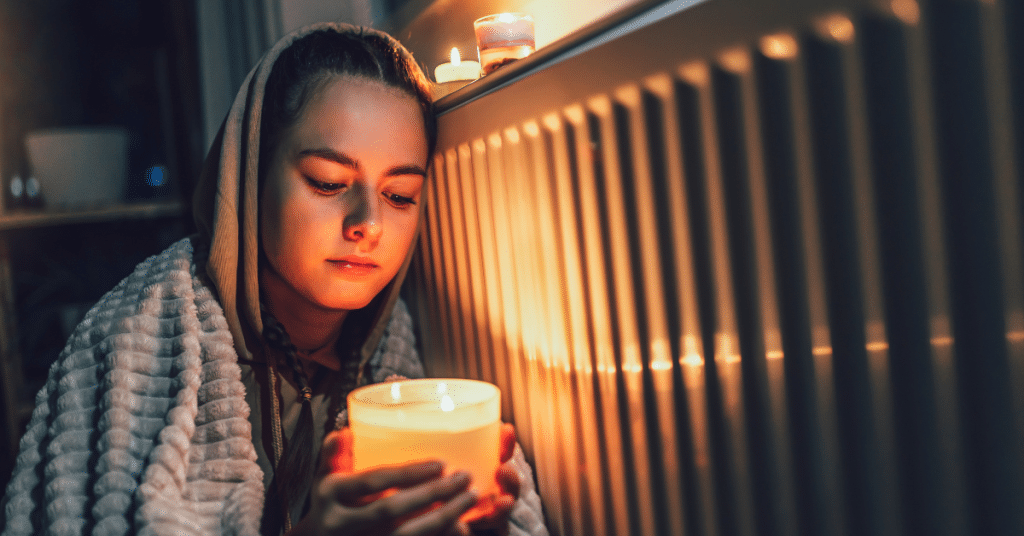
You are watching something — a film, a game, a show at the most suspenseful possible second — and the power goes out. Complete darkness. Complete silence where there was sound a moment ago. And in that silence, the first question that surfaces is the same one it always is: when is it coming back?
For most people reading this, the answer has always been: soon. An hour. Maybe a few. The grid comes back, the screen flickers on, and the moment of disruption becomes an inconvenience story told at work the next day.
For a growing number of people, in a growing number of places, the answer is not soon. It is days. Weeks. Sometimes the answer is that it does not come back at all — not in the form it was, not with the reliability it had, not for the price it cost before. And the people who built their entire lives around the assumption that it would always come back, always, without fail — those people discover very quickly what they actually built their lives on.
I grew up on a military base, in a military family, waiting for the bombs. Not as a fear. As a background condition of daily life, the way some people grow up knowing there are earthquakes or floods — not if, but when, and then what. That upbringing gave me something that most people in comfortable suburban lives never develop: the permanent, practiced awareness that systems fail, that the things you depend on are not guaranteed, and that the only real security is the kind you build yourself.
I have always been the person who has the thing — whatever the thing is that the moment requires. Not because I am lucky. Because I think ahead, I prepare deliberately, and I do not allow myself the comfortable fiction that everything is going to be fine simply because it has been fine so far.
This is the last article in the WholeStead™ Framework series, and I want to use it to name what the rest of the series has been building toward — because I think most homesteading content stops just short of saying it plainly. So I am going to say it plainly.
The Honest Picture of Where We Are
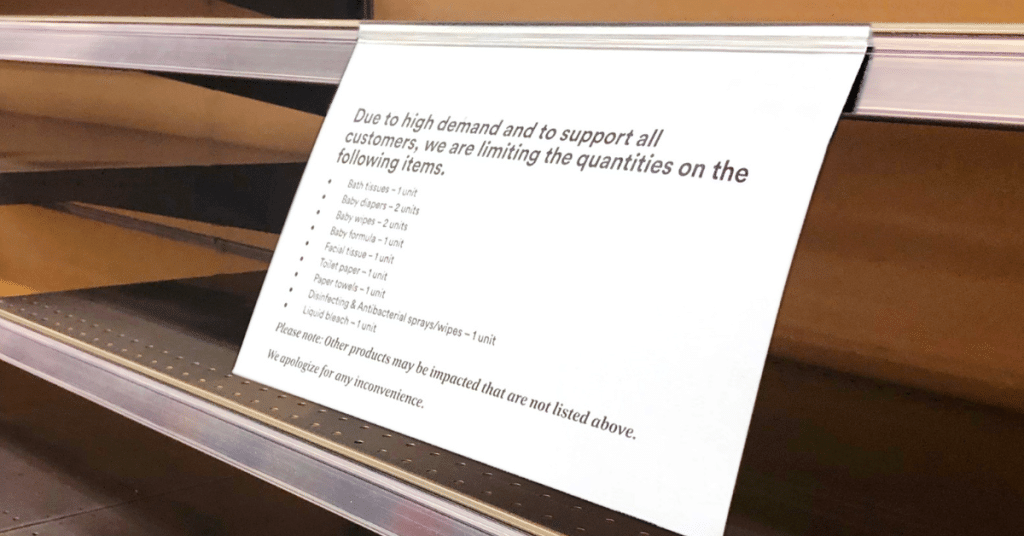
The pandemic disrupted the global supply chain. That disruption has not resolved. Grocery store shelves that emptied in 2020 have never fully restocked their previous variety. The selection available to most people in most stores has quietly contracted. Items that were standard six years ago are now simply gone — discontinued, unaffordable to stock, or lost in a logistics chain that has not recovered its former resilience. This is not a temporary disruption. It is a new baseline.
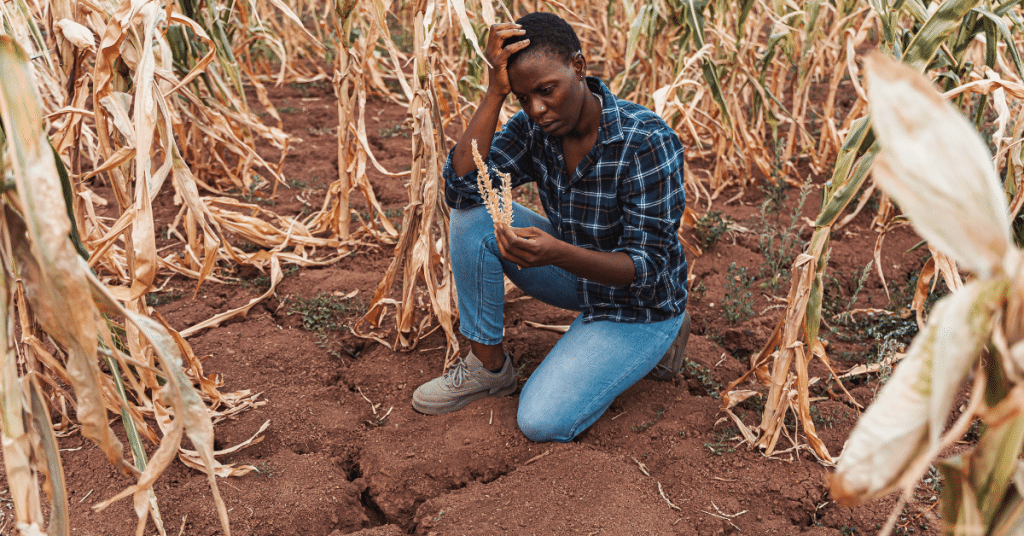
The climate is changing in ways that affect food production at every scale: drought patterns that are longer and more severe, flooding events that are more frequent and more destructive, growing seasons that are shifting in ways that the agricultural infrastructure of most regions was not designed for. Pollinator populations — the insects that make most of our food crops possible — are declining in ways that agricultural scientists describe as genuinely alarming. These are not projections. They are measurements of what is already happening.
Wars are multiplying. Not decreasing. And the resource conflicts that drive most modern wars are intensifying as the resources themselves become scarcer. The rational response to scarcity is conservation and cooperation. The historical response to scarcity, when the people making decisions are operating from fear and greed rather than intelligence and long-term thinking, is conflict over what remains. We are watching the historical response play out in real time.
The driving force behind most of this is not mysterious. It is greed — not the ordinary, human-scale desire to have enough, but the concentrated greed of a very small number of people who hold an extraordinary proportion of the world’s decision-making power and who have consistently chosen their own short-term enrichment over the long-term survival of the systems that sustain everyone else. The people who could change the trajectory of the entire planet with the collective weight of their decisions have looked at the evidence and chosen differently. They are choosing war over cooperation, extraction over regeneration, and control over sustainability.
I am not telling you this to produce despair. I am telling you this because despair is what happens when you see clearly and have no response available. The WholeStead™ Framework is a response. A complete, integrated, practical, immediately actionable response that is available to any person regardless of their location, or the size of their current space.
If you do not plan now, it will be too late later. That is not fearmongering. That is the simple logic of systems that take time to establish. A food forest planted today takes five years to produce meaningfully. A water system designed today takes weeks to months to install. A power system planned today takes a season to source and build. The time that preparation requires does not compress because the emergency arrived. You either have it or you do not, and the difference between those two outcomes is entirely a function of what you did before the emergency got here.
The Three Failure Modes and How the WholeStead™ Framework Addresses Each One
Grid failure, drought, and supply chain disruption are not separate threats requiring separate preparations. They are three expressions of the same underlying vulnerability: complete dependence on systems you do not control and cannot fix when they break. The WholeStead™ Framework addresses all three simultaneously because it builds the alternative systems that replace them — not as emergency backup, but as the primary infrastructure of your daily life.
Grid Failure: When the Power Goes Out and Stays Out
The electrical grid is the single most critical infrastructure dependency in modern life. It powers the pump that moves your water. It keeps your food cold. It runs the communication systems that connect you to information and to other people. It powers your heat in winter and your cooling in summer. When it fails for hours, it is an inconvenience. When it fails for days, it becomes a crisis. When it fails for weeks — as it has for communities hit by major storms, infrastructure failures, and in some regions, simply by the growing instability of an aging system under increasing load — it becomes a survival situation for the people who built their lives entirely inside it.
Phase 3 of the WholeStead™ Framework — the power system phase — is positioned where it is specifically because power is the infrastructure that serves every other system. An independent solar array with battery storage does not just reduce your utility bill. It removes grid failure as a threat category entirely. When the neighborhood goes dark, your home stays lit, your water pump keeps running, your food stays cold, and your communication systems stay on. You become the resource rather than the person in need of one.
For resilience planning specifically, the power system should be sized not just for your normal daily load but for your emergency load — what you need to run when everything outside the property has failed and you are supporting not just your household but potentially your neighbors and your community. That is a different sizing calculation than the one most solar installers run for you, and it produces a different system. Plan for the scenario you actually want to be prepared for.
Drought: When the Water Stops Being Available or Affordable
Water scarcity is no longer a problem that belongs to other places. Aquifer depletion is measurable and accelerating across agricultural regions that have fed populations for generations. Municipal water systems in drought-affected areas are implementing restrictions, rate increases, and in some cases outright rationing. The assumption that clean, affordable, reliable water will always flow from the tap when you turn it is not one that the data supports for the next several decades.
Phase 2 of the WholeStead™ Framework puts water infrastructure first in the physical build sequence for exactly this reason. A well, a cistern system, a rainwater harvest setup, a greywater recirculation system — these are not luxury additions to a homestead. They are the replacement for the infrastructure that is becoming less reliable every year. The household that has its own water source, its own storage capacity, and its own filtration system is not affected by municipal restrictions, rate increases, or system failures. It has already moved outside that vulnerability.
Water system design for resilience means redundancy: more than one source, more than one storage point, more than one filtration method, and the knowledge to maintain all of them without outside help. A single well with a single electric pump is less resilient than a well combined with a rainwater cistern and a hand pump backup. Layer your sources. Layer your storage. Never have a single point of failure in the system that everything else depends on.
Supply Chain Failure: When the Store Has Nothing Left to Sell
The supply chain disruption of the pandemic showed the world something that food systems researchers had been documenting for years: the modern food supply chain is extraordinarily efficient and extraordinarily fragile. It is optimized for cost and speed under normal conditions, with almost no redundancy built in for abnormal ones. When the disruption came, the shelves emptied within days. The recovery, four years later, is still incomplete.
Phase 4 of the WholeStead™ Framework — the food production system — is the direct response to supply chain vulnerability. A household that grows a meaningful portion of its own food is not dependent on the supply chain for that portion. A household that preserves food — canning, fermenting, dehydrating, freezing with its own independent power — is not dependent on the supply chain delivering fresh product every few days. A household with a seed bank of open-pollinated varieties can regenerate its food supply indefinitely without purchasing inputs from outside the property.
The food system built for resilience is layered: annual vegetables for immediate production, perennials and food forest for long-term caloric security, livestock for protein and fertility, preserved food stores for the months when fresh production is low, and the seed saving practice that makes the whole system self-regenerating. Each layer covers the gaps in the others. No single failure takes down the whole food supply.
The Resilience Build Order: What Changes When Protection Is the Primary Goal
The WholeStead™ Framework sequence — Learn, Practice, Water, Power, Food, Shelter, Income — holds for resilience-focused builds with one significant adjustment in priority weighting: Water and Power move to joint first priority in the physical build, because these two systems provide the foundation that makes everything else survivable under disrupted conditions.
For a household prioritizing resilience and preparedness, the sequence in practice looks like this:
- Immediate: Build 72-hour, then 30-day, then 90-day water and food reserves using existing commercial storage while the permanent systems are being planned and built. This covers you during the build period itself.
- Phase 0 accelerated: Complete your site analysis, regulatory research, and system design as rapidly as your learning curve allows. The resilience-focused homesteader does not have the luxury of a leisurely planning phase because the external conditions that make preparation necessary are not pausing to wait for your readiness.
- Phase 1 begins immediately: Start practicing where you are right now. A garden in your current setting. Small livestock if your situation permits. Food preservation skills. Water tracking. Power consumption mapping. Every skill built now is one you have when the land is ready.
- Water and Power simultaneously: For resilience builds, these two systems are co-developed rather than strictly sequential, because each one depends on the other at the emergency scale. Your power system runs your water pump. Your water system keeps your people and your garden alive when the power system is the only thing between you and the grid.
- Food production built for redundancy: Every food system element serves double duty: it feeds the family under normal conditions and it becomes the community resource under disrupted conditions. Size it accordingly.
- Shelter built for all conditions: Passive solar design, thermal mass, natural ventilation, and integrated heating systems that do not depend on grid power or continuous fuel supply. A structure that maintains livable temperatures through its design rather than through its mechanical systems is resilient in a way that a conventional HVAC-dependent house is not.
Beyond the Homestead: What This Is Actually Building Toward
I want to tell you what I am actually building, because the homestead is not the end of the vision. It is the beginning of it.
I am building toward a city. Not a metaphor for a city. An actual city, constructed from the ground up, designed entirely differently from any other city on the planet. A city where every system — power, water, food, waste, shelter, transportation, economy — is integrated into a closed-loop structure that produces more than it consumes, that regenerates rather than depletes, and that provides every resident with the kind of genuine security that no conventional city in the world currently offers its people.
The WholeStead™ Framework, applied at the household scale, is the proof of concept. The curriculum inside UpRooted Greens is the distribution mechanism that gets the knowledge into enough hands to make a community possible. The community is the foundation the city is built on. Each step is the prerequisite for the next one, sequenced exactly the way the Framework sequences a homestead build — because the logic is identical whether you are building a system for one household or for one hundred thousand people.
The two girls I am building all of this for are not my biological children, but they are my kids. They are the children of people I love, and they are growing up into the world that is being shaped right now by decisions being made by people who will not live to see the consequences. I chose a long time ago not to bring biological children into this world because I could not justify adding more lives to a trajectory I could already see clearly. What I chose instead was to build something that might change the trajectory itself.
That is what UpRooted Greens is. Not a homesteading platform. Not a self-sufficiency curriculum. A different answer to the question of how human beings can live on this planet without destroying it and each other in the process. An answer that starts with a rain barrel on a balcony, that scales through a WholeStead™ on an acre, that becomes a community, that becomes a city, that becomes a demonstration that another way is not only possible but already being built.
The people in charge of the world’s systems are not going to change direction until the direction they are going becomes the only thing left standing. History is consistent on this point. What I am building is the alternative that is already standing when that moment arrives — the thing that works, that is already proven, that people can step into rather than having to invent from scratch at the worst possible time.
If you do not plan now, it will be too late later. Not because disaster is certain. Because preparation takes time that the emergency does not give you. The window to build is open right now. It will not always be.
What to Do Right Now: The Resilience Starting Point
Preparedness for grid failure, drought, and supply chain disruption does not require land. It does not require significant capital. It requires clear thinking, a sequenced plan, and the willingness to start wherever you are with whatever you have.
Today, regardless of where you are living:
- Build a water reserve. Start with 72 hours: one gallon per person per day, stored in food-grade containers. Extend it to 30 days as your storage space allows. This single step puts you ahead of the overwhelming majority of households in any disruption scenario
- Start growing food in whatever space you have. A container, a windowsill, a balcony, a backyard corner. The skill of growing food is not learned in an afternoon. Start now so that you have years of practice before you need the output to matter
- Learn food preservation. Canning, dehydrating, fermenting, freezing. These skills convert your seasonal production into year-round security and your grocery store purchases into a supply that does not depend on the store being open tomorrow
- Assess your power vulnerability. What stops working in your home when the grid goes down? What would you need to keep your family safe and functional for a week? Start building toward that answer with whatever budget you have available
- Begin your WholeStead™ plan. Even if you have no land and no timeline, the planning phase costs nothing and prevents everything. Know what you are building toward before you spend a dollar toward it
- Find your community. The people building toward the same thing you are building toward are your most important resilience resource. Find them. Share knowledge. Build together. A network of WholeStead™ households is exponentially more resilient than any single one
This Is Where the Series Ends and Where You Begin
You have just read eight articles that together map the complete WholeStead™ Framework — the integrated build sequence for a fully self-sufficient, net zero+ homestead that addresses food security, water security, power security, shelter resilience, and income stability as a single connected system rather than five separate projects.
That framework was built by someone who started with nothing, spent twenty years building on less than $900 a month, made every beginner mistake available, and kept going anyway — because the vision of what a self-sufficient life could give to the people she loves was worth every year of the work it required.
UpRooted Greens exists so that you do not have to build this framework from scratch the way she did. The 320 courses inside the platform document every system, every skill, every decision point, and every lesson learned across thirty years of study and fifteen years of hands-on experimentation — organized in the sequence the WholeStead™ Framework prescribes, so that each thing you learn prepares the ground for the next.
The question is not whether the world you are preparing for is coming. It is already here, already visible to anyone willing to look clearly at it. The question is whether you will have built something by the time it fully arrives.
Start with the honest picture of where you stand right now. The free 10-Point Homestead Vulnerability Assessment inside UpRooted Greens shows you which of your ten critical systems are solid and which ones have the gaps that will matter most when the pressure comes. No fluff. No upsell dressed up as a resource. Just the clear picture that makes your next move the right one.
Take the free 10-Point Homestead Vulnerability Assessment
uprootedgreens.com
About the Author
Tihamtu Chaos-Dragon is the founder of UpRooted Greens, a total self-sufficiency education platform built around the WholeStead™ Framework. She grew up on military bases waiting for emergencies that never came on schedule, survived a childhood that tried to break her, built a life and a vision on less than $900 a month, and has been moving toward a fully integrated, net zero+ homestead for ten years without stopping.
Her final destination is not a homestead. It is a city — built from the ground up, designed entirely differently, proving that another way is possible. The wholestead is where that proof begins.