
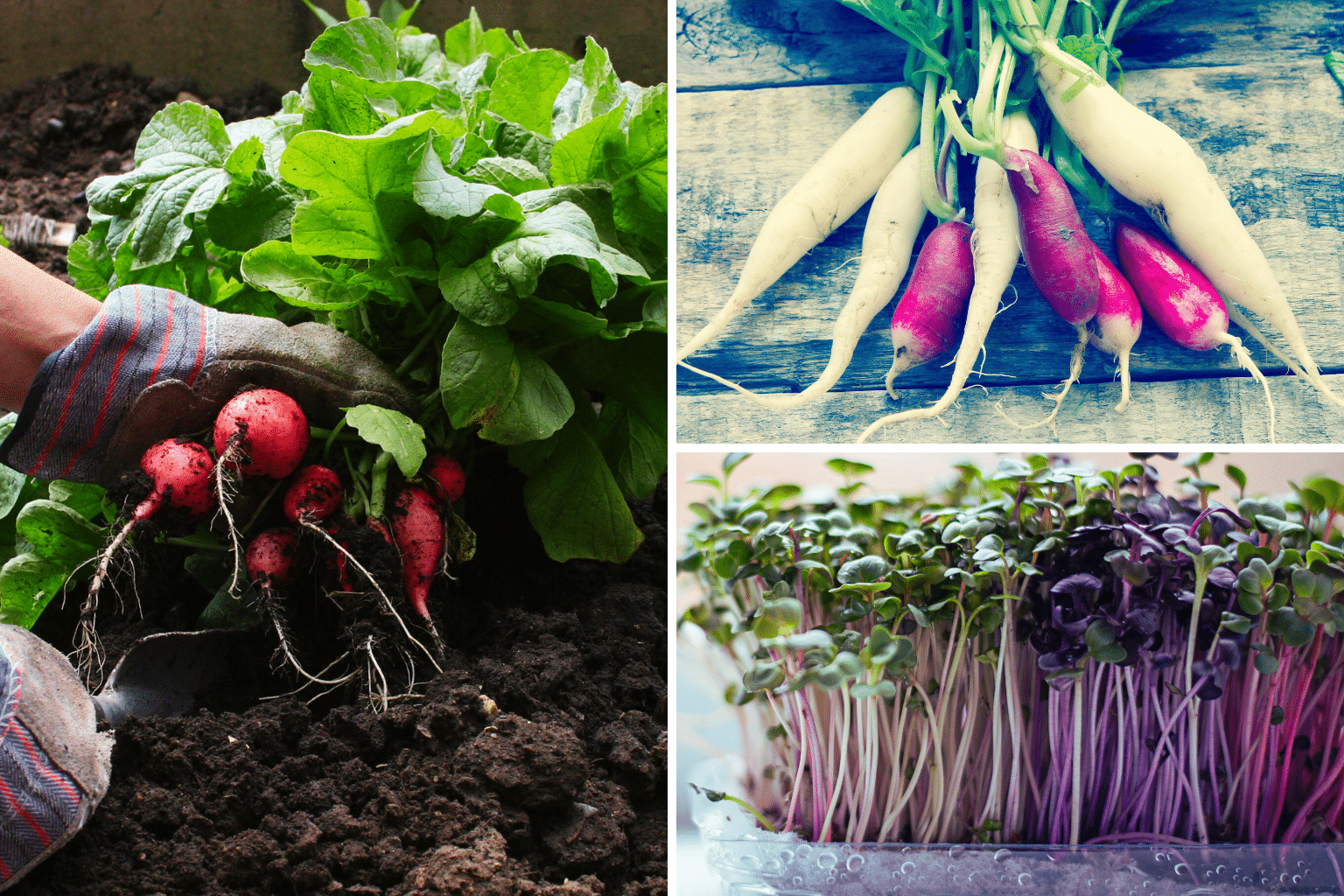
Radish (Raphanus sativus) Datasheet
-
Common Name: Radish
-
Scientific Name: Raphanus sativus
-
Family: Brassicaceae
-
Origin: Native to Southeast Asia, Mediterranean region; cultivated globally
-
Zone Hardiness: USDA Zones 2–10 (annual crop, tolerates cool weather)
-
Light Requirements: Full sun; tolerates light shade
-
Water Needs: Consistent moisture; keep soil evenly moist to avoid cracks or woody roots
-
Soil Preferences: Prefers loose, well-drained sandy to loamy soil, pH 6.0–7.0; avoid heavy clay
-
"Ponics" Compatibility:
• Aquaponics: Fairly compatible
• Aeroponics: Fairly compatible
• Hydroponics: Fairly compatible
• Preferred Method: Nutrient Film Technique (NFT) or media bed with good aeration -
Growth Habit: Annual herbaceous plant with basal leaf rosette and a swollen taproot
-
Height & Spread: Foliage height ~6–12 inches (15–30 cm); taproot diameter varies (1–7 cm)
-
**Time from Germination to Harvest:** Quick-maturing:
• Small radishes: 21–30 days
• Daikon/winter types: 50–70 days -
Flowering Time: Bolting may occur in 4–6 weeks; flowers appear if left in ground longer
-
Edible Parts: Taproot (raw or cooked); young leaves, seed pods, and seeds (sprouted or culinary)
-
Medicinal Uses: Traditionally used for digestive aid, diuretic properties; black radish variety supports liver and bile health
-
Companion Plants: Lettuce, peas, cucumbers, nasturtiums; deters pests and serves as trap crop for cucumber beetles
-
Pest & Disease Resistance: Generally pest-resistant; watch for flea beetles, cabbage root flies, swede midge; avoid crusted soil and overcrowding
-
Harvest Time: Harvest small radishes at 3–4 weeks; daikon at 50–70 days. Store in fridge for 2–3 days at room temp or 1–2 months at 0 °C with high humidity
-
Propagation Methods: Direct-sow seed ½–1 in deep; germinates in 3–7 days; seed spacing 1–2 in, rows 10–12 in apart
-
Sustainability Features: Great as a quick cover crop; taps and redistributes nutrients, breaks soil compaction, suppresses weeds
-
Culinary Uses: Added to salads, garnishes, soups; daikon is used in pickles and Asian dishes; pods (rat-tailed) cooked or pickled
-
Fun Fact: Winter black radishes were served at Bavarian Oktoberfest and known historically since 1548
Radish Type Overview
Radishes are broadly grouped by their form and growing season:
-
Spring/Summer types: Quick-growing (3–5 weeks), small root varieties like Cherry Belle and French Breakfast.
-
Winter/Storage types: Larger, slower-growing radishes that store well—includes Black Spanish and Daikon
Spring/Summer Radish Varieties
These radishes grow quickly and prefer cool spring or fall weather but not freezing or high heat. Best when harvested young.
Cherry Belle (Raphanus sativus 'Cherry Belle')
Flavor Profile: Mildly spicy, crisp, and refreshing.
Culinary Uses: Excellent raw in salads, crudités, or pickled.
Notes: Round bright red roots with white flesh; very uniform.
Planting Tip: Sow directly in full sun; thin to 1 inch apart. Avoid high temperatures to prevent bolting.
Days to Maturity: 22–30 days
French Breakfast (Raphanus sativus 'French Breakfast')
Flavor Profile: Mellow and mild with a subtle peppery snap.
Culinary Uses: Traditionally eaten raw with butter and salt.
Notes: Elongated roots with red upper and white tip; elegant heirloom.
Planting Tip: Prefers well-drained loamy soil; consistent moisture is key for tender roots.
Days to Maturity: 25–30 days
White Icicle (Raphanus sativus 'White Icicle')
Flavor Profile: Subtle pepper with a crisp bite.
Culinary Uses: Ideal for slicing into slaws or stir-frying.
Notes: Long tapered white root; looks like a small daikon.
Planting Tip: Ensure soil is free of stones; water evenly to prevent woody texture.
Days to Maturity: 28–35 days
Watermelon Radish (Raphanus sativus 'Red Meat')
Flavor Profile: Mild, lightly sweet with a slight pepper finish.
Culinary Uses: Best sliced thin for visual appeal in salads and pickles.
Notes: Pale green outside with deep magenta center; round shape.
Planting Tip: Prefers a longer growing window than typical summer radishes; sow in late summer for fall harvest.
Days to Maturity: 50–60 days
Winter/Storage Radish Varieties
These varieties are sown in late summer and harvested in late fall. They tend to grow larger, store longer, and have stronger flavor.
Black Spanish Round (Raphanus sativus var. niger)
Flavor Profile: Bold and spicy; earthy and intense.
Culinary Uses: Grated raw, roasted, or fermented.
Notes: Hard black skin with white flesh; very pungent and firm.
Planting Tip: Sow in late summer to early fall; don’t let soil dry out.
Days to Maturity: 55–70 days
Daikon / Mooli (Raphanus sativus var. longipinnatus)
Flavor Profile: Juicy and mild, slightly peppery.
Culinary Uses: Used in Asian cuisine—pickled (takuan), in soups, or stir-fried.
Notes: Long white roots up to 24 inches; can grow very large.
Planting Tip: Requires deep, loose soil for straight growth; mulch to retain moisture.
Days to Maturity: 50–70 days
China Rose (Raphanus sativus var. longipinnatus 'China Rose')
Flavor Profile: Juicy, sweet-crisp with a pleasantly peppery undertone.
Culinary Uses: Ideal for winter salads, pickling, roasting, or stir-frying.
Notes: Oblong, carrot-shaped roots with rose-pink skin and white flesh; heirloom variety introduced to Europe in the 1800s.
Planting Tip: Sow in late summer; provide deep, loose soil and consistent moisture; mulch to prevent bolting and retain even temperatures.
Days to Maturity: 50–60 days
🌱 Reasons Red Radishes Don't Store Long-Term:
-
Thin skins: These varieties have tender, thin skins that dehydrate or shrivel quickly.
-
High water content: This leads to rapid moisture loss and softening post-harvest.
-
Designed for speed, not storage: Spring radishes are bred to mature fast and be eaten fresh within a few days to a week.
✅ Best Storage Radishes:
For overwintering or root-cellar storage, use winter radish types, including:
-
Black Spanish Round (stores 2–3 months in ideal conditions)
-
Daikon (especially Korean or Japanese winter types)
-
Green/China Rose (thick-skinned, dense-flesh)
-
Watermelon radish (shorter storage life than black/daikon, but still better than red types)
📦 Storage Tips:
-
Harvest before hard frost.
-
Store unwashed in a perforated plastic bag or layered in damp sand.
-
Keep in a root cellar or fridge at 32–40°F (0–4°C) with 95% humidity.
Let me know if you’d like a comparison chart of storage potential by variety.
Audio
Video