
UpRooted Greens Daily Sprout is a growing database that covers a single plant in depth. Giving you all the information you need to germinate the seeds, sprout and grow the plant, when to harvest it and what is harvestable from it. Along with a plethora of useful and helpful information that will make sure you can grow whatever you want to grow.
Lessons
1
Arugula (Eruca vesicaria)

Arugula (Eruca vesicaria) Datasheet
-
Common Name: Arugula, Rocket
-
Scientific Name: Eruca vesicaria (syn. Eruca sativa)
-
Family: Brassicaceae
-
Origin: Mediterranean region (Spain, North Africa, West Asia)
-
Zone Hardiness: USDA Zones 3–10 (annual crop; best in cool weather)
-
Light Requirements: Full sun to partial shade; shading helpful in summer heat
-
Water Needs: Regular moisture; keep soil evenly moist to maintain tenderness
-
Soil Preferences: Rich, well-drained loamy soil; pH 6.0–7.0
-
"Ponics" Compatibility:
• Aquaponics: Very compatible
• Aeroponics: Very compatible
• Hydroponics: Very compatible
• Preferred Method: Nutrient Film Technique (NFT) or media-based systems; adaptable to grow lights -
Growth Habit: Fast-growing annual forming a basal rosette of deeply lobed leaves; flowers produce seed if bolted
-
Height & Spread: 6–24 inches (~15–60 cm) tall; rosette spread ~8–12 in (20–30 cm)
-
Time from Germination to Harvest: 30–40 days for full leaves; baby leaves ready in 20–30 days
-
Flowering Time: Flower bolts occur in late spring or when temperatures exceed ~70°F; flowers are edible, creamy-white with purple veins
-
Edible Parts: Leaves, flowers, seed pods, and seeds
-
Medicinal Uses: Rich in vitamins A, C, K, folate, and minerals; has antioxidant and potential aphrodisiac properties (historic Roman lore)
-
Companion Plants: Beets, celery, mint, and brassicas; seeds attract pollinators when flowered
-
Pest & Disease Resistance: Generally resistant; watch for slugs, aphids, flea beetles, powdery mildew—provide good airflow
-
Harvest Time: Harvest young leaves at ~3 in (~7 cm) length. Cut outer leaves and allow regrowth or harvest whole rosette. Refrigerate up to a week
-
Propagation Methods: Direct-seed ¼ in (6 mm) deep in rows 12 in apart. Germination in 5–10 days. Sow every 1–2 weeks for continuous harvest
-
Sustainability Features: Quick cover crop; suppresses weeds; deep roots improve soil; annual self-seeds easily
-
Culinary Uses: Spicy addition to salads, pizzas, sandwiches; used fresh or lightly cooked; flowers and seed pods also eaten
-
Fun Fact: Ancient Romans believed arugula had aphrodisiac qualities; it was seeded in Charlemagne’s gardens.
Astro (Eruca sativa 'Astro')
Flavor Profile: Mild but peppery—gentler than most arugulas.
Culinary Uses: Ideal for baby-leaf salad mixes and delicate garnishes.
Notes: Heirloom variety; forms tender rosettes; edible white flowers add visual and taste appeal.
Planting Tip: Sow in early spring or fall; harvest baby leaves at ~3 weeks or wait ~38 days for mature leaves.
Days to Maturity: 21–38 days
Garden Tangy (Eruca sativa 'Garden Tangy')
Flavor Profile: Spicy with frilly kale-like leaf texture.
Culinary Uses: Perfect for bold salads, pasta finishes, or pizza toppings.
Notes: Italian cultivar; vigorous growth with long, jagged leaves.
Planting Tip: Sow in cool weather; mulch to preserve moist soil and delay bolting.
Days to Maturity: 30–35 days
Italian Cress (Eruca sativa 'Italian Cress')
Flavor Profile: Nutty with light pepper—more mellow than standard arugula.
Culinary Uses: Excellent for sandwiches, slaws, and sautéed greens.
Notes: Large lettuce-like leaves; ideal for minimal harvest effort.
Planting Tip: Sow for continuous harvest; can also grow in containers or indoors.
Days to Maturity: ~30 days
Red Dragon (Eruca sativa 'Red Dragon')
Flavor Profile: Medium-spicy with mild bitterness.
Culinary Uses: Great for visually striking salads and garnishes.
Notes: Deeply lobed oak-like leaves with purple veins and stems.
Planting Tip: Prefers cool weather; shade in heat to slow bolting.
Days to Maturity: ~45 days
Rocket (Eruca sativa 'Rocket') (standard grocery variety)
Flavor Profile: Crisp and lightly peppery—classic arugula taste.
Culinary Uses: Salad greens, pizza toppings, and sandwiches.
Notes: Widely grown; rosette form with lobed leaves; typical archetype.
Planting Tip: Sow every 2–3 weeks in cool seasons for a continuous supply.
Days to Maturity: 30–40 days
Selvatica / Sylvetta (Eruca sativa 'Selvatica')
Flavor Profile: Bold and spicy—wild-rocket taste but as annual.
Culinary Uses: Adds strong peppery punch to spicy salads and sauces.
Notes: Olive-shaped deeply cut leaves; somewhat heat tolerant.
Planting Tip: Sow in early spring or fall; mulch to prevent hot-induced bolting.
Days to Maturity: ~35–50 days
Slow Bolt (Eruca sativa 'Slow Bolt')
Flavor Profile: Robust pepper flavor, similar to standard arugula.
Culinary Uses: Ideal for cooler regions—track salads through warmer weather.
Notes: Heat-tolerant heirloom that resists early flowering and bitterness.
Planting Tip: Best sown when temperatures under 75 °F; allows longer harvest window.
Days to Maturity: 35–50 days
Wasabi (Eruca sativa 'Wasabi') *** Not Actual Wasabi
Flavor Profile: Strongest peppery heat—comparable to horseradish.
Culinary Uses: Excellent in Asian cuisine, wasabi-style sauces, sushi, spicy salads.
Notes: Named for intense, sinus-clearing bite; small rosette.
Planting Tip: Sow in cool conditions; mulch and shade to slow growth and bolting.
Days to Maturity: ~40–50 days
🌱 Growing Note:
Arugula thrives in cool weather (40–70 °F); best planted in spring or fall. It bolts quickly in heat, so aim for successive sowing every 2–3 weeks in cooler seasons. For milder flavor, harvest baby leaves at ~20–30 days; full rosettes take 30–50 days depending on the variety.
Audio
Video
- Text Reading
2
Basil (Ocimum basilicum)
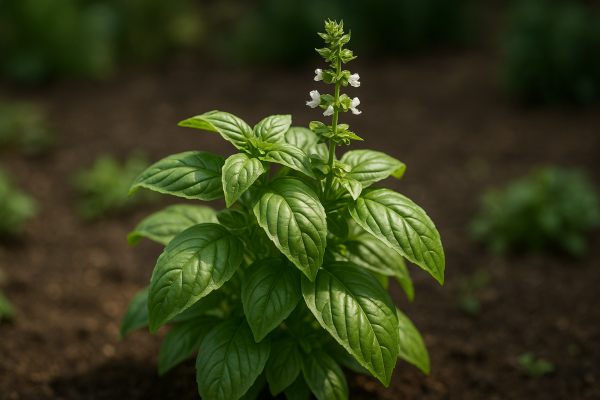
BASIL
#1 Common Name: Sweet Basil
#2 Scientific Name: Ocimum basilicum
#3 Family: Lamiaceae
#4 Origin: Native to tropical Asia, particularly India and Southeast Asia.
#5 Zone Hardiness: USDA Zones 10–11; grown as an annual in cooler climates.
#6 Light Requirements: Full sun; requires at least 6–8 hours of direct sunlight daily.
#7 Water Needs: Moderate; prefers moist, well-drained soil. Water deeply once a week outdoors; indoor plants may require watering every 2–4 days.
#8 Soil Preferences: Thrives in well-drained, fertile soil with a pH between 5.5 and 6.5.
#9 "Ponics" Compatibility:
• Aquaponics: Very compatible
• Aeroponics: Very compatible
• Hydroponics: Very compatible
• Preferred Method: Deep Water Culture (DWC), Nutrient Film Technique (NFT), and media beds using substrates like rockwool, coco coir, or perlite.
#10 Growth Habit: Herbaceous annual in temperate zones; perennial in tropical climates. Upright, bushy growth habit.
#11 Height & Spread: Typically grows 12–36 inches (30–90 cm) tall and 12–24 inches (30–60 cm) wide, depending on variety and conditions.
#12 Time from Germination to Harvest: Germinates in 5–10 days; ready for harvest within 3–4 weeks.
#13 Flowering Time: Blooms from June to frost; flowers are magenta and fragrant.
#14 Edible Parts: Leaves and flowers are edible; commonly used fresh or dried in culinary applications.
#15 Medicinal Uses: Traditionally used to treat digestive issues, colds, and skin conditions. Exhibits anti-inflammatory and antioxidant properties.
#16 Companion Plants: Pairs well with tomatoes, peppers, oregano, parsley, chamomile, and marigolds; helps repel pests and enhance flavor.
#17 Pest & Disease Resistance: Susceptible to downy mildew; resistant varieties like 'Amazel Basil®' and 'Devotion' offer improved resistance.
#18 Harvest Time: Begin harvesting when plants are 6–8 inches tall; harvest in the early morning for best flavor. Store by drying, freezing, or in low-oxygen environments to extend shelf life.
#19 Propagation Methods: Propagated by seeds, cuttings, or division. Seeds germinate in 5–10 days; cuttings root easily in water or soil.
#20 Sustainability Features: Attracts pollinators; its aromatic properties can deter certain pests, contributing to integrated pest management.
#21 Culinary Uses: Essential in Italian and Southeast Asian cuisines; used in pesto, salads, teas, and as a garnish.
#22 Fun Fact: Basil's essential oils vary by region, leading to diverse flavor profiles among cultivars.
Genovese Basil (Ocimum basilicum 'Genovese')
-
Flavor Profile: Sweet, slightly peppery, and aromatic.
-
Culinary Uses: Traditional choice for Italian dishes like pesto, Caprese salad, and tomato-based sauces.
-
Notes: Recognized for its large, tender leaves and is the classic basil variety in Mediterranean cuisine.
Sweet Basil (Ocimum basilicum)
-
Flavor Profile: Mild and sweet with hints of clove.
-
Culinary Uses: Versatile; used in a variety of dishes including salads, pastas, and herbal teas.
-
Notes: Most common basil variety; forms the base for many culinary applications.
Thai Basil (Ocimum basilicum var. thyrsiflora)
-
Flavor Profile: Spicy, licorice-like, and slightly sweet.
-
Culinary Uses: Essential in Southeast Asian cuisines; used in stir-fries, curries, and soups.
-
Notes: Distinctive purple stems and flowers; retains flavor well during cooking.
Lemon Basil (Ocimum × citriodorum)
-
Flavor Profile: Bright citrus aroma with a lemony flavor.
-
Culinary Uses: Enhances seafood dishes, salads, and teas.
-
Notes: Popular in Indonesian and Thai cuisines for its refreshing taste.
Cinnamon Basil (Ocimum basilicum 'Cinnamon')
-
Flavor Profile: Warm, spicy flavor reminiscent of cinnamon.
-
Culinary Uses: Used in teas, baked goods, and Mexican dishes.
-
Notes: Features purple stems and pink flowers; adds a unique twist to sweet and savory recipes.
Purple Basil (Ocimum basilicum 'Purpurascens')
-
Flavor Profile: Mild with a clove-like undertone.
-
Culinary Uses: Adds color and flavor to salads, vinegars, and garnishes.
-
Notes: Known for its striking deep purple leaves; ornamental and edible.
Holy Basil (Ocimum tenuiflorum)
-
Flavor Profile: Peppery and clove-like with a hint of bitterness.
-
Culinary Uses: Used in teas and traditional Indian dishes.
-
Notes: Revered in Ayurvedic medicine; known as Tulsi in India.
Greek Basil (Ocimum basilicum 'Greek')
-
Flavor Profile: Intense and slightly peppery.
-
Culinary Uses: Ideal for garnishing and flavoring Mediterranean dishes.
-
Notes: Compact growth with small leaves; suitable for container gardening.
Spicy Globe Basil (Ocimum basilicum 'Spicy Globe')
-
Flavor Profile: Strong and spicy.
-
Culinary Uses: Perfect for seasoning meats, sauces, and soups.
-
Notes: Forms a small, bushy plant; great for limited spaces.
Dark Opal Basil (Ocimum basilicum 'Dark Opal')
-
Flavor Profile: Similar to sweet basil with a slightly stronger flavor.
-
Culinary Uses: Used in salads, vinegars, and as a garnish.
-
Notes: Developed in the 1950s; notable for its dark purple leaves and ornamental appeal.
Lettuce Leaf Basil (Ocimum basilicum 'Lettuce Leaf')
-
Flavor Profile: Mild and sweet.
-
Culinary Uses: Ideal for salads and wraps due to its large, tender leaves.
-
Notes: Leaves can be as large as lettuce; adds texture and flavor to dishes.
African Blue Basil (Ocimum kilimandscharicum × basilicum)
-
Flavor Profile: Camphor-like with a hint of spice.
-
Culinary Uses: More ornamental; occasionally used in teas and as a garnish.
-
Notes: Sterile hybrid; attracts pollinators and adds visual interest to gardens.
Pesto Perpetuo Basil (Ocimum × citriodorum 'Pesto Perpetuo')
-
Flavor Profile: Mild and sweet.
-
Culinary Uses: Excellent for pesto and fresh dishes.
-
Notes: Variegated leaves with creamy white edges; does not flower, ensuring prolonged leaf production.
Each basil variety offers unique flavors and uses, making them valuable additions to various culinary traditions.
Audio
Video
- Text Reading
3
Beets (Beta vulgaris)

Beet (Beta vulgaris) Datasheet
-
Common Name: Beet, Beetroot, Swiss chard (leaf beet), Sugar beet (industrial), Mangelwurzel (fodder beet)
-
Scientific Name: Beta vulgaris subsp. vulgaris
-
Family: Amaranthaceae
-
Origin: Mediterranean/Europe; wild ancestor sea beet (B. vulgaris subsp. maritima)
-
Zone Hardiness: USDA Zones ~2–11; biennial grown as annual
-
Light Requirements: Full sun to partial shade; richest color and flavor under cool sunny conditions
-
Water Needs: Consistent moisture—about 1″ (2.5 cm) weekly; avoid drought stress to maintain tenderness
-
Soil Preferences: Rich, well-drained loamy soil; pH 6.0–7.5
-
"Ponics" Compatibility:
• Aquaponics: Very compatible (greens and roots)
• Aeroponics: Compatible
• Hydroponics: Compatible
• Preferred Method: Media beds or deep water culture; gentle flow to support root shape -
Growth Habit: Biennial leafy rosette with swollen taproot; grown as annual
-
Height & Spread: 1–1.5 ft tall; leaves 6–20 cm long; root sizes vary by cultivar
-
Time from Germination to Harvest: 50–80 days for garden beets; baby greens in 30–40 days
-
Flowering Time: Bolting in second year if overwintered; small yellow-green flowers in terminal spikes
-
Edible Parts: Taproots; tender beet greens and immature leaves (like chard)
-
Medicinal Uses: High in folate, manganese, and antioxidants (betalains); traditionally used for digestion, circulation; natural dye
-
Companion Plants: Bush beans, onions, lettuce; tolerant of wide spacing; greens suppress weeds
-
Pest & Disease Resistance: Susceptible to leaf miners, flea beetles, leaf miners; diseases include Cercospora leaf spot; rotate crops and maintain airflow
-
Harvest Time: Harvest roots when 1.5–3″ (4–8 cm) diameter; greens at any size; store roots in fridge or sand-lined root cellar at 32–40°F
-
Propagation Methods: Direct-seed ½″ deep; thin to 2–3″ apart; succession sow every 2–3 weeks
-
Sustainability Features: Dual-use crop (roots + greens); greens help suppress weeds; biennial cycle supports seed saving; tolerant of poor soils
-
Culinary Uses: Boiled, roasted, steamed, raw; pickled for borscht; greens used like spinach or chard
-
Fun Fact: Beet pigment (betanin) is a natural dye used in foods and cosmetics; beets were once believed to relieve fevers and constipation in ancient Rome
Detroit Dark Red (Beta vulgaris 'Detroit Dark Red')
Flavor Profile: Sweet, earthy, and well-balanced.
Culinary Uses: Ideal for roasting, pickling, salads, and juices.
Notes: Classic red table beet; globe-shaped, tender, and smooth; introduced in 1892.
Planting Tip: Sow in early spring or late summer; thin to 3–4″ apart in well-drained soil.
Days to Maturity: ~60 days
Golden Detroit (Beta vulgaris 'Golden Detroit')
Flavor Profile: Mellow, sweet, and less earthy than red beets.
Culinary Uses: Great for roasting, mashing, pickling, and brightening salads without stain.
Notes: Heirloom yellow-gold roots (~4″); less staining and rich flavor.
Planting Tip: Sow in cool weather; harvest greens in 30–40 days, roots in ~55 days.
Days to Maturity: ~55 days
Chioggia / Candy Cane (Beta vulgaris 'Chioggia')
Flavor Profile: Sweet with mild earthy flavor; less intense soil taste than red beets.
Culinary Uses: Used raw in salads or pickles to showcase pink/white interior; cooks lose stripes.
Notes: Striking concentric rings; Italian heirloom also called candy cane or bull’s eye beet.
Planting Tip: Sow in early spring or late summer; harvest young to better preserve flesh.
Days to Maturity: ~54 days
Bull’s Blood (Beta vulgaris 'Bull’s Blood')
Flavor Profile: Sweet earthy root; greens have a spinach-like texture and mild taste.
Culinary Uses: Greens used in salads or sautéed; roots eaten like standard red beets.
Notes: Deep maroon-purple foliage; dual purpose for greens and roots.
Planting Tip: Thin to 3–4″; harvest greens early for best texture, roots by 40–52 days.
Days to Maturity: Greens ~35 days, roots 40–52 days
Crosby’s Egyptian (Beta vulgaris 'Crosby’s Egyptian')
Flavor Profile: Mildly sweet and tender.
Culinary Uses: Great early beet for pickling and bunching.
Notes: German heirloom with flattened, dark red hearts and upright tops.
Planting Tip: Sow early; thin to maintain shape; harvest greens as baby leaves or roots at ~55 days.
Days to Maturity: ~55 days
Cylindra (Beta vulgaris 'Cylindra')
Flavor Profile: Sweet, smooth, and earthy with uniform flavor.
Culinary Uses: Ideal for slicing or canning due to elongated shape.
Notes: Long (6–8 in), cylindrical root with deep red color and fine texture.
Planting Tip: Requires deep, loose soil to accommodate root shape; sow in cool weather.
Days to Maturity: ~60 days
White Albino (Beta vulgaris 'Albino')
Flavor Profile: Mild, sweet, and very subtle in earthiness.
Culinary Uses: Excellent for pickling, frying, or serving where non-staining color is desired.
Notes: Pure white roots from a Dutch heirloom; maintains color even when mature.
Planting Tip: Sow in spring or fall; harvest young to enjoy crisp texture and mild flavor.
Days to Maturity: ~50 days
Sugar Beet (Beta vulgaris var. altissima)
Flavor Profile: Very sweet with high sugar content (used for sugar production).
Culinary Uses: Roots can be juiced or used for homemade sugar; greens edible too.
Notes: White-fleshed, tapered roots, and large foliage; also a livestock feed.
Planting Tip: Sow early; space generously; harvest when sugar content peaks—usually late summer.
Days to Maturity: ~90 days
Early Wonder (Beta vulgaris 'Early Wonder')
Flavor Profile: Mild and sweet with tender greens.
Culinary Uses: Dual-purpose: baby greens and roots for salads or canning.
Notes: Heirloom from 1811; dark flattened globe shape; fast-growing.
Planting Tip: Sow successively; harvest greens at 35 days, roots at ~50 days.
Days to Maturity: Greens ~35 days, roots ~50 days
🌈 Variety Grouping & Highlights:
| Variety | Color Type | Days to Maturity | Specialty Features |
|---|---|---|---|
| Detroit Dark Red | Red heirloom | ~60 days | Classic, reliable, deep color and sweetness |
| Golden Detroit | Yellow heirloom | ~55 days | Mild flavor, non-staining, vibrant yellow roots |
| Chioggia | Striped heirloom | 50–60 days | Decorative rings, sweet when eaten raw |
| Crosby’s Egyptian | Red heirloom | ~55 days | Bunching root, ideal pickling |
| Cylindra | Red heirloom | ~60 days | Long, perfect for slicing and processing |
| White Albino | White heirloom | ~50 days | Pure white, mild flavor, excellent raw/fried |
| Sugar Beet | Industrial beet | ~90 days | High sugar, edible greens, historic use |
| Early Wonder | Red heirloom | 50 days (roots) | Fast-growing, dual-purpose greens & roots |
Audio
Video
- Text Reading
4
Borage (Borago officinalis)


Borage (Borago officinalis) Datasheet
-
Common Name: Borage (Starflower)
-
Scientific Name: Borago officinalis
-
Family: Boraginaceae
-
Origin: Native to the Mediterranean region; naturalized across Europe and North America
-
Zone Hardiness: USDA Zones 3–11; grows as an annual, sometimes self-seeding as an occasional perennial
-
Light Requirements: Full sun to partial shade; thrives best with at least 6 hours of sunlight daily
-
Water Needs: Moderate; drought-tolerant once established, watering during dry periods
-
Soil Preferences: Tolerant of many soils; prefers well-drained loamy soil
-
"Ponics" Compatibility:
• Aquaponics: Compatible
• Aeroponics: Compatible
• Hydroponics: Compatible – easily grown in pots or media-based systems
• Preferred Method: Container/media-bed systems for good drainage -
Growth Habit: Fast-growing, sprawling annual with coarse, hairy stems and leaves; forms bushy habit
-
Height & Spread: 1–3 ft tall, spreading to ~18 in
-
Time from Germination to Harvest: First flowers appear ~8 weeks after sowing; seed oil maturity ~100 days
-
Flowering Time: Summer to early autumn (June–September)
-
Edible Parts: Young leaves (cucumber-flavored), edible blue or white starflowers, seeds (oil)
-
Medicinal Uses: Leaves and flowers used as demulcent, diuretic, calming; seed oil rich in GLA with anti-inflammatory properties, but contains pyrrolizidine alkaloids—use caution
-
Companion Plants: Attracts pollinators, deters tomato hornworms, supports spinach, brassicas, strawberries, tomatoes
-
Pest & Disease Resistance: Generally pest-resistant; may get powdery mildew if airflow is poor
-
Harvest Time: Harvest young leaves early; flowers throughout season; remove spent blooms to prevent excessive self-seeding
-
Propagation Methods: Direct sow seed after frost; germinates in 5–10 days; self-seeds prolifically; can use stem cuttings
-
Sustainability Features: Excellent pollinator plant; self-seeds; enriches compost; suitable for companion planting; oilseed crop for GLA
-
Culinary Uses: Leaves for teas, salads, soups; flowers decorate drinks and desserts; seeds yield borage oil; edible stalks in Mediterranean cuisines
-
Fun Fact: Ancient Romans and Greeks believed borage "brings joy"; its name means “I bring courage” in Latin
Common Borage (Borago officinalis)
Flavor Profile: Mild cucumber-like flavor with a hint of herbal nuttiness.
Culinary Uses: Leaves in salads, soups, and teas; blue flowers for drinks and desserts.
Notes: Classic annual with violet-blue starflowers and black stamens; excellent pollinator magnet and companion plant
Planting Tip: Self-seeds abondantly—deadhead earlier blooms to control spread.
Days to Maturity: ~60 days to first flowers; seeds in ~100 days.
White Borage (‘Alba’, Borago officinalis ‘Alba’)
Flavor Profile: Same gentle cucumber taste; visually striking pure white blooms.
Culinary Uses: Garnish salads and cocktails with elegant white stars.
Notes: Slightly sturdier stems; blooms a bit later than blue variety .
Planting Tip: Space 18–24″ apart to highlight bloom contrast.
Days to Maturity: ~60–70 days.
Variegated Borage (‘Variegata’, Borago officinalis ‘Variegata’)
Flavor Profile: Identical to common borage.
Culinary Uses: Edible leaves and flowers; ornamental accent.
Notes: Green leaves splashed with white; blooms blue; adds visual interest in mixed beds .
Planting Tip: Better performance in partial shade to preserve variegation.
Days to Maturity: ~60–75 days.
Golden-Trim Borage (‘Bill Archer’)
Flavor Profile: Mild, cucumber-like foliage flavor.
Culinary Uses: Decorative leaves and flowers, edible same as blue variety.
Notes: Striking gold-edged leaves, blue flowers; great for shady borders .
Planting Tip: Use as edging plant to brighten borders.
Days to Maturity: ~60 days.
Creeping / Pygmy Borage (Borago pygmaea)
Flavor Profile: Mild cucumber flavor in smaller form.
Culinary Uses: Small edible flowers and leaves for containers or garnishes.
Notes: Short-lived perennial; mat-forming; pale blue blooms; suitable for containers and rock gardens .
Planting Tip: Container friendly; trim after blooming to maintain shape.
Days to Maturity: ~50 days to flowers; perennial regrowth.
🌸 Borage Variety Comparison Table
| Variety | Flower Color | Habit | Height/Spread | Key Feature | Days to Maturity |
|---|---|---|---|---|---|
| Common Borage | Blue | Erect annual | 2–3 ft tall | Classic pollinator-friendly blue blooms | ~60–100 (seed stage) |
| White Borage (‘Alba’) | White | Erect annual | 2–3 ft tall | Elegant white flowers, sturdy stems | ~60–70 |
| Variegated Borage (‘Variegata’) | Blue | Erect annual | 2–3 ft tall | Decorative variegated foliage | ~60–75 |
| Golden-Trim (‘Bill Archer’) | Blue | Erect annual | 2–3 ft tall | Ornamental gold-edged leaves | ~60 |
| Pygmy Borage (Borago pygmaea) | Pale blue | Sprawling perennial | ~6–12″ high, mat-forming | Compact & container-friendly | ~50 |
Audio
Video
- Text Reading
5
Broccoli (Brassica oleracea var. italica)

Broccoli (Brassica oleracea var. italica) Datasheet
-
Common Name: Broccoli
-
Scientific Name: Brassica oleracea var. italica
-
Family: Brassicaceae
-
Origin: Domesticated in Italy over 2,000 years ago; descended from wild cabbage in Atlantic coastal Europe
-
Zone Hardiness: USDA Zones 3–9; frost-tolerant cool-season annual or biennial
-
Light Requirements: Full sun; grows best at 65–75 °F; high light for tight heads
-
Water Needs: Moderate to high; maintain even moisture, about 0.8 cups every 9 days in moderate pot conditions
-
Soil Preferences: Fertile, well-drained loam; pH 6.0–7.5
-
"Ponics" Compatibility:
• Aquaponics: Compatible
• Aeroponics: Compatible
• Hydroponics: Compatible – media beds or containers preferred
• Preferred Method: DWC/NFT systems for side shoot production -
Growth Habit: Upright, branching annual/biennial forming a central head, then side shoots
-
Height & Spread: 2–3 ft tall; 18–24 in spread
-
Time from Germination to Harvest: 50–90 days for main head; side shoots continue for weeks
-
Flowering Time: Head forms before maturity; if delayed, florets open yellow; then seeds form July–September
-
Edible Parts: Compact flower buds (head), side shoots, leaves, and stalks
-
Medicinal Uses: High in vitamin C, K, sulforaphane, glucosinolates—linked to anti-inflammatory and anticancer benefits
-
Companion Plants: Strawberries, herbs; attracts pollinators post-bloom
-
Pest & Disease Resistance: Susceptible to cabbage looper, aphids, clubroot, black rot, downy mildew, fungal diseases; use crop rotation and drainage
-
Harvest Time: Cut main head before buds loosen; then harvest side shoots over 2–4 weeks
-
Propagation Methods: Start indoors or direct sow ¼–½″ deep; transplant 12–24″ apart; germination in 5–10 days
-
Sustainability Features: Dual harvest (main head + side shoots); fits crop rotations; seeds from pods; nutritious biomass leftovers
-
Culinary Uses: Broccoli florets steamed, roasted, raw in salads; leaves/stalks sautéed; side shoots stir-fried
-
Fun Fact: The word “broccoli” derives from Italian broccolo meaning “cabbage sprout”
Calabrese
Flavor Profile: Classic, slightly peppery and earthy.
Culinary Uses: Steamed, sautéed, roasted, or used in stir-fries and soups.
Notes: Heirloom variety from Italy; produces large central head with numerous side shoots.
Planting Tip: Sow in early spring or late summer for fall harvest.
Days to Maturity: 60–90 days
Green Magic
Flavor Profile: Mild and slightly sweet.
Culinary Uses: Fresh or cooked; excellent for freezing.
Notes: Heat-tolerant hybrid; uniform dome-shaped heads; ideal for warmer climates.
Planting Tip: Best for spring planting; keep evenly watered.
Days to Maturity: 57–65 days
Waltham 29
Flavor Profile: Rich and robust.
Culinary Uses: Steamed, stir-fried, and great for home freezing.
Notes: Cold-hardy heirloom; compact plants with excellent side-shoot production.
Planting Tip: Ideal for fall planting; handles frost well.
Days to Maturity: 74–85 days
De Cicco
Flavor Profile: Tender with mild bitterness.
Culinary Uses: Baby heads and florets for sautéing, pasta, and salads.
Notes: Italian heirloom; smaller central head with abundant side shoots over time.
Planting Tip: Succession sow every 2–3 weeks for continuous harvest.
Days to Maturity: 48–65 days
Belstar
Flavor Profile: Mild and nutty.
Culinary Uses: Great fresh or steamed; freezes well.
Notes: Organic hybrid; compact, well-domed heads with reliable performance.
Planting Tip: Works well in spring and fall; tolerates moderate heat.
Days to Maturity: 65–70 days
Fiesta
Flavor Profile: Sweet with dense texture.
Culinary Uses: Uniform florets ideal for market bunching and processing.
Notes: Firm heads resist purpling and hold well in the field.
Planting Tip: Best for late summer planting.
Days to Maturity: 70–80 days
Packman
Flavor Profile: Tender and sweet.
Culinary Uses: Quick steamer or stir-fry choice.
Notes: Early-maturing hybrid; great for rapid harvest cycles.
Planting Tip: Best for spring planting; avoid heat stress.
Days to Maturity: 50–55 days
Sprouting Broccoli (Purple Sprouting)
Flavor Profile: Stronger and earthier than standard broccoli.
Culinary Uses: Roasted, sautéed, or eaten raw.
Notes: Multiple small purple heads; extremely cold hardy.
Planting Tip: Plant midsummer for overwintering and spring harvest.
Days to Maturity: 120–150 days
🥦 Broccoli Cultivar Comparison Table
| Variety | Type | Habit | Head Size | Best Use | Days to Maturity |
|---|---|---|---|---|---|
| Calabrese | Heirloom | Central + side | Large central | General cooking | 60–90 |
| Green Magic | Hybrid | Compact uniform | Dome-shaped | Fresh & freezing | 57–65 |
| Waltham 29 | Heirloom | Cold-hardy bush | Medium-large | Fall/winter harvest | 74–85 |
| De Cicco | Heirloom | Bushy | Small central | Continuous shoots | 48–65 |
| Belstar | Hybrid (organic) | Compact | Dense domes | Fresh & freezing | 65–70 |
| Fiesta | Hybrid | Upright | Uniform firm | Market/bulk | 70–80 |
| Packman | Hybrid | Fast-growing | Medium domes | Quick harvests | 50–55 |
| Sprouting (Purple) | Specialty | Multi-stalked | Many small heads | Spring harvest | 120–150 |
Audio
Video
- Text Reading
6
Cabbage (Brassica oleracea var. capitata)

Cabbage (Brassica oleracea var. capitata) Datasheet
-
Common Name: Cabbage
-
Scientific Name: Brassica oleracea var. capitata
-
Family: Brassicaceae
-
Origin: Europe; domesticated from wild mustard in the Mediterranean region over 2,000 years ago
-
Zone Hardiness: USDA Zones 2–10
-
Light Requirements: Full sun; 6–8 hours daily
-
Water Needs: Moderate to high; consistent moisture required especially during head formation
-
Soil Preferences: Fertile, well-drained loamy soil with a pH of 6.0–6.8
-
"Ponics" Compatibility:
• Aquaponics: Fairly compatible
• Aeroponics: Not commonly used due to size and weight of heads
• Hydroponics: Compatible in larger systems
• Preferred Method: Media bed or Dutch bucket system preferred for stable head support -
Growth Habit: Cool-season biennial grown as an annual; forms a dense, round “head” of overlapping leaves
-
Height & Spread: Height: 12–24 inches; Spread: 18–36 inches
-
Time from Germination to Harvest: 70–120 days depending on variety and season
-
Flowering Time: Bolts in second year if left unharvested; small yellow flowers
-
Edible Parts: Leaves and heads
-
Medicinal Uses: Traditionally used for digestive support and anti-inflammatory poultices; rich in vitamin C and K
-
Companion Plants: Beets, onions, dill, celery, potatoes; avoid planting near strawberries or tomatoes
-
Pest & Disease Resistance: Susceptible to cabbage worms, aphids, clubroot, and black rot; floating row covers, crop rotation, and resistant varieties help
-
Harvest Time: When head feels firm and solid; cut at base and store in a cool, humid place for weeks to months depending on variety
-
Propagation Methods: Grown from seed; direct sow or transplant; germinates in 7–10 days
-
Sustainability Features: Suitable for interplanting; heavy feeder but enhances compost piles and attracts pollinators if flowering
-
Culinary Uses: Slaws, sauerkraut, soups, stir-fries, stuffed leaves, fermentation, and roasting
-
Fun Fact: Cabbage heads were used in traditional WWI field medicine to draw infection from wounds
Early Jersey Wakefield (Brassica oleracea var. capitata)
Flavor Profile: Sweet and tender with a mild cabbage taste.
Culinary Uses: Perfect for coleslaws, fresh eating, and light cooking.
Notes: Classic pointed/conehead heirloom; forms 2–3 lb compact heads; fast‑maturing
Planting Tip: Ideal for cool-season succession; start early spring sowing.
Days to Maturity: ~90 days
Golden Acre (Green Cabbage)
Flavor Profile: Crisp, mild, and slightly sweet.
Culinary Uses: Sauerkraut, slaws, soups, and stir‑fries.
Notes: Heirloom favorable for home gardens; medium-depth domed head .
Planting Tip: Grow in spring or fall for best head quality.
Days to Maturity: ~70 days
Early Flat Dutch
Flavor Profile: Mild yet slightly peppery.
Culinary Uses: Sauerkraut, stuffed cabbage, hearty stews.
Notes: Flattened round head; excellent keeper; heirloom variety .
Planting Tip: Best sown for fall harvests; mulch for overwintering.
Days to Maturity: ~85 days
Red Acre (Red Cabbage)
Flavor Profile: Robust with earthy, slightly spicy notes.
Culinary Uses: Pickling, slaws, fermentation, and roasting.
Notes: Compact red cabbage; great color stability in acid soil; heirloom .
Planting Tip: Use acidic soil (<6.5 pH) to enhance red coloration.
Days to Maturity: ~70–75 days
Savoy King (Savoy Cabbage)
Flavor Profile: Tender, mild, and delicately sweet.
Culinary Uses: Stuffing, rolls, braising, soups.
Notes: Crinkled leaves tender even when mature; winter-hardy heirloom .
Planting Tip: Fall planting produces best flavor and texture.
Days to Maturity: ~80 days
January King
Flavor Profile: Earthy with a winter-harvest sweetness.
Culinary Uses: Hearty stews, boiling greens, winter storage.
Notes: Semi-savoy with blue-green leaves blushed purple; cold-tolerant 19th‑century cultivar .
Planting Tip: Sow midsummer for full winter maturity.
Days to Maturity: ~120 days
Pointed (Sweetheart/Hispi)
Flavor Profile: Delicate, crisp, and sweet.
Culinary Uses: Fresh salads, light cooking, minimal prep dishes.
Notes: Early tapering head for spring/summer; less fibrous than round heads .
Planting Tip: Succession sow for spring to fall harvest.
Days to Maturity: ~80 days
January Threshold (Dutch White)
Flavor Profile: Mild and versatile with robust texture.
Culinary Uses: Canning, long-term storage, cooked dishes.
Notes: Smooth white-green heads; good keeper; classic market variety .
Planting Tip: Fall sow for winter storage.
Days to Maturity: ~95 days
Napa (Brassica rapa subsp. pekinensis 'Michihili')
Flavor Profile: Mild, sweet, crunchy—slightly peppery.
Culinary Uses: Ideal for stir-fry, kimchi, slaws, soups.
Notes: Upright, cylinder-shaped heads; open, frilly leaves with white ribs
Planting Tip: Sow midsummer for cool fall harvest; bolt-resistant.
Days to Maturity: ~70–75 days
Napa Minuet
Flavor Profile: Sweet, tender, ideal baby napa flavor.
Culinary Uses: Small heads perfect for compact gardens, stir-fry, or baby slaw.
Notes: Mini variety (~2–3 lb); slow to bolt, downy mildew resistant .
Planting Tip: Plant in succession for continuous harvest.
Days to Maturity: ~70 days
Napa Rubicon
Flavor Profile: Classic, slightly sweet napa cabbage flavor.
Culinary Uses: Full-size heads great for kimchi and fermentation.
Notes: Standard 5–7 lb heads for household use .
Planting Tip: Fall plantings yield best head density.
Days to Maturity: ~80 days
Napa Blues
Flavor Profile: Sweet with typical napa crunch.
Culinary Uses: Pickling, fresh eating, fermentation.
Notes: Standard head; bred for slow bolting and disease resistance .
Planting Tip: Ideal for late summer fall sequences.
Days to Maturity: ~75 days
Napa Nozaki Early
Flavor Profile: Sweet, tender leaves—classic napa taste.
Culinary Uses: Versatile in fall salads, pickles, and soups.
Notes: Open-pollinated, forms dense compact heads; early and reliable .
Planting Tip: Plant midsummer; some heads may not fully close.
Days to Maturity: ~60 days
Tokyo Bekana
Flavor Profile: Mild and sweet with delicate crunch.
Culinary Uses: Excellent raw in salads and sandwiches.
Notes: Loose-heading Chinese cabbage; pale green, frilly leaves .
Planting Tip: Early spring or fall sowing; avoid summer heat.
Days to Maturity: ~45–60 days
Wong Bok
Flavor Profile: Mild, classic napa crunch.
Culinary Uses: Steaming, braising, and soups.
Notes: Standard upright head-forming variety .
Planting Tip: Transplant before midsummer; avoid hot spell.
Days to Maturity: ~70 days
| Variety | Type | Head Form | Size | Best Use | Days to Maturity |
|---|---|---|---|---|---|
| Early Jersey Wakefield | Pointed (Heirloom) | Conehead, upright | 2–3 lb | Fresh eating, coleslaw | ~90 |
| Golden Acre | Green (Heirloom) | Round domed | 6–8 in | Sauerkraut, slaw, soups | ~70 |
| Early Flat Dutch | Flathead (Heirloom) | Flattened round | 8 in | Sauerkraut, storage | ~85 |
| Red Acre | Red (Heirloom) | Round domed | 6–8 in | Pickling, fermentation | 70–75 |
| Savoy King | Savoy | Crinkled round | 7–9 in | Stuffing, soups | ~80 |
| January King | Semi-savoy | Round w/ color blush | 4–6 lb | Winter storage, stews | ~120 |
| Pointed (Hispi) | Pointed | Upright tapering | 5 in | Salads, light cooking | ~80 |
| January Threshold | Green | Domed round | 6–8 in | Canning, cooked dishes | ~95 |
| Napa Michihili | Napa | Cylindrical upright | 14 in | Kimchi, stir-fry | 70–75 |
| Napa Minuet | Mini Napa | Mini upright | 2–3 lb | Baby slaw, stir-fry | ~70 |
| Napa Rubicon | Napa | Standard head | 5–7 lb | Fermentation, slicing | ~80 |
| Napa Blues | Napa | Standard head | Medium | Pickling, fresh | ~75 |
| Napa Nozaki Early | Napa | Compact head | Medium | Salads, soups | ~60 |
| Tokyo Bekana | Loose-leaf | Loose rosette | 8–12 in | Raw eating, salads | 45–60 |
| Wong Bok | Napa | Upright head | Medium | Steaming, braising | ~70 |
Audio
Video
- Text Reading
7
Calendula (Calendula officinalis)

Calendula (Calendula officinalis) Datasheet
-
Common Name: Calendula, Pot Marigold
-
Scientific Name: Calendula officinalis
-
Family: Asteraceae
-
Origin: Native to southern Europe and the Mediterranean region
-
Zone Hardiness: USDA Zones 2–11 (perennial in zones 9–11; usually annual elsewhere)
-
Light Requirements: Full sun (6+ hours/day); tolerates light afternoon shade in hot climates
-
Water Needs: Moderate; keep soil evenly moist—1–2″ weekly once established; drought-tolerant once mature
-
Soil Preferences: Prefers light, well-drained soil; tolerates a wide range from sandy to clay; pH 6.0–7.0
-
"Ponics" Compatibility:
• Aquaponics: Very compatible
• Aeroponics: Compatible
• Hydroponics: Compatible
• Preferred Method: Media bed or vertical systems; prefers cooler temperatures (~<85 °F) -
Growth Habit: Annual or short-lived perennial with erect, branching stems forming 1–3 ft tall habit
-
Height & Spread: 1–3 ft tall; 1–2 ft wide
-
Time from Germination to Harvest: Blooms in 6–8 weeks after sowing
-
Flowering Time: Spring through frost; self-seeds prolifically in mild climates
-
Edible Parts: Petals (used fresh or dried); young leaves sparingly
-
Medicinal Uses: Topical anti-inflammatory, wound healing, antiseptic; traditional uses include treating skin irritations, eczema, burns, and eye inflammation
-
Companion Plants: Great with tomatoes, carrots, roses; attracts pollinators like bees and butterflies; may deter some pests
-
Pest & Disease Resistance: Generally hardy; watch for aphids, slugs, powdery mildew—ensure good airflow and avoid over-watering
-
Harvest Time: Deadhead spent blooms to prolong flowering; collect petals before wilting; store dried petals in airtight containers
-
Propagation Methods: Direct-seed ½″ deep in spring or fall; seedlings emerge in ~7–14 days; self-seeds readily
-
Sustainability Features: Pollinator-friendly; self-seeding habit supports ecological balance; drought tolerant and low-input crop
-
Culinary Uses: Use petals as “poor man’s saffron” in soups, salads, rice, teas, and baked goods
-
Fun Fact: Known as “Mary’s Gold,” the flower was historically used in love potions and magical rituals to reveal future spouses
Pink Surprise (Calendula officinalis 'Pink Surprise')
Flower Color: Peach to apricot blooms with pink-edged petals.
Culinary Uses: Edible petals, lovely in teas and salads.
Notes: Bicolor and early-blossoming; medium height (~20–24″).
Planting Tip: Sow in spring or fall; pinch back for bushier habit.
Days to Maturity: ~50–55 days
Orange Porcupine (Calendula officinalis 'Orange Porcupine')
Flower Color: Bright orange, quilled petals.
Culinary Uses: Petals for culinary decoration and infusion.
Notes: Unique spiky flowers; ideal for borders or containers.
Planting Tip: Grow in full sun; mulch to preserve moisture.
Days to Maturity: ~50–60 days
Fiesta Gitana (Calendula officinalis 'Fiesta Gitana')
Flower Color: Soft buttery yellow to pale orange.
Culinary Uses: Petals for edible garnish or “poor man’s saffron.”
Notes: Dwarf, free-flowering; Award of Garden Merit from RHS.
Planting Tip: Great for containers; trim stems to encourage blooms.
Days to Maturity: ~50 days
Nova (Calendula officinalis 'Nova')
Flower Color: Bright yellow and orange single blooms.
Culinary Uses: Petals for teas and winter soups.
Notes: Tall stems (to ~18″); favored by native pollinators.
Planting Tip: Best in cooler weather; deadhead to extend bloom.
Days to Maturity: ~50–60 days
Bon Bon Series (Calendula officinalis 'Bon Bon')
Flower Color: Mix of apricot, yellow, and orange semi-double blooms.
Culinary Uses: Edible petals add color and flavor to dishes.
Notes: Compact plants (~12″ tall); great in beds or edging.
Planting Tip: Sow in blocks; pinch tips lightly to promote fullness.
Days to Maturity: ~50–55 days
Kinglet Mix (Calendula officinalis 'Kinglet Mix')
Flower Color: Crest-like double flowers in yellow to orange shades.
Culinary Uses: Petals for garnish and floral sachets.
Notes: Medium height (~20–24″); prolific and showy.
Planting Tip: Prefers consistent moisture and full sun.
Days to Maturity: ~50–60 days
Citrus Cocktail (Calendula officinalis 'Citrus Cocktail')
Flower Color: Bicolor yellow and orange blooms.
Culinary Uses: Decorative petals for dishes or potpourri.
Notes: Compact and container-friendly.
Planting Tip: Use in pots or garden beds; pinch to extend bloom time.
Days to Maturity: ~50–55 days
Neon (Calendula officinalis 'Neon')
Flower Color: Dense, deep orange double flowers.
Culinary Uses: Petals bring bold color to foods and teas.
Notes: Vibrant, rich tone; high stem count.
Planting Tip: Deadhead often and stake if blooms heavy.
Days to Maturity: ~50–60 days
Ivory Princess (Calendula officinalis 'Ivory Princess')
Flower Color: Creamy-white double blooms with dark centers.
Culinary Uses: Gentle-colored petals suitable for light dishes.
Notes: Elegant and restrained hues; good for arrangements.
Planting Tip: Provide full sun; moderate water to maintain form.
Days to Maturity: ~50–55 days
Bronzed Beauty (Calendula officinalis 'Bronzed Beauty')
Flower Color: Copper-peach and cream-toned blooms.
Culinary Uses: Petals used for autumn-themed plate presentations.
Notes: Tall stems; rich, warm-toned flowers.
Planting Tip: Ideal for cut flower use; grow in blocks for visual impact.
Days to Maturity: ~50–60 days
Alpha (Calendula officinalis 'Alpha')
Flower Color: Rich, deep orange.
Culinary Uses: Brightens dishes or teas with vibrant petals.
Notes: High-resin variety, great for medicinal salves; hardy and long-blooming.
Planting Tip: Deadhead regularly to maintain flower production; grow in full sun.
Days to Maturity: ~50–60 days
Sun Glow (Calendula officinalis 'Sun Glow')
Flower Color: Bright yellow.
Culinary Uses: Edible petals for soups, salads, and rice dishes.
Notes: Single-flowered; early to bloom and vigorous.
Planting Tip: Start indoors or direct-sow after frost; thin to 12" apart.
Days to Maturity: ~50 days
Lemon (Calendula officinalis 'Lemon')
Flower Color: Pale, pastel yellow.
Culinary Uses: Subtle petal color in light-colored foods and teas.
Notes: Double blooms; delicate bouquet effect.
Planting Tip: Provide cool, well-drained conditions to maintain color intensity.
Days to Maturity: ~50–55 days
Orange Prince (Calendula officinalis 'Orange Prince')
Flower Color: Deep orange.
Culinary Uses: Edible decoration or tea infusion.
Notes: Strong, upright stems with full blooms.
Planting Tip: Provide support if planted in cutting gardens; thrives in full sun.
Days to Maturity: ~50–60 days
Apricot Pygmy (Calendula officinalis 'Apricot Pygmy')
Flower Color: Light peach to apricot, semi-double blooms.
Culinary Uses: Adds pastel color to salads and desserts.
Notes: Compact, growing to ~25 cm; drought-tolerant.
Planting Tip: Excellent for containers due to small stature and prolific bloom.
Days to Maturity: ~50 days
Snow Princess (Calendula officinalis 'Snow Princess')
Flower Color: Creamy white with buttery undertones.
Culinary Uses: Elegant, light-colored edible petals.
Notes: Compact habit (~30 cm); bi-colored blooms with dark centers.
Planting Tip: Best in cooler weather to maintain color; avoid direct hot sun.
Days to Maturity: ~50–60 days
Greenheart Orange (Calendula officinalis 'Greenheart Orange')
Flower Color: Orange petals with striking lime-green center.
Culinary Uses: Unique petals for salads and teas; visually striking.
Notes: Double flowers; stands out in cut-flower arrangements.
Planting Tip: Deadhead spent flowers to encourage more blooms.
Days to Maturity: ~50–60 days
Flashback Mix (Calendula officinalis 'Flashback Mix')
Flower Color: Pastel and bright hues with bicolor reverse petals.
Culinary Uses: Edible garnish with visual contrast.
Notes: Long-stemmed for cutting; semi-double to double flowers.
Planting Tip: Harvest full stems for best vase life.
Days to Maturity: ~50–60 days
Dandy (Calendula officinalis 'Dandy')
Flower Color: Light, bright orange with large double blooms and green center.
Culinary Uses: Showy petals for teas and edible arrangements.
Notes: Tall (~50–60 cm); decorative and medicinal.
Planting Tip: Stake if stems lean under bloom weight.
Days to Maturity: ~50–60 days
Orange King (Calendula officinalis 'Orange King')
Flower Color: Bright orange, fully double.
Culinary Uses: Excellent as edible garnish or in floral teas.
Notes: Large, fully double flowers; impressive in urns.
Planting Tip: Provide regular deadheading to maintain bloom vigor.
Days to Maturity: ~55–60 days
Touch of Red (Calendula officinalis 'Touch of Red')
Flower Color: Yellow to orange petals with red tips and mahogany underside.
Culinary Uses: Adds colorful accent to dishes or teas.
Notes: Eye-catching bicolor effect; medium height.
Planting Tip: Plant in full sun to maintain vibrant red coloring.
Days to Maturity: ~50–60 days
Audio
Video
- Text Reading
8
Carrot (Daucus carota subsp. sativus)

Carrot (Daucus carota subsp. sativus) Datasheet
-
Common Name: Carrot
-
Scientific Name: Daucus carota subsp. sativus
-
Family: Apiaceae
-
Origin: Domesticated from wild carrots native to Europe and Southwestern Asia; earliest domestication ~ 1200 years ago in Central Asia
-
Zone Hardiness: USDA Zones 3–10 (biennial, grown as annual)
-
Light Requirements: Full sun; tolerates partial shade
-
Water Needs: Moderate—1–2″ per week; keep soil moist 4–5″ deep to avoid splitting or woody roots
-
Soil Preferences: Deep, loose, stone‑free sandy‑loam; pH 5.8–6.8
-
"Ponics" Compatibility:
• Aquaponics: Very compatible
• Aeroponics: Compatible
• Hydroponics: Compatible
• Preferred Method: Deep Water Culture or media-bed systems; ensure space for taproot growth -
Growth Habit: Biennial root vegetable; first year forms edible swallow taproot and leafy rosette
-
Height & Spread: Foliage ~6–24″ tall; root length varies by cultivar (2″–12″)
-
Time from Germination to Harvest: 60–80 days for standard varieties; baby carrots in 30–40 days
-
Flowering Time: Flowers in second year if overwintered; umbels of small white flowers
-
Edible Parts: Taproot; leaves sometimes used sparingly (though may be bitter or toxic to some)
-
Medicinal Uses: Supports liver, urinary health; antioxidant, anti-inflammatory, anticancer, cardioprotective; carrots often used topically for skin healing
-
Companion Plants: Best with onions, lettuce, leeks, chives, peas, roses; avoid dill or parsnip due to pest overlap
-
Pest & Disease Resistance: Watch for carrot rust flies, aphids, fungal leaf blight; use mulch, crop rotation, airy spacing
-
Harvest Time: Harvest roots at 1.5–3″ diameter; store in fridge or root cellars at 32–40°F in damp sand; greens stored fresh ~3–5 days
-
Propagation Methods: Direct-seed ¼″ deep; thin seedlings to 2–3″ apart; sow every 3–4 weeks for continuous harvest
-
Sustainability Features: Low-input, deep-rooted crop improves soil structure and captures nutrients; biennial seed-saving supports biodiversity
-
Culinary Uses: Eaten raw, roasted, steamed, juiced; integral to soups, stews, baby foods, baby carrots, mirepoix base
-
Fun Fact: The orange carrot was bred in the 17th century in the Netherlands as a tribute to the House of Orange—earlier carrots were purple, red, white, or yellow
🥕 Imperator-Type Carrots
Long, slender roots—ideal for sweet fresh eating but need deep, loose soil.
Imperator 58 (Daucus carota 'Imperator 58')
Flavor Profile: Very sweet, crisp, ideal for fresh snacking.
Culinary Uses: Perfect for fresh eating, juicing, baby carrots.
Notes: Roots grow 6–7½″ long; introduced in 1963 as an improved Nantes × Chantenay hybrid
Planting Tip: Requires deep, loose sandy-loam soil; sow in full sun after frost.
Days to Maturity: ~75 days
Tendersweet (Daucus carota 'Tendersweet')
Flavor Profile: Exceptionally sweet, tender texture.
Culinary Uses: Fresh eating, juicing, baby carrots.
Notes: A classic Imperator heirloom; very long roots.
Planting Tip: Use deep raised beds to accommodate root length.
Days to Maturity: ~70–80 days
🥕 Danvers-Type Carrots
Medium-length with rich color and coreless texture—great in heavier soils.
Danvers 126 (Daucus carota 'Danvers 126')
Flavor Profile: Sweet, rich, traditional carrot taste.
Culinary Uses: Excellent for roasting, juicing, storage.
Notes: Globe-to-tapered roots ~6–7″, introduced in late 1800s
Planting Tip: Tolerates heavier or shallower soils; ensure good organic content.
Days to Maturity: ~60 days
🥕 Nantes-Type Carrots
Cylindrical, blunt-ended, extra-sweet, and fine-grained—popular in home gardens.
Scarlet Nantes (Daucus carota 'Scarlet Nantes')
Flavor Profile: Very sweet, juicy, crisp.
Culinary Uses: Ideal for fresh eating, baby carrots, juice.
Notes: Classic Nantes heirloom; 5–7″ cylindrical roots.
Planting Tip: Prefers well-drained sandy or raised beds; mulch to keep soil cool.
Days to Maturity: ~60 days
Little Finger (Daucus carota 'Little Finger')
Flavor Profile: Sweet, delicate—child-sized treat.
Culinary Uses: Perfect for small hands, containers, salads.
Notes: Miniature Nantes ~3–4″ long; great for tight spaces .
Planting Tip: Sow densely in pots or raised beds; thin regularly.
Days to Maturity: ~50 days
🥕 Chantenay-Type Carrots
Short, thick, blunt roots—ideal for crunchy texture and heavy soils.
Red Core Chantenay (Daucus carota 'Red Core Chantenay')
Flavor Profile: Rich, sweet, classic beetlike sweetness.
Culinary Uses: Great for cooking, canning, storage.
Notes: 5″ conical roots; large core; stores well
Planting Tip: Excellent choice for clay or rocky soils; sow 2″ deep.
Days to Maturity: ~60 days
Shin Kuroda (Daucus carota 'Shin Kuroda')
Flavor Profile: Exceptionally sweet and mild.
Culinary Uses: Fresh eating, juicing, cooking.
Notes: Japanese-improved Chantenay; deep orange; heavy-soil tolerant .
Planting Tip: Sow in summer for a fall crop; excellent heat tolerance.
Days to Maturity: ~60 days
🥕 Baby and Paris Market Types
Tiny, round, or short roots; easy to grow in shallow or rocky soils.
Amsterdam Forcing (Daucus carota 'Amsterdam Forcing')
Flavor Profile: Sweet, crisp bite.
Culinary Uses: Baby carrots, snacking, mixed salads.
Notes: 3″ short roots; early-maturing; ideal for containers .
Planting Tip: Sow early spring or late summer; harvest young.
Days to Maturity: ~45 days
Atlas / Oxheart (Daucus carota 'Atlas')
Flavor Profile: Sweet and dense.
Culinary Uses: Great for heavy soil areas.
Notes: Round Parisian-style roots ~1.5″ diameter; soil-tolerant .
Planting Tip: Sow in compacted soil where long carrots won’t grow.
Days to Maturity: ~55 days
🥕 Specialty Color Varieties
Cosmic Purple (Danvers-type hybrid)
Flavor Profile: Sweet with mild spice.
Culinary Uses: Bright purple accent in salads, soups, juice.
Notes: Purple-skinned, orange inside; high anthocyanin content .
Planting Tip: Same care as Nantes; harvest before maturity to retain color.
Days to Maturity: ~60 days
Lunar White (Danvers-type)
Flavor Profile: Mild, sweet, nearly coreless.
Culinary Uses: Great for soups and mild-flavored dishes without staining.
Notes: Creamy-white roots ~6–8″; decorative and versatile .
Planting Tip: Sow in spring or fall; ensure uniform soil texture.
Days to Maturity: ~70 days
Solar Yellow (Danvers-type)
Flavor Profile: Sweet with a sharp finish.
Culinary Uses: Eye-catching juicing or sauté additions.
Notes: Yellow roots ~6–7″; cheerful accent in dishes .
Planting Tip: Sow with other Danvers types for colorful harvest.
Days to Maturity: ~60 days
🌱 Sowing & Cultivation Tips
-
Soil: Deep, loose, stone-free sandy loam (pH 5.8–6.8)
-
Spacing: Thin to 2–3″ apart with rows 12–18″ apart
-
Succession Sowing: Every 3–4 weeks for continuous harvest
-
Storage: Store at 32–40 °F in damp sand/paper at 90–95 % humidity
Audio
Video
- Text Reading
9
Cauliflower (Brassica oleracea var. botrytis)

Cauliflower (Brassica oleracea var. botrytis) Datasheet
-
Common Name: Cauliflower
-
Scientific Name: Brassica oleracea var. botrytis
-
Family: Brassicaceae
-
Origin: Likely derived from wild cabbage in the northeastern Mediterranean region
-
Zone Hardiness: USDA Zones 2–11 (cool-season annual)
-
Light Requirements: Full sun; requires 6–8 hours of direct light daily
-
Water Needs: Moderate to high; 1–1.5 inches of water per week; consistent moisture essential during head formation
-
Soil Preferences: Fertile, well-draining loam with pH between 6.0–7.0; high in organic matter
-
"Ponics" Compatibility:
• Aquaponics: Fairly compatible
• Aeroponics: Fairly compatible
• Hydroponics: Compatible
• Preferred Method: Nutrient Film Technique (NFT) and Deep Water Culture (DWC); requires temperature and humidity control to prevent bolting -
Growth Habit: Cool-season biennial grown as an annual; compact rosette with central flower head
-
Height & Spread: Height: 18–30 inches; Spread: 12–24 inches
-
Time from Germination to Harvest: 55–100 days depending on variety and season
-
Flowering Time: Typically does not flower when harvested for edible curd; if left unharvested, flowers in second year
-
Edible Parts: Primarily the undeveloped flower head (curd); leaves are also edible but less commonly used
-
Medicinal Uses: Rich in antioxidants (glucosinolates, sulforaphane), vitamins C and K; supports liver detoxification, anti-inflammatory properties
-
Companion Plants: Celery, beets, spinach, onions, dill, chamomile; avoid planting near strawberries and tomatoes
-
Pest & Disease Resistance: Susceptible to cabbage loopers, aphids, flea beetles, root maggots, clubroot, and downy mildew; use row covers and crop rotation to reduce risks
-
Harvest Time: Harvest when heads are compact, white, and 6–8 inches in diameter; do not wait for florets to separate. Store unwashed in the refrigerator up to a week
-
Propagation Methods: By seed; germination in 5–10 days; transplant at 4–6 weeks when seedlings have 4–5 true leaves
-
Sustainability Features: Non-leguminous crop; valuable in crop rotations; heavy feeder but can build organic matter if followed by cover crops
-
Culinary Uses: Steamed, roasted, pureed, riced, pickled; often used as low-carb substitute in grain dishes and crusts
-
Fun Fact: Orange, purple, and green varieties get their colors from natural mutations—beta-carotene, anthocyanins, and chlorophyll, respectively
Snowball Y Improved
Flavor Profile: Mild, creamy, slightly nutty when roasted.
Culinary Uses: Versatile—excellent for steaming, mashing, roasting, and ricing.
Notes: Compact heirloom variety; self-blanching with pure white, tight heads.
Planting Tip: Ideal for fall planting; protect from sun to maintain whiteness.
Days to Maturity: ~70–80 days
Amazing
Flavor Profile: Smooth and mild.
Culinary Uses: Roasting, sautéing, grilling.
Notes: Tolerates heat better than many others; tight curds with upright foliage.
Planting Tip: Great for late spring or early summer plantings.
Days to Maturity: ~75 days
Graffiti (Purple Cauliflower)
Flavor Profile: Mild with a touch of sweetness; slightly nuttier than white types.
Culinary Uses: Steaming, raw in salads, stir-frying.
Notes: Rich purple color from anthocyanins; color fades when cooked unless lightly steamed.
Planting Tip: Prefers full sun and cooler weather for richest color.
Days to Maturity: ~80–90 days
Cheddar (Orange Cauliflower)
Flavor Profile: Mild and slightly sweet; firmer texture.
Culinary Uses: Roasting, sautéing, blending into soups.
Notes: Orange hue from beta-carotene; retains some color after cooking.
Planting Tip: Keep heads covered for best color intensity.
Days to Maturity: ~58–65 days
Veronica (Romanesco Cauliflower)
Flavor Profile: Nutty and mildly sweet, more complex than standard cauliflower.
Culinary Uses: Roasted or steamed to highlight fractal form.
Notes: Unique spiral fractal appearance; technically a broccoli-cauliflower hybrid.
Planting Tip: Requires consistent moisture and cooler temps.
Days to Maturity: ~75–90 days
Purple of Sicily (Heirloom)
Flavor Profile: Sweet, rich, and nutty.
Culinary Uses: Boiling, steaming, pureeing; softens beautifully.
Notes: Large heads turn green when cooked; mild flavor and good for beginners.
Planting Tip: Sow in late summer for fall harvest.
Days to Maturity: ~85–90 days
Fioretto 85 (Caulilini-type)
Flavor Profile: Mild and sweet with tender stems.
Culinary Uses: Stir-frying, grilling, fresh eating.
Notes: Long-stemmed, loose-floreted hybrid—“caulilini” style.
Planting Tip: Protect from frost; needs staking in windy areas.
Days to Maturity: ~85 days
Violet Queen
Flavor Profile: Subtle and fresh; holds flavor well raw.
Culinary Uses: Salad garnish, raw trays, light sauté.
Notes: Violet exterior with creamy white interior; elegant for market display.
Planting Tip: Direct sow in mid-summer for best fall color.
Days to Maturity: ~75–85 days
| Variety | Color | Head Type | Days to Maturity | Best Uses |
|---|---|---|---|---|
| Snowball Y Improved | White | Compact, self-blanching | 70–80 | Steaming, roasting, ricing |
| Amazing | White | Upright foliage, tight head | 75 | Grilling, sautéing, roasting |
| Graffiti | Purple | Standard head | 80–90 | Steaming, raw, stir-frying |
| Cheddar | Orange | Standard head | 58–65 | Soups, roasting, sautéing |
| Veronica | Green (Romanesco) | Fractal spirals | 75–90 | Roasting, steaming |
| Purple of Sicily | Purple | Large heirloom | 85–90 | Boiling, pureeing |
| Fioretto 85 | White (Caulilini) | Long-stemmed, loose floret | 85 | Stir-frying, fresh eating |
| Violet Queen | Violet exterior | Small elegant head | 75–85 | Raw, sauté, garnish |
Audio
Video
- Text Reading
10
Chamomile (Matricaria chamomilla or Chamaemelum nobile)

Chamomile (Matricaria chamomilla / Chamaemelum nobile) Datasheet
-
Common Name: Chamomile (German chamomile = Matricaria chamomilla; Roman chamomile = Chamaemelum nobile)
-
Scientific Name: Matricaria chamomilla / Chamaemelum nobile
-
Family: Asteraceae
-
Origin: Native to Europe and Western Asia; now naturalized worldwide
-
Zone Hardiness: German: USDA Zones 3–9 as annual; Roman: Zones 4–8 perennial
-
Light Requirements: Full sun best; tolerates partial shade, especially in heat
-
Water Needs: Moderate; ~1 inch/week, drought-tolerant once established
-
Soil Preferences: Well-draining loamy or sandy soil; pH ~5.6–7.5
-
"Ponics" Compatibility:
• Aquaponics: Very compatible
• Aeroponics: Compatible
• Hydroponics: Compatible
• Preferred Method: Media bed or vertical systems; requires cooler temps (<85 °F) -
Growth Habit:
-
German: Erect annual ~15–60 cm tall
-
Roman: Low, spreading perennial groundcover ~20–30 cm tall
-
-
Height & Spread:
-
German: 15–60 cm tall
-
Roman: ~10–16″ tall and 8–12″ spread
-
-
Time from Germination to Harvest:
-
German blooms in ~50–65 days; flower development ~20–25 days post-emergence
-
Roman blooms in summer (June–July), seeds ripen by late summer
-
-
Flowering Time: German: early to midsummer with multiple flushes; Roman: summer to fall
-
Edible Parts: Dried or fresh flower heads; Roman leaves are also used
-
Medicinal Uses: Traditionally calming, antispasmodic, digestive aid, anti-inflammatory, skin-soothing; essential oil used aromatically
-
Companion Plants: Grows well with most herbs; good in pollinator gardens and as lawn groundcover
-
Pest & Disease Resistance: Susceptible to aphids, fungal diseases (mildew, rust); proper spacing, airflow help
-
Harvest Time: Pick flower heads at full bloom; dry in shade with good airflow; store in airtight containers
-
Propagation Methods:
-
German: direct-seed in spring/fall
-
Roman: seed or division; self-seeds readily and spreads by stolons
-
-
Sustainability Features: Supports pollinators; Roman can be used as lawn alternative; low-input, self-seeding, groundcover
-
Culinary Uses: Flowers in tea, beverages, ales; petals in baked goods, salads, soups; Roman used as lawn seating plant
-
Fun Fact: Named from Greek for "earth apple" due to apple-like aroma; Roman used in Elizabethan “chamomile seats”
Bodegold (Matricaria chamomilla 'Bodegold')
Flavor Profile: Sweet, fruity, pineapple-apple aroma and taste.
Culinary Uses: Ideal for soothing teas, tonics, infusions, and topical tinctures.
Notes: High-yield German chamomile; large, uniform flowers on 1–2′ upright stems; abundant essential oils
Planting Tip: Direct-sow in early spring or fall; thin seedlings to 12″ apart; thrives in full sun with light, well-drained soil .
Days to Maturity: ~70–90 days (first blooms), with continuous flowering .
Flore Pleno (Chamaemelum nobile 'Flore Pleno')
Flower Profile: Creamy-white, fully double, pom‑pom blooms.
Culinary Uses: Edible flowers for tea or potpourri; highly fragrant foliage.
Notes: Double‑flowered Roman chamomile; forms evergreen groundcover to ~6″ tall; great for edging or lawn alternatives .
Planting Tip: Plant from plugs or divisions; prefers sunny, well-drained, dry conditions; trim after blooming to maintain compact habit .
Days to Maturity: First blooms in ~60 days; perennial with summer flowering .
Treneague (Chamaemelum nobile 'Treneague')
Flower Profile: Non-flowering selection with aromatic foliage only.
Culinary Uses: Primarily ornamental/groundcover; foliage may be lightly used in teas.
Notes: Low-growing Roman chamomile at ~2–4″ tall; forms dense mat; ideal for "chamomile lawn" without flowers .
Planting Tip: Plant plugs or divisions in spring; thin spacing to 4–8″ for mat formation; no mowing required .
Days to Maturity: Establishing groundcover within ~60 days; perennial for long-term use .
Audio
Video
- Text Reading
11
Chives (Allium schoenoprasum)
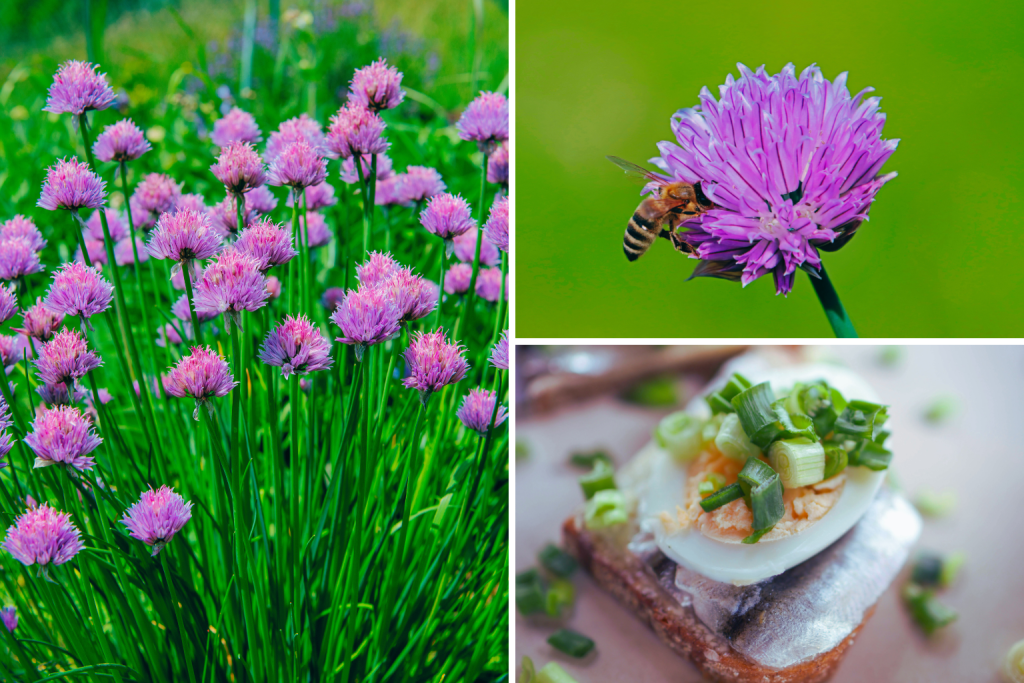
Chives (Allium schoenoprasum) Datasheet
-
Common Name: Chives, Flowering Onion, Wild Chives
-
Scientific Name: Allium schoenoprasum
-
Family: Amaryllidaceae (formerly Alliaceae/Liliaceae)
-
Origin: Native across Europe, Asia, and North America
-
Zone Hardiness: USDA Zones 3–10; perennial
-
Light Requirements: Full sun to light shade
-
Water Needs: Moderate—keep soil evenly moist; drought-tolerant once established
-
Soil Preferences: Well-drained, fertile loamy soil; pH 6.0–7.0
-
"Ponics" Compatibility:
• Aquaponics: Very compatible
• Aeroponics: Compatible
• Hydroponics: Compatible
• Preferred Method: Media-bed or nutrient film technique; ensure light and drainage -
Growth Habit: Clumping perennial with hollow, grass-like leaves; forms bulbs; flower umbels in spring
-
Height & Spread: 12–24″ tall; 12–24″ wide
-
Time from Germination to Harvest: Leaves ~60 days; flowers ~90 days
-
Flowering Time: Mid-spring to early summer; blooms produce attractive white/pink to lavender umbels
-
Edible Parts: Leaves (snipped), flowers, bulbs (mild onion flavor)
-
Medicinal Uses: Mild antimicrobial, digestive aid, appetite stimulant, potential antihypertensive
-
Companion Plants: Excellent with carrots, tomatoes, lettuce, peas; repels pests; attracts pollinators
-
Pest & Disease Resistance: Few pests; may suffer bulb mites or rust in poor drainage; deer/rabbit resistant
-
Harvest Time: Snip leaves 2″ above soil; flower buds harvested before opening have milder flavor; divide every 2–3 years
-
Propagation Methods: Seed (thin to 4–6″) or division of clumps every few years
-
Sustainability Features: Perennial, supports pollinators, low-maintenance, self-seeding; excellent ground cover/edge plant
-
Culinary Uses: Garnish for soups, salads, eggs, potatoes, cheeses; flowers used in salads and herb butter
-
Fun Fact: Chives are the only Allium species native to both the Old and New Worlds; name derived from French “cive” and Greek meaning “rush leek”
Common Chives (Allium schoenoprasum)
Flavor Profile: Delicate, mild onion flavor, slightly sweet.
Culinary Uses: Ideal for garnishes—soups, salads, eggs, potatoes.
Notes: Classic hollow-leaf chive with lavender flower umbels; clumping habit.
Planting Tip: Divide every 2–3 years; cut stems at 2″ above soil to encourage regrowth.
Days to Maturity: ~60 days for harvestable leaves gardening.cornell.edu+15blogs.ifas.ufl.edu+15greg.app+15
Fernleaf (Allium schoenoprasum 'Fernleaf')
Flavor Profile: Mild and delicate, similar to common chives.
Culinary Uses: Lovely in containers; perfect for garnishes and soups.
Notes: Compact variety (~18 in tall), slow to bolt, ideal for consistent harvests.
Planting Tip: Plant densely in pots or garden beds; frequent harvesting enhances foliage production.
Days to Maturity: ~40–60 days
Greensleeves (Allium schoenoprasum 'Greensleeves')
Flavor Profile: Same mild onion taste, rich green color.
Culinary Uses: Perfect for containers, pickling, and fresh use.
Notes: Compact and uniform at ~18 in tall; attractive dark green foliage.
Planting Tip: Harvest early and often to extend growing period.
Days to Maturity: ~40–60 days
Staro (Allium schoenoprasum 'Staro')
Flavor Profile: Classic chive taste, sturdy texture.
Culinary Uses: Great for mass harvesting, freezing, and culinary prep.
Notes: Heavier, thicker leaves; developed for greenhouse and processing.
Planting Tip: Use in raised beds or containers; regular harvesting keeps foliage dense.
Days to Maturity: ~60 days
Nelly (Allium schoenoprasum 'Nelly')
Flavor Profile: Traditional mild onion-chive flavor.
Culinary Uses: Versatile—soups, omelets, salads.
Notes: Fine-to-medium blue-green leaves; upright, tidy habit.
Planting Tip: Performs well in containers with regular harvesting.
Days to Maturity: ~60 days
Profusion® (Allium schoenoprasum 'Profusion')
Flavor Profile: Mild, fresh chive flavor.
Culinary Uses: Great in gardens, containers, and floral garnishes.
Notes: Sterile flowers (no seeds), prolific blooms and foliage.
Planting Tip: Ideal for indoor/outdoor pots; deadheading not required due to sterile blooms.
Days to Maturity: ~60 days
Garlic Chives (Allium tuberosum)
Flavor Profile: Bold garlic-onion taste.
Culinary Uses: Excellent in stir-fries, dumplings, and Asian dishes.
Notes: Flat, strap-like leaves and white flowers; forms perennial clumps.
Planting Tip: Cut flower stalks to prevent self-seeding; spreads via rhizomes.
Days to Maturity: ~60 days for leaves; seeds later
Chinese Chives 'Kobold' (Allium tuberosum 'Kobold')
Flavor Profile: Garlicy and strong.
Culinary Uses: Perfect for dumplings, stir-fries, savory pancakes.
Notes: Dwarf Chinese chive with compact growth; ideal for container gardens.
Planting Tip: Grow in full sun; spacing ~8–12″ for a dense mound.
Days to Maturity: ~60 days
Siberian Chives (Allium nutans)
Flavor Profile: Mild onion-chive flavor, similar to common chives.
Culinary Uses: Great garnish; edible bluish flowers add color.
Notes: Tall (up to 2 ft), flat leaves with purple-blue umbels.
Planting Tip: Use as ornamental accent in herb borders or pollinator gardens.
Days to Maturity: ~60 days
🌱 Varieties Overview
| Variety | Leaf Type | Height | Strength | Best Use |
|---|---|---|---|---|
| Common | Hollow | 12–24″ | Mild | Everyday garnishing |
| Fernleaf / Nelly | Hollow | ~18″ | Mild | Containers, frequent harvest |
| Staro / Profusion | Hollow | ~20–24″ | Mild | Processing, sterile bloom beds |
| Garlic Chives | Flat | 12–18″ | Strong | Asian dishes & stronger flavor |
| Chinese 'Kobold' | Flat | ~12″ | Strong | Containers, dumplings, stir-fries |
| Siberian | Flat | ~24″ | Mild | Ornament & edible flowers |
Audio
Video
- Text Reading
12
Cilantro / Coriander (Coriandrum sativum)
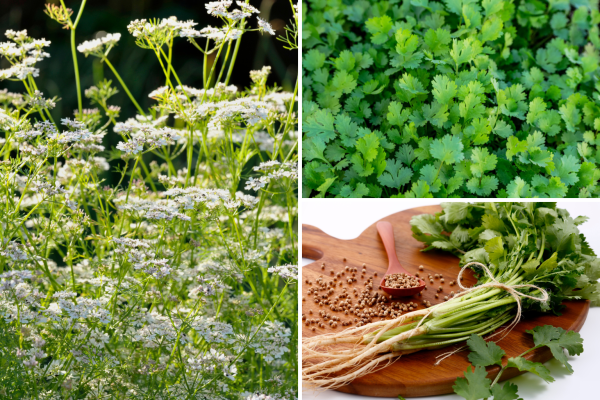
Cilantro / Coriander (Coriandrum sativum) Datasheet
Common Name: Cilantro (leaves), Coriander (seeds)
Scientific Name: Coriandrum sativum
Family: Apiaceae
Origin: Eastern Mediterranean and Southern Europe
Zone Hardiness: USDA Zones 2–11
Light Requirements: Full sun to partial shade; requires 6–8 hours of sunlight daily
Water Needs: Moderate; approximately 1 inch (2.5 cm) per week
Soil Preferences: Well-drained, fertile loamy or sandy soil with pH between 6.2 and 6.8
"Ponics" Compatibility:
-
Aquaponics: Fairly compatible
-
Aeroponics: Fairly compatible
-
Hydroponics: Fairly compatible
-
Preferred Method: Deep Water Culture (DWC) and Nutrient Film Technique (NFT); requires temperature control to prevent bolting
Growth Habit: Upright annual herb
Height & Spread: Height: 10–24 inches (25–60 cm); Spread: 8–12 inches (20–30 cm)
Time from Germination to Harvest: Leaves: 30–45 days; Seeds: 90–120 days
Flowering Time: Late spring to early summer
Edible Parts: Leaves, stems, seeds, and roots
Medicinal Uses: Traditionally used to alleviate gastrointestinal discomfort, respiratory issues, and urinary complaints
Companion Plants: Legumes (e.g., beans, peas), potatoes, and lupines
Pest & Disease Resistance: Susceptible to aphids and fungal diseases like Septoria leaf spot; crop rotation and proper spacing recommended
Harvest Time: Harvest leaves before flowering; seeds when they turn brown. Store leaves in a jar with water in the refrigerator for up to a few days; seeds can be dried and stored in airtight containers
Propagation Methods: Primarily by seed; seeds germinate in 7–21 days. Direct sowing recommended due to sensitivity to transplanting
Sustainability Features: Attracts beneficial insects; can act as a trap crop for aphids; contributes to soil health when used in crop rotation
Culinary Uses: Leaves used in salsas, curries, and salads; seeds used in spice blends, pickling, and baking; roots used in Thai cuisine
Fun Fact: Coriander seeds are one of the key botanicals used to flavor gin
Santo (Coriandrum sativum 'Santo')
-
Flavor Profile: Classic cilantro flavor with a hint of citrus.
-
Culinary Uses: Widely used in Mexican and Asian cuisines; leaves for fresh dishes, seeds for spices.
-
Notes: Slow to bolt; suitable for warmer climates.
Calypso (Coriandrum sativum 'Calypso')
-
Flavor Profile: Mild and sweet.
-
Culinary Uses: Ideal for salads and garnishes.
-
Notes: Slow-bolting variety; good for extended leaf harvest.
Confetti (Coriandrum sativum 'Confetti')
-
Flavor Profile: Milder than common cilantro.
-
Culinary Uses: Decorative garnishes; subtle flavor addition.
-
Notes: Finely divided, dill-like foliage; unique appearance.
Delfino (Coriandrum sativum 'Delfino')
-
Flavor Profile: Similar to standard cilantro.
-
Culinary Uses: Garnishes and salads.
-
Notes: Fern-like leaves; ornamental appeal.
Leisure (Coriandrum sativum 'Leisure')
-
Flavor Profile: Traditional cilantro taste.
-
Culinary Uses: Versatile; used in various dishes.
-
Notes: Slow to bolt; reliable for continuous harvest.
Long Standing (Coriandrum sativum 'Long Standing')
-
Flavor Profile: Robust and aromatic.
-
Culinary Uses: Suitable for cooking and fresh use.
-
Notes: Resists bolting; extended harvesting period.
Marino (Coriandrum sativum 'Marino')
-
Flavor Profile: Spicy and intense.
-
Culinary Uses: Adds depth to dishes.
-
Notes: Strong leaf growth; high yield.
Moroccan (Coriandrum sativum 'Moroccan')
-
Flavor Profile: Bold and citrusy.
-
Culinary Uses: Common in Moroccan cuisine.
-
Notes: Early flowering; good for seed production.
Pokey Joe (Coriandrum sativum 'Pokey Joe')
-
Flavor Profile: Rich and complex.
-
Culinary Uses: Enhances flavor in various recipes.
-
Notes: Slow to bolt; rare variety.
Rak Tamachat (Coriandrum sativum 'Rak Tamachat')
-
Flavor Profile: Mild and pleasant.
-
Culinary Uses: Suitable for fresh consumption.
-
Notes: Large leaves; collected from Thailand.
Standby (Coriandrum sativum 'Standby')
-
Flavor Profile: Traditional cilantro flavor.
-
Culinary Uses: Versatile in cooking.
-
Notes: Cold-hardy; suitable for fall sowing.
Sunmaster (Coriandrum sativum 'Sunmaster')
-
Flavor Profile: Classic cilantro taste.
-
Culinary Uses: Used in various cuisines.
-
Notes: Heat-tolerant; slow to bolt.
Caribe (Coriandrum sativum 'Caribe')
-
Flavor Profile: Strong and pungent.
-
Culinary Uses: Ideal for robust dishes.
-
Notes: High leaf yield; vigorous growth.
Dwarf Lemon (Coriandrum sativum 'Dwarf Lemon')
-
Flavor Profile: Lemony aroma.
-
Culinary Uses: Adds citrus notes to dishes.
-
Notes: Compact growth; suitable for containers.
Cilantro Macho (Coriandrum sativum var. vulgare)
-
Flavor Profile: Bold and intense.
-
Culinary Uses: Enhances spicy dishes.
-
Notes: Robust variety; higher heat tolerance.
Coriandrum sativum var. microcarpum
-
Flavor Profile: Traditional coriander seed flavor.
-
Culinary Uses: Seed production; spices.
-
Notes: Smaller seeds; grown in cooler climates.
Coriandrum sativum var. macrocarpum
-
Flavor Profile: Traditional coriander seed flavor.
-
Culinary Uses: Seed production; spices.
-
Notes: Larger seeds; suited for warmer climates.
Vietnamese Coriander (Persicaria odorata)
-
Flavor Profile: Spicy and peppery.
-
Culinary Uses: Common in Southeast Asian dishes.
-
Notes: Not a true cilantro; perennial in warm climates.
Culantro (Eryngium foetidum)
-
Flavor Profile: Stronger than cilantro.
-
Culinary Uses: Used in Caribbean and Asian cuisines.
-
Notes: Heat-tolerant; different species from cilantro.
Papalo (Porophyllum ruderale)
-
Flavor Profile: Bold and complex.
-
Culinary Uses: Mexican dishes; salsas.
-
Notes: Distinct from cilantro; thrives in hot weather.
Audio
Video
- Text Reading
13
Cucumber (Cucumis sativus)

Cucumber (Cucumis sativus) Datasheet
-
Common Name: Cucumber
-
Scientific Name: Cucumis sativus
-
Family: Cucurbitaceae
-
Origin: Native to South Asia; domesticated in India over 3,000 years ago
-
Zone Hardiness: USDA Zones 4–12 (grown as a warm-season annual)
-
Light Requirements: Full sun; needs 6–8 hours of direct sunlight per day
-
Water Needs: High; 1–2 inches per week with consistent moisture—especially during flowering and fruiting
-
Soil Preferences: Loose, well-draining sandy loam with high organic matter; pH 6.0–7.0
-
"Ponics" Compatibility:
- Aquaponics: Very compatible
- Aeroponics: Fairly compatible
- Hydroponics: Very compatible
- Preferred Method: Vertical NFT or trellised DWC for efficient space use; Dutch bucket systems for heavier fruit loads -
Growth Habit: Fast-growing annual vine; can be determinate (bush) or indeterminate (vining); monoecious (male and female flowers) or gynoecious (only female flowers)
-
Height & Spread: Height (trellised): 4–6 ft; Spread: 2–6 ft depending on variety and training
-
Time from Germination to Harvest: 50–70 days, depending on cultivar
-
Flowering Time: 4–6 weeks after germination; yellow star-shaped flowers
-
Edible Parts: Fruit (botanically a pepo); skin, flesh, and seeds are all edible
-
Medicinal Uses: Hydrating, diuretic, anti-inflammatory; traditionally used for cooling skin, eye treatments, and minor burns
-
Companion Plants: Corn, beans, peas, lettuce, radish, dill, marigolds; avoid potatoes and aromatic herbs like sage
-
Pest & Disease Resistance: Prone to powdery mildew, cucumber beetles, aphids, downy mildew, mosaic virus; resistant cultivars available; rotating crops, row covers, and trellising help prevention
-
Harvest Time: Harvest young when firm and green, before seeds mature; pick daily to encourage continuous production; refrigerate up to 1 week
-
Propagation Methods: By seed; direct sow or transplant seedlings; germinates in 3–10 days in warm soil (70–95°F)
-
Sustainability Features: Fast-growing; trellising increases yield and airflow; beneficial for pollinator activity; compatible with intercropping systems
-
Culinary Uses: Fresh eating, pickling, salads, cold soups (like tzatziki), juices, and fermented as traditional pickles
-
Fun Fact: Cucumbers are 95% water—making them one of the most hydrating garden vegetables
Marketmore 76
Flavor Profile: Mild, crisp, and slightly sweet.
Culinary Uses: Ideal for slicing, salads, and fresh eating.
Notes: Classic open-pollinated heirloom; dark green 8″ fruits with good disease resistance.
Planting Tip: Trellis for straight fruits and improved airflow.
Days to Maturity: ~65–70 days
Straight Eight
Flavor Profile: Crunchy and refreshing.
Culinary Uses: Excellent all-purpose slicer.
Notes: Heirloom variety with uniform, straight fruits about 8″ long.
Planting Tip: Best grown in full sun with consistent watering.
Days to Maturity: ~60–65 days
Boston Pickling
Flavor Profile: Firm and slightly tangy when pickled.
Culinary Uses: Made for pickling—classic small cuke.
Notes: Heirloom dating back to the 1800s; 3–6″ fruits.
Planting Tip: Pick frequently to encourage continual fruiting.
Days to Maturity: ~55–60 days
National Pickling
Flavor Profile: Crunchy, tangy, and great for brines.
Culinary Uses: Traditional pickles, fermented or vinegar-based.
Notes: Developed by USDA for commercial pickling; blocky, tapered ends.
Planting Tip: Great for container gardens and intensive plantings.
Days to Maturity: ~50–58 days
Lemon Cucumber
Flavor Profile: Sweet, mild, almost citrusy.
Culinary Uses: Fresh eating, salads, and decorative garnish.
Notes: Round yellow fruits the size of a lemon; heirloom and very prolific.
Planting Tip: Trellis to avoid blemishes on delicate skin.
Days to Maturity: ~65–70 days
Armenian Cucumber (Yard-long Cuke)
Flavor Profile: Mild and crisp with tender skin.
Culinary Uses: Best raw in salads or spiralized.
Notes: Technically Cucumis melo but grown like cucumbers; long, ribbed fruit can reach 24″+.
Planting Tip: Requires warmth and space; trellis to prevent curling.
Days to Maturity: ~70–75 days
Tasty Green (Burpless Hybrid)
Flavor Profile: Smooth, mild, and easy on digestion.
Culinary Uses: Great raw, in wraps, or on sandwiches.
Notes: Thin skin, no bitterness, and excellent texture.
Planting Tip: Performs well in greenhouses or warm climates.
Days to Maturity: ~55 days
Bush Champion
Flavor Profile: Standard crisp cucumber flavor.
Culinary Uses: Good for fresh eating and slicing.
Notes: Compact bush habit; great for patios and containers.
Planting Tip: Avoid overhead watering to reduce mildew risk.
Days to Maturity: ~55 days
Cucumber Cultivar Comparison Table
| Variety | Type | Growth Habit | Fruit Length | Key Features | Days to Maturity |
|---|---|---|---|---|---|
| Marketmore 76 | Slicing | Vining | 8″ | Heirloom, disease-resistant | ~65–70 |
| Straight Eight | Slicing | Vining | 8″ | Uniform straight fruit | ~60–65 |
| Boston Pickling | Pickling | Vining | 3–6″ | Heirloom, prolific | ~55–60 |
| National Pickling | Pickling | Semi-bush | 5–6″ | USDA-bred, blocky shape | ~50–58 |
| Lemon Cucumber | Specialty | Vining | 3″ round | Yellow skin, sweet flavor | ~65–70 |
| Armenian Cucumber | Specialty | Vining | 18–24″ | Ribbed, not true cucumber | ~70–75 |
| Tasty Green | Burpless | Vining | 8–10″ | Thin skin, mild flavor | ~55 |
| Bush Champion | Slicing | Bush | 8″ | Container-friendly | ~55 |
Audio
Video
- Text Reading
14
Dill (Anethum graveolens)

Dill (Anethum graveolens) Datasheet
-
Common Name: Dill
-
Scientific Name: Anethum graveolens
-
Family: Apiaceae
-
Origin: Native to North Africa, Western Asia, Mediterranean region
-
Zone Hardiness: USDA Zones 3–10; annual
-
Light Requirements: Full sun (6–8 hr/day); tolerates light afternoon shade in heat
-
Water Needs: Moderate—keep soil evenly moist (~1–2″/week); avoid waterlogging
-
Soil Preferences: Well-drained sandy or loamy soil, slightly acidic pH 5.8–6.5
-
"Ponics" Compatibility:
• Aquaponics: Very compatible
• Aeroponics: Compatible
• Hydroponics: Compatible
• Preferred Method: Nutrient Film Technique (NFT) or media-bed; maintain EC 1.0–1.6, pH 5.5–6.4 -
Growth Habit: Erect annual herb with finely divided, fern-like foliage and hollow stems; taprooted
-
Height & Spread: 18″–48″ (45–120 cm) tall; ~12–36″ (30–90 cm) spread
-
Time from Germination to Harvest: Leaves in ~40–60 days; seed umbels in ~70–90 days
-
Flowering Time: Mid to late summer; umbels of yellow flowers; seed production follows
-
Edible Parts: Foliage (dill weed), flower heads, seeds
-
Medicinal Uses: Carminative and digestive aid; traditionally used for colic and gas; essential oil used for antimicrobial properties
-
Companion Plants: Excellent with cucumbers, cabbage, lettuce, onions; attracts beneficial insects; avoid planting near carrots or potatoes
-
Pest & Disease Resistance: Attracts predators of pests; may host swallowtail caterpillars; susceptible to aphids, fungal diseases—ensure airflow
-
Harvest Time:
-
Leaves: Harvest regularly before flowering; cut sprigs leaving ⅓ of plant to encourage regrowth
-
Seeds: Harvest umbels when seeds mature and turn brown; dry in paper bag
-
-
Propagation Methods: Direct‐seed ¼″ deep; germination in 7–21 days; thin to 9–12″ apart; sow every 4–6 weeks for continuous harvest
-
Sustainability Features: Self‑sows readily; supports pollinators and beneficial insects; deep taproot loosens soil
-
Culinary Uses: Essential for pickles, gravlax, soups, salads, sauces; seeds used in bread, pickling spice; leaves best fresh
-
Fun Fact: Dill was found in Egyptian tombs (~1400 BC); the name derives from an Anglo-Saxon word meaning "to lull" due to its soothing properties
Bouquet (Anethum graveolens 'Bouquet')
Flavor Profile: Classic dill aroma—bright, slightly tangy, aromatic.
Culinary Uses: All-purpose: ideal for pickling, fresh use in salads, soups, fish dishes, and drying.
Notes: Tall (2–3 ft), dark blue-green foliage with large yellow flower umbels; excellent seed production
Planting Tip: Direct sow after frost in full sun; thin to ~10 in apart and succession plant for continuous harvest.
Days to Maturity: Leaves ~40–60 days; seeds ~85–100 days
Fernleaf (Anethum graveolens 'Fernleaf')
Flavor Profile: Milder, delicate dill flavor with finely cut foliage.
Culinary Uses: Best for garnishes, container growing, and soups.
Notes: Compact (~18 in tall), slow to bolt; All-American Selections 1992 winner .
Planting Tip: Ideal for pots; sow densely and harvest leaves frequently for fuller growth.
Days to Maturity: ~40–60 days
Dukat (Anethum graveolens 'Dukat')
Flavor Profile: Strong, sweet dill flavor with hint of anise.
Culinary Uses: Excellent for pickling, sauces, and robust flavor dishes.
Notes: Medium height, blue-green foliage; later flowering for extended leaf harvest .
Planting Tip: Sow early for spring leaves; pinch flowers to delay bolting.
Days to Maturity: Leaves ~50–60 days; seeds later
Superdukat (Anethum graveolens 'Superdukat')
Flavor Profile: Intensely aromatic with classic dill fragrance.
Culinary Uses: Great for fresh leaves, pickling, and heavy foliage use.
Notes: Tall (4–5 ft), uniform growth; slower bolting than Bouquet; high oil content .
Planting Tip: Needs support in windy areas; ideal for cutting gardens.
Days to Maturity: Leaves 40–50 days; seeds 90–100 days
Tetra / Dukat (synonym) (Anethum graveolens 'Tetra')
Flavor Profile: Complex dill-fennel blend—rich and aromatic.
Culinary Uses: Savory salads, sauces, and mixed herb blends.
Notes: Reaches 25–32 in tall; upright and bushy; slow-bolting trait .
Planting Tip: Provide 12 in spacing; regular cuttings help delay flowering.
Days to Maturity: ~50–70 days for leaves; later for seeds
Hercules (Anethum graveolens 'Hercules')
Flavor Profile: Robust, slightly coarser dill—best picked when young.
Culinary Uses: Ideal for pickles and hearty dishes; seeds ideal for preservation.
Notes: Up to 5 ft tall; tetraploid variety bred for foliage yield and slow bolting .
Planting Tip: Stake tall plants; early thinning ensures straight growth.
Days to Maturity: ~60–70 days; seeds later
Long Island Mammoth (Anethum graveolens 'Long Island Mammoth')
Flavor Profile: Strong dill aroma with large seed heads.
Culinary Uses: Excellent for pickling, tea, and culinary décor.
Notes: Heirloom cultivar, up to 5 ft tall; wide-spread, best for fresh cut herbs .
Planting Tip: Grow in back of garden beds; provides visual height and seed umbels.
Days to Maturity: ~60–80 days
Greensleeves (Anethum graveolens 'Greensleeves')
Flavor Profile: Classic dill—rich, fragrant, dark green.
Culinary Uses: Perfect for containers, fresh leaves, and pickling.
Notes: Compact, dark-green foliage, slow to bolt (~18 in tall) .
Planting Tip: Excellent for window boxes or indoor planters; regular harvesting extends growth.
Days to Maturity: ~40–60 days
🌱 Variety Comparison Snapshot
| Variety | Habit | Height | Best Use | Bolting Speed |
|---|---|---|---|---|
| Fernleaf | Compact, container | ~18″ | Garnish, container | Slow |
| Greensleeves | Compact | ~18″ | Containers, pickling | Medium-slow |
| Bouquet | Mid-height | 24–30″ | All-purpose & cut flowers | Medium |
| Dukat / Tetra | Mid-tall, flavorful | ~30″ | Pickling, cooking | Slow |
| Superdukat | Tall, high yield | 54–60″ | Cutting & leaf harvest | Slow |
| Hercules | Very tall | ~60″ | Seed & foliage yield | Slow |
| Long Island Mammoth | Very tall | ~60″ | Heirloom pickling/salad | Medium |
Audio
Video
- Text Reading
15
Echinacea (Echinacea purpurea)

Echinacea (Echinacea purpurea)
-
Common Name: Purple Coneflower, Eastern Purple Coneflower
-
Scientific Name: Echinacea purpurea
-
Family: Asteraceae
-
Origin: Native to eastern and central North America, including the Ozarks, Mississippi Valley, and Ohio Valley
-
Zone Hardiness: USDA Zones 3–9
-
Light Requirements: Full sun; tolerates light shade
-
Water Needs: Moderate; drought-tolerant once established
-
Soil Preferences: Prefers well-drained loamy soil; adaptable to various soil types and pH levels
-
"Ponics" Compatibility:
-
Aquaponics: Fairly compatible
-
Aeroponics: Fairly compatible
-
Hydroponics: Fairly compatible
-
Preferred Method: Best suited for soil-based systems; however, can be adapted to media bed systems with proper support
-
-
Growth Habit: Herbaceous perennial; upright growth
-
Height & Spread: Height: 2–5 feet (60–150 cm); Spread: 1.5–2 feet (45–60 cm)
-
Time from Germination to Harvest: 90–120 days for flowering; roots are typically harvested in the fall of the second or third year
-
Flowering Time: Mid to late summer; blooms last several weeks
-
Edible Parts: Roots, leaves, and flowers are used medicinally; not commonly consumed as food
-
Medicinal Uses: Traditionally used to treat respiratory infections, toothaches, and snakebites; modern uses include immune support and reducing symptoms of colds and flu
-
Companion Plants: Pairs well with other native wildflowers like Black-eyed Susan, Bee Balm, and Butterfly Weed; attracts pollinators
-
Pest & Disease Resistance: Generally resistant to pests; may be susceptible to aphids and powdery mildew in humid conditions
-
Harvest Time: Roots are harvested in the fall after the plant has gone dormant; flowers can be harvested during full bloom; dry roots and flowers for storage
-
Propagation Methods: Propagated by seeds, division, or root cuttings; seeds may require stratification for better germination
-
Sustainability Features: Attracts pollinators such as bees and butterflies; provides seeds for birds; contributes to biodiversity in native plant gardens
-
Culinary Uses: Not commonly used in cooking; primarily used in teas, tinctures, and supplements for medicinal purposes
-
Fun Fact: The genus name "Echinacea" is derived from the Greek word "echinos," meaning hedgehog, referencing the spiny central disk of the flower
Echinacea purpurea 'Magnus'
-
Flower Color: Deep pink with horizontal petals.
-
Bloom Time: Mid to late summer.
-
Notes: An award-winning cultivar known for its large, non-drooping petals and robust growth habit.
Echinacea 'Cheyenne Spirit'
-
Flower Color: Mix of red, orange, yellow, cream, and purple.
-
Bloom Time: June to August.
-
Notes: A seed-grown hybrid offering a vibrant mix of colors on a single plant; attracts pollinators.
Echinacea tennesseensis 'Rocky Top'
-
Flower Color: Pink with upward-facing petals.
-
Bloom Time: June to August.
-
Notes: A compact cultivar of the rare Tennessee coneflower; prefers full sun and well-drained soil.
Echinacea 'Sombrero Poco Hot Coral'
-
Flower Color: Bright coral-orange.
-
Bloom Time: Late spring to late summer.
-
Notes: Part of the Sombrero series; known for its vivid color and compact size, making it suitable for small gardens.
Echinacea purpurea 'Pow Wow White'
-
Flower Color: Pure white.
-
Bloom Time: June to August.
-
Notes: A compact variety with prolific blooming; ideal for contrasting with brightly colored plants.
Echinacea purpurea 'Prairie Splendor Deep Rose'
-
Flower Color: Deep rose-pink.
-
Bloom Time: June to August.
-
Notes: Early blooming and compact; excellent for extended color in the garden.
Echinacea pallida
-
Flower Color: Pale pink with drooping petals.
-
Bloom Time: Early to mid-summer.
-
Notes: Native species with slender petals; attracts a variety of pollinators and is drought-tolerant once established.
Echinacea purpurea 'White Swan'
-
Flower Color: White petals with a greenish center.
-
Bloom Time: June to August.
-
Notes: A white-flowered cultivar of the purple coneflower; offers a serene color option for perennial borders.
Echinacea 'Green Jewel'
-
Flower Color: Lime green.
-
Bloom Time: Mid to late summer.
-
Notes: Unique green petals with a central cone; adds an unusual hue to garden palettes.
Echinacea 'Hot Papaya'
-
Flower Color: Fiery orange-red, double blooms.
-
Bloom Time: Summer.
-
Notes: A double-flowered variety with vibrant color; stands out in mixed borders.
Echinacea 'Raspberry Truffle'
-
Flower Color: Pink with a double center.
-
Bloom Time: Summer.
-
Notes: Features a pom-pom center with downward petals; adds texture and interest.
Echinacea 'Razzmatazz'
-
Flower Color: Deep pink, double blooms.
-
Bloom Time: July to August.
-
Notes: One of the first double-flowered coneflowers; offers a full, ruffled appearance.
Echinacea 'Ruby Giant'
-
Flower Color: Rich ruby-red.
-
Bloom Time: Summer.
-
Notes: Large blooms with intense color; attracts butterflies and bees.
Echinacea 'Avalanche'
-
Flower Color: White.
-
Bloom Time: Summer.
-
Notes: Noted for its pure white petals and strong stems; excellent for cut flowers.
Echinacea 'Double Scoop Cranberry'
-
Flower Color: Deep cranberry-red, double blooms.
-
Bloom Time: Summer.
-
Notes: Offers a rich color and full flower form; adds depth to garden designs.
Echinacea 'Tomato Soup'
-
Flower Color: Bright tomato-red.
-
Bloom Time: Summer.
-
Notes: Vibrant red petals with a large central cone; a standout in any garden.
Echinacea 'Mango Meadowbrite'
-
Flower Color: Mango-orange.
-
Bloom Time: Summer.
-
Notes: Offers a tropical hue; part of the Meadowbrite series known for unique colors.
Echinacea 'Greenline'
-
Flower Color: Green.
-
Bloom Time: Summer.
-
Notes: Unusual green petals; provides a distinctive look in perennial plantings.
Echinacea 'Firebird'
-
Flower Color: Red-orange.
-
Bloom Time: Summer.
-
Notes: Bright, fiery petals; attracts hummingbirds and butterflies.
Echinacea 'Sensation Pink'
-
Flower Color: Vibrant pink.
-
Bloom Time: Summer.
-
Notes: Noted for its vivid color and strong performance in trials.
Echinacea 'Glowing Dream'
-
Flower Color: Bright coral-pink.
-
Bloom Time: Summer.
-
Notes: Offers glowing color and robust growth; performs well in various conditions.
Echinacea 'Frankly Scarlet'
-
Flower Color: Bright scarlet-red.
-
Bloom Time: Summer.
-
Notes: Part of the Color Coded® series; known for its intense color and uniform habit.
Echinacea 'Knock 'em Red'
-
Flower Color: Deep red.
-
Bloom Time: Summer.
-
Notes: Offers bold color and strong stems; ideal for cutting gardens.
Echinacea 'One in a Melon'
-
Flower Color: Melon-orange.
-
Bloom Time: Summer.
-
Notes: Unique color adds a fresh look; part of the Color Coded® series.
Echinacea 'Orange You Awesome'
-
Flower Color: Bright orange.
-
Bloom Time: Summer.
-
Notes: Vibrant color with a compact growth habit; excellent for containers.
Echinacea 'The Fuchsia is Bright'
-
Flower Color: Bright fuchsia-pink.
-
Bloom Time: Summer.
-
Notes: Eye-catching color; attracts pollinators and adds brightness to gardens.
Echinacea 'The Price is White'
-
Flower Color: Pure white.
-
Bloom Time: Summer.
-
Notes: Clean white petals with a greenish center; part of the Color Coded® series.
Echinacea 'Yellow My Darling'
-
Flower Color: Soft yellow.
-
Bloom Time: Summer.
-
Notes: Gentle yellow hue; provides a soothing color palette.
Echinacea 'Everything's Rosy'
-
Flower Color: Rosy pink, double blooms.
-
Bloom Time: Summer.
-
Notes: Part of the Double Coded® series; offers full, lush flowers.
Echinacea 'Butter Pecan'
-
Flower Color: Soft buttery-yellow, double blooms.
-
Bloom Time: Summer.
-
Notes: Creamy color with a double flower form; adds elegance to plantings.
Echinacea 'Coral Cranberry'
-
Flower Color: Coral-pink, double blooms.
-
Bloom Time: Summer.
-
Notes: Rich color and full petals; part of the Double Coded® series.
Echinacea 'Raspberry Beret'
-
Flower Color: Raspberry-pink, double blooms.
-
Bloom Time: Summer.
-
Notes: Deep pink color with a full flower form; attracts pollinators.
Echinacea 'Summersong Firefinch'
-
Flower Color: Fiery red-orange.
-
Bloom Time: Summer.
-
Notes: Bright color with a compact habit; suitable for small spaces.
Echinacea 'Ruby Glow'
-
Flower Color: Bright pink with orange-red center.
-
Bloom Time: Summer.
-
Notes: Vibrant color combination; adds a pop to garden beds.
Audio
Video
- Text Reading
16
Eggplant (Solanum melongena)

Eggplant (Solanum melongena) Datasheet
-
Common Name: Eggplant
-
Scientific Name: Solanum melongena
-
Family: Solanaceae
-
Origin: Native to India and Southeast Asia
-
Zone Hardiness: USDA Zones 9–12 (grown as annual in cooler zones)
-
Light Requirements: Full sun; minimum 6–8 hours of direct sunlight daily
-
Water Needs: Moderate to high; consistent moisture without waterlogging; 1–1.5 inches per week
-
Soil Preferences: Well-drained loamy or sandy soil with a pH of 5.5–6.8; benefits from warm soil and rich organic content
-
"Ponics" Compatibility:
- Aquaponics: Very compatible
- Aeroponics: Compatible with support and temperature control
- Hydroponics: Very compatible
- Preferred Method: Dutch Bucket or DWC systems with support; thrives with warm temperatures and nutrient stability -
Growth Habit: Tender perennial grown as a warm-season annual; upright bushy habit
-
Height & Spread: Height: 2–4 feet; Spread: 1.5–3 feet depending on variety
-
Time from Germination to Harvest: 80–100 days from seed; 60–75 days from transplant
-
Flowering Time: Begins 6–8 weeks after transplanting; lavender to violet star-shaped flowers
-
Edible Parts: Fruit is edible; skin, flesh, and immature seeds are consumed
-
Medicinal Uses: Contains nasunin (a potent antioxidant in the skin), helps lower cholesterol, supports brain health, and aids in blood sugar control
-
Companion Plants: Beans, peppers, marigolds, spinach, and thyme; avoid fennel and potatoes
-
Pest & Disease Resistance: Prone to flea beetles, spider mites, aphids, Colorado potato beetle, verticillium wilt, and blight; resistant cultivars and row covers are helpful
-
Harvest Time: Harvest when skin is glossy and fruit is firm but not hard; overripe fruits become bitter and dull
- Store at 50–55°F; do not refrigerate long-term; best used fresh or preserved by roasting and freezing -
Propagation Methods: Grown from seed; start indoors 8–10 weeks before last frost; germinates in 7–14 days at 75–85°F
-
Sustainability Features: Can be integrated into polyculture beds; dense foliage shades soil, reducing evaporation; attracts pollinators and deters weeds when mulched
-
Culinary Uses: Roasted, grilled, stir-fried, baked (e.g. eggplant parmesan), used in baba ghanoush, ratatouille, curries
-
Fun Fact: In Renaissance Europe, eggplants were nicknamed “mad apples” due to the belief they caused insanity
Black Beauty
Flavor Profile: Mild and creamy when cooked.
Culinary Uses: Classic for baking, frying, and eggplant parmesan.
Notes: Large, glossy purple-black fruit; heirloom introduced in the early 1900s.
Planting Tip: Requires warm soil and staking for large fruit support.
Days to Maturity: ~80 days
Rosa Bianca
Flavor Profile: Mild, sweet, and creamy texture.
Culinary Uses: Ideal for grilling and caponata.
Notes: Italian heirloom; round, lavender and white variegated fruit with minimal seeds.
Planting Tip: Needs ample spacing due to bushy growth.
Days to Maturity: ~85–90 days
Japanese Long
Flavor Profile: Tender, less bitter than large types.
Culinary Uses: Stir-frying, grilling, tempura.
Notes: Slender, dark purple fruits; very prolific and early producer.
Planting Tip: Harvest frequently to encourage continuous fruiting.
Days to Maturity: ~65–70 days
Ping Tung Long
Flavor Profile: Sweet and mild; skin is thin and edible.
Culinary Uses: Stir-fries, sautéed dishes, and curries.
Notes: Taiwanese heirloom; elongated lavender fruits up to 18″ long.
Planting Tip: Benefits from trellising or staking due to length.
Days to Maturity: ~70 days
Thai Green
Flavor Profile: Mild, nutty, and creamy.
Culinary Uses: Thai curries, sautéed dishes, grilling.
Notes: Pale green, elongated fruit; tender and productive.
Planting Tip: Provide high heat and regular feeding for best yield.
Days to Maturity: ~65–70 days
Fairy Tale
Flavor Profile: Delicate, sweet, with few seeds.
Culinary Uses: Small-fruit dishes, grilling whole, roasting.
Notes: Mini hybrid variety with purple and white stripes; ornamental and edible.
Planting Tip: Harvest early for best texture and ongoing yields.
Days to Maturity: ~55–60 days
Little Fingers
Flavor Profile: Rich and sweet; good skin texture.
Culinary Uses: Great for pickling, roasting, or grilling.
Notes: Small, thin fruits in clusters; very early and compact.
Planting Tip: Perfect for containers or small garden spaces.
Days to Maturity: ~60 days
Listada de Gandia
Flavor Profile: Sweet, mild, and low in bitterness.
Culinary Uses: Grilling, baking, and frying.
Notes: Spanish heirloom; white with violet streaks; highly ornamental.
Planting Tip: Needs consistent warmth and rich soil.
Days to Maturity: ~85 days
Eggplant Cultivar Comparison Table
| Variety | Type | Fruit Color | Fruit Size | Growth Habit | Days to Maturity | Best Use |
|---|---|---|---|---|---|---|
| Black Beauty | Globe | Deep purple-black | 6–8″ oval | Bushy | ~80 | Classic baking, frying |
| Rosa Bianca | Globe | Lavender/white mottled | 4–6″ round | Sprawling | ~85–90 | Grilling, Mediterranean dishes |
| Japanese Long | Asian | Dark purple | 8–10″ slender | Upright, prolific | ~65–70 | Stir-fry, grilling |
| Ping Tung Long | Asian | Light purple | Up to 18″ long | Tall | ~70 | Curries, stir-fry |
| Thai Green | Asian | Pale green | 8–10″ long | Upright | ~65–70 | Curries, grilling |
| Fairy Tale | Miniature | Purple w/ white stripes | 3–5″ slender | Compact | ~55–60 | Grilled whole, roasting |
| Little Fingers | Miniature | Glossy dark purple | 3–5″ clusters | Compact | ~60 | Pickling, roasting |
| Listada de Gandia | Heirloom | White w/ purple streaks | 5–7″ oval | Bushy | ~85 | Roasting, grilling |
Audio
Video
- Text Reading
17
Fennel (Foeniculum vulgare)

Fennel (Foeniculum vulgare) Datasheet
-
Common Name: Fennel
-
Scientific Name: Foeniculum vulgare
-
Family: Apiaceae
-
Origin: Native to the Mediterranean region
-
Zone Hardiness: USDA Zones 4–9 (grown as a perennial in warm zones; annual in colder climates)
-
Light Requirements: Full sun; requires 6–8+ hours of direct sunlight daily
-
Water Needs: Moderate; prefers evenly moist soil—about 1 inch per week
-
Soil Preferences: Well-drained, fertile loam with a pH between 6.0 and 7.0; benefits from compost-rich soil
-
"Ponics" Compatibility:
- Aquaponics: Fairly compatible
- Aeroponics: Fairly compatible with root support
- Hydroponics: Fairly compatible
- Preferred Method: Deep Water Culture (DWC) or media beds with good airflow and root anchoring -
Growth Habit: Herbaceous perennial (often grown as an annual); upright growth with feathery foliage and bulbous base (in Florence fennel)
-
Height & Spread: Height: 3–5 feet; Spread: 1.5–2 feet
-
Time from Germination to Harvest: Bulb: 80–100 days; Leaves: ~60 days; Seeds: 100–120 days
-
Flowering Time: Summer (typically July–August); produces umbrella-shaped yellow flowers
-
Edible Parts: Bulb, stalks, fronds (leaves), and seeds
-
Medicinal Uses: Traditionally used as a digestive aid, to relieve gas and bloating; seeds are carminative and mildly expectorant
-
Companion Plants: Dill, mint, and coriander should be avoided due to cross-pollination; best planted alone or with strong companions like lettuce or cucumber
-
Pest & Disease Resistance: Generally pest-resistant; can attract swallowtail caterpillars; watch for aphids and root rot in poorly drained soils
-
Harvest Time:
- Bulbs: Harvest when swollen, about tennis ball size
- Fronds: Snip as needed
- Seeds: Collect when umbels turn brown and dry
- Store bulbs in the fridge (up to 5 days); seeds can be dried and kept in airtight jars -
Propagation Methods: Grown from seed; direct sow preferred due to taproot sensitivity; germinates in 7–14 days
-
Sustainability Features: Attracts beneficial insects and pollinators; deep taproot breaks up soil; drought-tolerant once established
-
Culinary Uses: Bulbs are used raw (shaved) or cooked (roasted, braised); fronds are a fresh garnish; seeds flavor sausage, breads, teas, and pickles
-
Fun Fact: The ancient Greeks and Romans associated fennel with courage and strength—fennel stalks were used as victory symbols in athletic events
Florence Fennel (Foeniculum vulgare var. azoricum)
Flavor Profile: Sweet, mild anise flavor with a crisp texture.
Culinary Uses: Excellent raw in salads, roasted, or braised.
Notes: Grown for its enlarged bulb; bolt-resistant varieties are preferred for warmer climates.
Planting Tip: Sow in late summer for fall harvest in warm regions.
Days to Maturity: ~90 days
Bronze Fennel (Foeniculum vulgare ‘Purpureum’)
Flavor Profile: Licorice-like with a slightly more herbal and earthy tone.
Culinary Uses: Fronds used as garnish or in salads; seeds for seasoning.
Notes: Ornamental perennial with bronze-purple foliage; does not form a bulb.
Planting Tip: Excellent pollinator plant; grows well in herb borders.
Days to Maturity: ~75–90 days for foliage; seeds after flowering
Zefa Fino
Flavor Profile: Subtly sweet and crisp with mild licorice notes.
Culinary Uses: Raw or cooked; holds texture well during roasting.
Notes: Swiss-bred variety known for uniform, round bulbs and bolt resistance.
Planting Tip: Ideal for early planting; good for spring and fall harvest.
Days to Maturity: ~80–85 days
Perfection
Flavor Profile: Classic fennel flavor—crisp and aromatic.
Culinary Uses: Versatile in roasted dishes and slaws.
Notes: Uniform hybrid variety with compact growth; resistant to bolting.
Planting Tip: Good for succession sowing throughout the season.
Days to Maturity: ~80 days
Victorio
Flavor Profile: Clean, sweet flavor with tender texture.
Culinary Uses: Best for fresh eating or grilling.
Notes: Italian heirloom; forms small, tight bulbs quickly.
Planting Tip: Grows well in cooler climates; prefers rich soil.
Days to Maturity: ~70–75 days
Solaris
Flavor Profile: Mellow, clean anise flavor.
Culinary Uses: Ideal for slicing raw or sautéing.
Notes: High-yield hybrid for warm climates; slow to bolt.
Planting Tip: Thrives in raised beds or well-drained loose soil.
Days to Maturity: ~75–80 days
Fennel Cultivar Comparison Table
| Variety | Type | Bulb Forming | Foliage Color | Days to Maturity | Bolt Resistance | Best Use |
|---|---|---|---|---|---|---|
| Florence | Bulbing | Yes | Green | ~90 | Moderate | Roasting, salads |
| Bronze | Herbaceous | No | Bronze-purple | ~75–90 (fronds) | N/A | Garnish, pollinator plant |
| Zefa Fino | Bulbing | Yes | Green | ~80–85 | High | Roasting, slaws |
| Perfection | Hybrid Bulbing | Yes | Green | ~80 | High | Succession planting |
| Victorio | Heirloom | Yes | Green | ~70–75 | Moderate | Fresh, quick harvest |
| Solaris | Hybrid Bulbing | Yes | Green | ~75–80 | High | Warm climates, sautéing |
Audio
Video
- Text Reading
18
Garlic (Allium sativum)

Garlic (Allium sativum) Datasheet
-
Common Name: Garlic
-
Scientific Name: Allium sativum
-
Family: Amaryllidaceae
-
Origin: Central Asia and northeastern Iran
-
Zone Hardiness: USDA Zones 3–9 (hardneck types for cold climates; softneck for milder zones)
-
Light Requirements: Full sun; requires at least 6–8 hours of direct sunlight
-
Water Needs: Moderate; requires consistent watering, especially during bulb formation (about 1 inch per week)
-
Soil Preferences: Loose, well-drained loam with a pH between 6.0 and 7.0; avoid heavy clay or soggy soil
-
"Ponics" Compatibility:
- Aquaponics: Not compatible
- Aeroponics: Not compatible
- Hydroponics: Not compatible
- Preferred Method: Traditional soil-based or raised-bed growing only -
Growth Habit: Herbaceous perennial grown as an annual for its bulbs
-
Height & Spread: Height: 12–24 inches; Spread: 6 inches per plant
-
Time from Germination to Harvest: ~8–9 months from fall planting; ~5–6 months from spring planting
-
Flowering Time: Late spring to early summer (mostly in hardneck types, producing scapes)
-
Edible Parts: Bulbs, scapes (flower stalks), and young green shoots
-
Medicinal Uses: Traditionally used for cardiovascular health, antibacterial and antifungal properties, and immune support
-
Companion Plants: Tomatoes, carrots, fruit trees, roses (helps repel pests); avoid peas and beans
-
Pest & Disease Resistance: Fairly resistant to most pests; watch for onion maggots, white rot, and rust; crop rotation recommended
-
Harvest Time:
- Harvest when the lower leaves turn brown and 4–5 green leaves remain
- Cure in a dry, shady spot for 2–4 weeks; store bulbs in cool, dry, ventilated areas -
Propagation Methods: Grown from cloves (vegetative propagation); not typically grown from true seed
-
Sustainability Features: Natural pest repellent in companion planting; good addition to permaculture systems
-
Culinary Uses: Widely used in savory dishes; roasted, minced, crushed, or fermented (black garlic)
-
Fun Fact: One of the oldest cultivated crops—used by ancient Egyptians, Greeks, and Romans both medicinally and as food
Music (Hardneck)
Flavor Profile: Rich, spicy, and warm with a long-lasting heat.
Culinary Uses: Excellent for roasting or raw use in strong-flavored dishes.
Notes: Large, easy-to-peel cloves; cold-hardy; popular heirloom.
Planting Tip: Ideal for northern climates; plant in fall for best results.
Days to Maturity: ~240 days (planted in fall, harvested in summer)
German White (Hardneck)
Flavor Profile: Strong and robust with a spicy finish.
Culinary Uses: Roasted dishes, sautés, pestos.
Notes: Excellent storage; 4–6 large cloves per bulb.
Planting Tip: Prefers cold winters for vernalization.
Days to Maturity: ~240 days
Chesnok Red (Hardneck)
Flavor Profile: Sweet when roasted; rich and full when raw.
Culinary Uses: Baking, roasting, sauces.
Notes: Purple-striped cloves; good storage; 8–10 cloves per bulb.
Planting Tip: Performs well in a wide range of climates.
Days to Maturity: ~240 days
Spanish Roja (Hardneck)
Flavor Profile: Spicy and complex with true garlic “zing.”
Culinary Uses: Ideal for bold dishes and raw preparations.
Notes: Rocambole type; loose skins make for easy peeling.
Planting Tip: Prefers well-drained soil; mulch in snowy areas.
Days to Maturity: ~240 days
Inchelium Red (Softneck)
Flavor Profile: Mild and buttery with a touch of heat.
Culinary Uses: Great all-purpose garlic for daily use.
Notes: Long-storing softneck heirloom; 10–20 cloves per bulb.
Planting Tip: Suitable for braiding and warm climates.
Days to Maturity: ~240 days
California Early (Softneck)
Flavor Profile: Mild and clean; reliable for general cooking.
Culinary Uses: Versatile in almost any recipe.
Notes: Stores well for 6–9 months; quick growing.
Planting Tip: Great for spring planting in warmer zones.
Days to Maturity: ~210–220 days
California Late (Softneck)
Flavor Profile: Balanced with moderate pungency.
Culinary Uses: Ideal for baking and sautéing.
Notes: Best for storage; up to 12 months if cured well.
Planting Tip: Plant later than other garlics; harvest mid-summer.
Days to Maturity: ~240 days
Elephant Garlic (Allium ampeloprasum)
Flavor Profile: Mild and leek-like; subtle garlic flavor.
Culinary Uses: Roasting, grilling, garlic spreads.
Notes: Technically a leek; massive bulbs up to 1 lb.
Planting Tip: Needs space and rich soil; longer growing season.
Days to Maturity: ~270 days
Garlic Cultivar Comparison Table
| Variety | Type | Clove Size | Flavor Profile | Storage Life | Days to Maturity | Notes |
|---|---|---|---|---|---|---|
| Music | Hardneck | Large (4–6) | Rich, spicy, long-lasting | 4–6 months | ~240 | Cold-hardy, heirloom |
| German White | Hardneck | Large (4–6) | Strong, spicy | 5–6 months | ~240 | Robust flavor, easy peel |
| Chesnok Red | Hardneck | Med (8–10) | Sweet roasted, bold raw | 6–7 months | ~240 | Great for baking and sauces |
| Spanish Roja | Hardneck | Med (8–10) | Spicy, complex, zingy | 4–5 months | ~240 | Rocambole type, loose skins |
| Inchelium Red | Softneck | Small (10–20) | Mild, buttery | 6–9 months | ~240 | Great braider, warm climates |
| California Early | Softneck | Small–med | Mild and clean | 6–8 months | ~210–220 | Versatile, spring planting |
| California Late | Softneck | Med | Balanced, moderate heat | 9–12 months | ~240 | Long storage, late planting |
| Elephant Garlic | Leek type | Extra-large | Very mild, leek-like | 3–4 months | ~270 | Technically a leek, huge size |
Audio
Video
- Text Reading
19
Green Beans (Phaseolus vulgaris)

Green Beans (Phaseolus vulgaris) Datasheet
-
Common Name: Green Bean, Snap Bean, Stringless Bean
-
Scientific Name: Phaseolus vulgaris
-
Family: Fabaceae (Legume)
-
Origin: Domesticated in Mesoamerica and the Andes ~8,000 years ago; introduced to Europe via Columbus in 1493
-
Zone Hardiness: USDA Zones 3–10; grown as an annual
-
Light Requirements: Full sun (≥6 hrs/day)
-
Water Needs: Moderate – ~1″/week; sensitive to waterlogged soil
-
Soil Preferences: Well-drained, fertile loam; pH 6.0–7.0; amend with compost for best yields
-
"Ponics" Compatibility:
• Aquaponics: Compatible
• Aeroponics: Compatible
• Hydroponics: Compatible
• Preferred Method: Media-bed or NFT; ensure excellent drainage and root space -
Growth Habit: Erect (bush) or twining/climbing (pole); trifoliate foliage, smooth pods
-
Height & Spread: Bush types: ~20–60 cm tall; Pole types: 2–3 m vines
-
Time from Germination to Harvest: 50–65 days for pods; dry bean harvest in ~90 days
-
Flowering Time: White, pink, or purple flowers mid summer, leading to pod set
-
Edible Parts: Young pods (snap/shell beans), seeds (dry beans), leaves occasionally in some cultures
-
Medicinal Uses: Source of fiber and vitamins A, C, K; legumes fix nitrogen, improving soil health
-
Companion Plants: Corn, squash (“Three Sisters”), carrots, cucumbers; improves soil N; avoid onions
-
Pest & Disease Resistance: Watch for aphids, bean beetles, fungal diseases; provide airflow and rotate crops
-
Harvest Time: Pick pods when straight, crisp, before seed bulges; shell beans when mature; store fresh beans in fridge 5–7 days
-
Propagation Methods: Direct sow after frost; 1–2″ deep, 6–12″ spacing; succession sow every 2–3 weeks
-
Sustainability Features: Nitrogen-fixing legume; supports biodiversity and improves soil; low fertilizer input
-
Culinary Uses: Steamed, stir-fried, pickled, casseroles; shell beans in soups and stews; can be dried
-
Fun Fact: The first stringless green bean was bred in 1894; modern stringless means pods snap cleanly
🟢 Bush Bean Varieties
Blue Lake 274 (Phaseolus vulgaris 'Blue Lake 274')
Flavor Profile: Sweet, crisp, stringless pods.
Culinary Uses: Excellent fresh, canned, or frozen.
Notes: Heirloom bush bean; pods grow to 5–6″; resistant to Bean Mosaic Virus
Planting Tip: Sow directly after frost; thin to ~6″; harvest continually for 2–3 weeks cluster production.
Days to Maturity: ~50–60 days
Contender (Phaseolus vulgaris 'Contender')
Flavor Profile: Tender with a classic bean flavor.
Culinary Uses: Ideal for fresh eating, sauces, canning, and freezing.
Notes: Bush, early-maturing (~52 days); tolerates cool soil; prolific .
Planting Tip: Succession sow every 2 weeks; pick pods young to avoid toughness.
Days to Maturity: ~50–55 days
Provider (Phaseolus vulgaris 'Provider')
Flavor Profile: Mild, versatile, excellent flavor.
Culinary Uses: Great for fresh eating, freezing, or canning.
Notes: Early bush bean (~55 days); heat- and cold-tolerant; does well in varied climates .
Planting Tip: Sow early or late season; reliable performer in marginal conditions.
Days to Maturity: ~55 days
🥢 Pole Bean Varieties
Blue Lake Pole (Phaseolus vulgaris 'Blue Lake Pole')
Flavor Profile: Same crisp, sweet flavor as bush type.
Culinary Uses: Ideal for continuous fresh pods, and canning.
Notes: 6″ pods; vining habit with extended harvest; needs trellis support .
Planting Tip: Plant once soil >65°F; support vines; harvest regularly for production.
Days to Maturity: ~60–70 days
Kentucky Wonder (Phaseolus vulgaris 'Kentucky Wonder')
Flavor Profile: Robust, classic green bean with full flavor.
Culinary Uses: Ideal for fresh eating and freezing.
Notes: Heirloom pole variety; stringless if picked young; vigorous climber .
Planting Tip: Needs sturdy support; succession sow for extended season.
Days to Maturity: ~65–72 days
Rattlesnake Pole (Phaseolus vulgaris 'Rattlesnake')
Flavor Profile: Slightly sweet, traditional fresh bean taste.
Culinary Uses: Eye-catching for fresh eating and pickling.
Notes: Green pods with purple streaks up to 8″; drought-tolerant; heirloom .
Planting Tip: Plant in full sun once warm; support vines; harvest early for best texture.
Days to Maturity: ~65 days
You Fong Wong / Yardlong (Vigna unguiculata subsp. sesquipedalis 'You Fong Wong')
Flavor Profile: Crisp and tender with classic snap‑bean taste.
Culinary Uses: Stir-fry, sauté, fresh or pickled like regular green beans.
Notes: Tropical heirloom with pods reaching 24–26″ (2 ft); thick‑skinned and heat‑tolerant; vines thrive in warm areas
Planting Tip: Plant once soil warms past 65 °F; provide robust support and harvest when pods reach ~12″ to keep them tender.
Days to Maturity: Leaves/flowers ~60 days; pods harvestable at ~65 days
Dark Green Yard Long (Vigna unguiculata subsp. sesquipedalis)
Flavor Profile: Slightly sweeter than common bush beans with crisp texture.
Culinary Uses: Delicious in stir-fries, sautés, or raw in salads.
Notes: Long, dark green stringless pods up to 20″; heat-loving, open-pollinated heirloom plant .
Planting Tip: Grow in full sun with vertical structures; space plants 4–6″ apart.
Days to Maturity: ~70 days
🍝 Romano / Flat Bean Variety
Italian Romano (Phaseolus vulgaris 'Romano')
Flavor Profile: Rich, satisfying bean flavor with thick pods.
Culinary Uses: Great for cooking, soups, and stews.
Notes: Heavy-yielding flat pods; stringless; excellent in Italian cooking .
Planting Tip: Climbing habit needs support; succession planting encourages continuous pods.
Days to Maturity: ~60–70 days
🌈 Specialty & Heirloom Types
Scarlet Runner (Phaseolus coccineus)
Flavor Profile: Slightly firmer, traditional bean taste.
Culinary Uses: Snap bean or dried; also grown ornamentally.
Notes: Runner bean with red flowers; perennial in warm climates; pods up to 6″ .
Planting Tip: Provide tall support; cut flowers for ornamental use; edible beans when young.
Days to Maturity: ~65–75 days
Blue Lake Stringless Pole (Phaseolus vulgaris 'Blue Lake Stringless Pole')
Flavor Profile: Crisp, sweet, classic snap taste.
Culinary Uses: Fresh eating; ideal for steaming and freezing.
Notes: Heirloom; 5½″ pods; resistant to mosaic; high yield .
Planting Tip: Sow after soil warms; harvest early for tender pods.
Days to Maturity: ~62 days
🌱 Summary Table
| Variety | Habit | Height | Use | Maturity |
|---|---|---|---|---|
| Blue Lake 274 | Bush | 15–20″ | Fresh, canning, freezing | 50–60 d |
| Contender | Bush | 15–20″ | Fresh, freezing, canning | 50–55 d |
| Provider | Bush | 15–20″ | Fresh, freezing, early planting | 55 d |
| Blue Lake Pole | Pole | 6–8′ | Extended harvest, freezing | 60–70 d |
| Kentucky Wonder | Pole | 6–8′ | Fresh eating, old heirloom | 65–72 d |
| Rattlesnake Pole | Pole | 6–8′ | Visual, drought tolerance | 65 d |
| Italian Romano | Pole | 4–6′ | Cooking, soups/stews | 60–70 d |
| Scarlet Runner (Phaseolus coccineus) | Pole | 6–10′ | Snap & ornamental, edible flowers | 65–75 d |
| Blue Lake Stringless Pole | Pole | 6–8′ | High yield, freezing | 62 d |
Audio
Video
- Text Reading
20
Kale (Brassica oleracea var. sabellica)

Kale (Brassica oleracea var. sabellica) datasheet
1. Common Name: Kale
2. Scientific Name: Brassica oleracea var. sabellica
3. Family: Brassicaceae
4. Origin: Eastern Mediterranean and Asia Minor
5. Zone Hardiness: USDA Zones 3–10
6. Light Requirements: Full sun to partial shade; prefers 6+ hours of direct sun
7. Water Needs: Moderate; ~1 inch/week, more in hot weather
8. Soil Preferences: Fertile, well-drained loam or silty soil with pH 6.0–7.5
9. "Ponics" Compatibility:
- Aquaponics: Compatible
- Aeroponics: Compatible
- Hydroponics: Very compatible
- Preferred Method: Nutrient Film Technique (NFT) or Deep Water Culture (DWC); also suitable for vertical systems
10. Growth Habit: Leafy biennial (grown as an annual); upright rosette or curly loose-leaf forms
11. Height & Spread: 1–3 feet tall, 1–2 feet wide depending on variety
12. Time from Germination to Harvest: 50–80 days, depending on variety and use (baby leaves or full size)
13. Flowering Time: Bolts in second year if not harvested; small yellow flowers appear when it goes to seed
14. Edible Parts: Leaves, stems (young), and flower buds (like broccolini)
15. Medicinal Uses: Rich in vitamins A, C, and K, and antioxidants; supports immune and bone health
16. Companion Plants: Onions, beets, celery, chamomile, nasturtiums; avoid beans and strawberries
17. Pest & Disease Resistance: Susceptible to cabbage worms, aphids, flea beetles; rotate crops, use row covers, encourage beneficial insects
18. Harvest Time: Baby greens: 20–30 days; full leaves: 50–80 days. Harvest lower leaves first for continued growth
19. Propagation Methods: Direct seeding or transplants; germinates in 5–10 days at 55–75°F
20. Sustainability Features: Cold-hardy, produces over long season, tolerates light frosts (which sweetens flavor); supports pollinators when allowed to flower
21. Culinary Uses: Salads (young leaves), soups, smoothies, sautés, kale chips, fermented (kimchi style)
22. Fun Fact: Frost enhances kale’s sweetness by triggering sugar production in leaves
Curly Kale / Dwarf Blue Curled Scotch
Flavor Profile: Mild, slightly peppery; gets sweeter after frost.
Culinary Uses: Salads (young leaves), sautéing, kale chips.
Notes: Frilly, tightly curled blue-green leaves; compact and cold-tolerant.
Planting Tip: Best in cool weather; tolerates light frost well.
Days to Maturity: ~55–65 days
Lacinato (Dinosaur Kale / Nero di Toscana)
Flavor Profile: Mild, nutty, earthy.
Culinary Uses: Soups, stir-fries, braising, Tuscan dishes.
Notes: Tall plants with dark green, blistered “dino-skin” leaves; heirloom.
Planting Tip: Continuous harvest of lower leaves encourages growth.
Days to Maturity: ~60–70 days
Red Russian
Flavor Profile: Slightly sweet with tender texture.
Culinary Uses: Salads, smoothies, steaming.
Notes: Flat, lobed green leaves with purple veins and stems; cold-hardy.
Planting Tip: Very early spring or fall sowing yields best texture.
Days to Maturity: ~50–60 days
Scarlet Kale
Flavor Profile: Mild and crisp; sweeter after frost.
Culinary Uses: Stir-fry, salad mixes, juicing.
Notes: Frilly, vibrant reddish-purple leaves; ornamental and edible.
Planting Tip: Cooler temps intensify leaf color.
Days to Maturity: ~60–70 days
Siberian Kale
Flavor Profile: Milder and more tender than curly types.
Culinary Uses: Fresh or cooked greens; southern-style dishes.
Notes: Flat, wide, light green leaves; extremely cold-hardy.
Planting Tip: Great for overwintering in mild climates.
Days to Maturity: ~50–60 days
Redbor
Flavor Profile: Crisp, with slight bitterness that mellows when cooked.
Culinary Uses: Sautéed, steamed, or ornamental container gardens.
Notes: Deep purple-red curly leaves; very cold-hardy and decorative.
Planting Tip: Use in edible landscaping and for season extension.
Days to Maturity: ~55–65 days
Thousandhead Kale (Collard-like)
Flavor Profile: Mild and cabbage-like.
Culinary Uses: Steaming, soups, traditional greens.
Notes: Massive leaves; productive over long season.
Planting Tip: Space generously to accommodate growth.
Days to Maturity: ~60–70 days
Walking Stick Kale (Jersey Kale)
Flavor Profile: Mild, traditional cabbage-kale taste.
Culinary Uses: Cooked greens, historic culinary uses.
Notes: Can grow 6–10 ft tall; stalks once used to make walking sticks.
Planting Tip: Staking may be required; long-season crop.
Days to Maturity: ~90–120 days
Kale Cultivar Comparison Chart
| Variety | Type | Leaf Style | Color | Cold-Hardy | Height | Days to Maturity | Notes |
|---|---|---|---|---|---|---|---|
| Curly / Dwarf Scotch | Curly Leaf | Tightly curled | Blue-green | Yes | 12–18″ | ~55–65 | Compact, classic variety |
| Lacinato / Dino | Heirloom | Blistered, flat | Dark green | Yes | 24–36″ | ~60–70 | Also called “dinosaur kale” |
| Red Russian | Flat Leaf | Lobed | Green w/ purple | Yes | 18–24″ | ~50–60 | Tender & early maturing |
| Scarlet | Curly Leaf | Frilled | Reddish-purple | Yes | 18–24″ | ~60–70 | Bright color, edible and ornamental |
| Siberian | Flat Leaf | Wide, tender | Light green | Very | 24–30″ | ~50–60 | Best for overwintering |
| Redbor | Ornamental Curly | Tightly curled | Deep purple | Yes | 24–30″ | ~55–65 | Great for color contrast |
| Thousandhead | Flat Leaf | Very large | Green | Moderate | 30–40″ | ~60–70 | Giant heirloom variety |
| Walking Stick Kale | Flat/Leaf-Stalk | Broad | Green | Moderate | 6–10 ft | ~90–120 | Historic cultivar |
Audio
Video
- Text Reading
21
Lettuce (Lactuca sativa)

Lettuce (Lactuca sativa) Datasheet
-
Common Name: Lettuce
-
Scientific Name: Lactuca sativa
-
Family: Asteraceae
-
Origin: Native to the Mediterranean region; cultivated since ancient Egypt
-
Zone Hardiness: USDA Zones 3–9; grown as a cool-season annual
-
Light Requirements: Full sun to partial shade; light shade preferred in hotter climates
-
Water Needs: High; requires consistent soil moisture due to shallow roots
-
Soil Preferences: Well-drained, fertile loam with a pH between 6.0–7.5
-
"Ponics" Compatibility:
• Aquaponics: Compatible
• Aeroponics: Compatible
• Hydroponics: Compatible
• Preferred Method: Nutrient Film Technique (NFT) and Deep Water Culture (DWC) are ideal -
Growth Habit: Fast-growing annual that forms a compact rosette; prone to bolting in heat
-
Height & Spread: Typically 6–12 inches tall; spread varies by cultivar and type
-
Time from Germination to Harvest:
• Baby leaves: 25–30 days
• Full-sized leaf lettuce: 45–60 days
• Head-forming types (e.g., romaine, crisphead): 60–90 days -
Flowering Time: Summer; bolts quickly in heat producing small yellow flowers
-
Edible Parts: Primarily leaves; stems (in celtuce varieties); seeds used for oil
-
Medicinal Uses: Traditionally used for digestive and calming effects; mild sedative properties from lactucarium
-
Companion Plants: Carrots, radishes, strawberries, cucumbers, and onions
-
Pest & Disease Resistance: Susceptible to aphids, slugs, mildew, and downy mildew; rotate crops and provide airflow
-
Harvest Time: Harvest outer leaves as needed or entire heads; store in cool, humid conditions for short-term use
-
Propagation Methods: Direct sow from seed; germinates in 7–10 days; succession planting recommended
-
Sustainability Features: Quick-growing crop; ideal for succession planting; fits well in vertical, hydroponic, and urban gardens
-
Culinary Uses: Salads, sandwiches, wraps, juices; also used lightly cooked in soups and stir-fries
-
Fun Fact: Ancient Romans believed lettuce aided sleep and digestion—often served before bed
Great Lakes Iceberg
Flavor Profile: Refreshingly crisp with mild sweetness.
Culinary Uses: Classic for wedge salads, sandwiches, and as a crunchy garnish.
Notes: Standard iceberg head with superior bolt resistance; ideal for large heads
Planting Tip: Start indoors for early spring transplant, space 12″ apart.
Days to Maturity: ~70 days
Buttercrunch (Butterhead)
Flavor Profile: Tender, buttery, slightly sweet.
Culinary Uses: Excellent in salads, wraps, and as lettuce cups.
Notes: Heirloom with high heat tolerance and dependable heads .
Planting Tip: Drip irrigation in warm shoulder seasons maintains leaf texture.
Days to Maturity: ~55–70 days
Little Gem (Romaine-type)
Flavor Profile: Crunchy, sweet, and compact.
Culinary Uses: Ideal for mini Caesar salads, appetizers, and grilling.
Notes: Compact “mini-romaine” with heat tolerance and dual-use in salads .
Planting Tip: Harvest small heads ~6–8″; fits well in containers.
Days to Maturity: ~50–60 days
Red Sails (Leaf)
Flavor Profile: Mild and leafy with subtle sweetness.
Culinary Uses: Salads and garnishes; adds color.
Notes: Heat-tolerant looseleaf with attractive burgundy edges .
Planting Tip: Cut-and-come-again sowing extends harvest season.
Days to Maturity: ~40 days
Lollo Rossa (Leaf)
Flavor Profile: Mild with a slightly nutty finish.
Culinary Uses: Baby leaf mixes, garnishes, and summer salads.
Notes: Frilly red looseleaf; bolt-resistant variety .
Planting Tip: Succession plant every 2–3 weeks for a continuous harvest.
Days to Maturity: ~55 days
Parris Island Cos (Romaine)
Flavor Profile: Crunchy, slightly bitter, hearty rib.
Culinary Uses: Classic Caesar and club sandwiches.
Notes: Widely grown romaine known for bolt resistance and strong ribs .
Planting Tip: Provide afternoon shade and regular watering in warm weather.
Days to Maturity: ~60–70 days
Black Seeded Simpson (Looseleaf)
Flavor Profile: Mild, classic leaf lettuce taste.
Culinary Uses: Salads, baby leaf mixes, quick harvests.
Notes: Standard looseleaf variety with reliable early yields and bolt resistance .
Planting Tip: Thin seedlings to 4–6″ spacing for full leaves.
Days to Maturity: ~35 days (baby), ~60 days (full)
Forellenschluss (Looseleaf)
Flavor Profile: Mild, nutty with a hint of sweetness.
Culinary Uses: Salads; prized heirloom in cooler seasons.
Notes: Decorative spotted leaves; stands out for bolt resistance .
Planting Tip: Grow in spring/fall to showcase its unique foliage.
Days to Maturity: ~55–60 days
🥗 Lettuce Cultivar Comparison Table
| Variety | Type | Habit | Height/Spread | Key Feature | Days to Maturity |
|---|---|---|---|---|---|
| Great Lakes Iceberg | Crisphead | Compact head | ~8–10″ across | Classic crunch; bolt-resistant | ~70 |
| Buttercrunch | Butterhead | Loose head | ~8–12″ diameter | Tender & reliable in heat | 55–70 |
| Little Gem | Mini Romaine | Upright compact | ~6–8″ tall | Sweet crunch; container-friendly | 50–60 |
| Red Sails | Looseleaf | Open rosette | 8–10″ wide | Colorful edges; heat-tolerant | ~40 |
| Lollo Rossa | Looseleaf | Frilly rosette | ~8–10″ wide | Decorative frills; bolt-resistant | ~55 |
| Parris Island Cos | Romaine | Upright head | ~12–18″ tall | Hearty ribs; Caesar classic | 60–70 |
| Black Seeded Simpson | Looseleaf | Open rosette | ~8–12″ wide | Fast, reliable, bolt-resistant | 35 (baby), 60 (full) |
| Forellenschluss | Looseleaf | Open rosette | ~8–10″ wide | Spotted heirloom; bolt-resistant | 55–60 |
Audio
Video
- Text Reading
22
Marigold (Tagetes spp.)

Marigold (Tagetes spp.) Datasheet
-
Common Name: Marigold
-
Scientific Name: Tagetes spp.
-
Family: Asteraceae
-
Origin: Native to Central & South America (Mexico & Guatemala)
-
Zone Hardiness: USDA Zones 2–11 (annuals); select species are perennial in warmer zones
-
Light Requirements: Full sun preferred; tolerates partial shade
-
Water Needs: Moderate; drought-tolerant once established; avoid waterlogged soil
-
Soil Preferences: Well-drained loam, clay, or sandy soil; pH 6.0–7.0
-
"Ponics" Compatibility:
• Aquaponics: Compatible
• Aeroponics: Compatible
• Hydroponics: Compatible
• Preferred Method: Media-bed; ensure good drainage and light -
Growth Habit: Annual (most species); upright to mounding; height varies 6 in–4 ft
-
Height & Spread: Heights 6″ to 48″; spread 6″–24″ depending on type
-
Time from Germination to Harvest: Blooms ~50–60 days after sowing
-
Flowering Time: Late spring through fall until frost
-
Edible Parts: Petals, young leaves; petals used raw in salads, teas, dishes, or as a colorant
-
Medicinal Uses: Anti-inflammatory; petals and oils used traditionally for teas and digestive support
-
Companion Plants: Excellent with vegetables like tomatoes, peppers, cucurbits; repels nematodes and pests
-
Pest & Disease Resistance: Deters aphids, nematodes, squash bugs; may host beneficial insects; restrict near legumes due to allelopathy
-
Harvest Time: Harvest flowers when fully open; petals dried or used fresh; pick regularly to promote new blooms
-
Propagation Methods: Direct sow ¼″ deep after frost; easy from seed; some species self-seed prolifically
-
Sustainability Features: Attracts pollinators, beneficial insects; roots produce nematode-suppressing compounds; low maintenance
-
Culinary Uses: Edible petals in salads, baked goods, rice dishes; Tagetes erecta petals used as a food colorant (lutein)
-
Fun Fact: The yellow-orange lutein from African marigold petals is approved as a natural food color (INS E161b) in the EU
French Marigold (Tagetes patula)
Flower Color: Orange, yellow, red, or bi-colored.
Bloom Time: Late spring to frost.
Notes: Compact, bushy plants (6–18″ tall); ideal for edging and containers. Known for heavy bloom production and excellent pest control.
African Marigold (Tagetes erecta)
Flower Color: Bright yellow, gold, orange.
Bloom Time: Mid to late summer.
Notes: Tall, upright habit (up to 3–4 ft); also called Aztec marigold. Great for cut flowers and attracting pollinators.
Signet Marigold (Tagetes tenuifolia)
Flower Color: Yellow, orange, red, often with fine textures.
Bloom Time: Summer to frost.
Notes: Lacy foliage; edible flowers with citrus-like flavor. Grows to 12″ tall. Used in salads and teas.
Mexican Tarragon (Tagetes lucida)
Flower Color: Golden yellow.
Bloom Time: Late summer to fall.
Notes: Aromatic herb with anise-like flavor; used as a tarragon substitute in cooking. Perennial in warm climates (Zones 8–11).
Bolero (Tagetes patula 'Bolero')
Flower Color: Fiery mix of deep orange with yellow centers.
Culinary Uses: Edible petals for salads and teas; also used as companion plant.
Notes: Compact French heirloom (~10–12″ tall); excellent for borders; repels pests.
Planting Tip: Sow indoors 6–8 weeks before last frost or direct sow after frost; space 8–10″ apart.
Days to Maturity: ~60–70 days
Queen Sophia (Tagetes patula 'Queen Sophia')
Flower Color: Dark orange petals rimmed in gold.
Culinary Uses: Edible; use petals in baked goods or teas.
Notes: Non-GMO heirloom; 2½–3″ blooms; AAS winner in 1979 and RHS recommended in 1983.
Planting Tip: Space 10–12″ apart; pinch spent blooms to extend flowering.
Days to Maturity: ~70 days
Brocade Mix (Tagetes patula 'Brocade')
Flower Color: Mahogany-red petals with golden centers.
Culinary Uses: Petals garnish for visual-rich dishes.
Notes: Elegant French heirloom mix; perfect for edging; thrives even in cool climates.
Planting Tip: Sow directly after frost; space 8–12″ apart.
Days to Maturity: ~60 days
Crackerjack Series (Tagetes erecta 'Crackerjack')
Flower Color: Vivid yellow to orange large double blooms.
Culinary Uses: Petals for colorant; excellent cut flowers.
Notes: Tall African heirloom (~36″); nematode-suppressing roots; blooms until frost.
Planting Tip: Provide support for heavy heads; deadhead for continuous bloom.
Days to Maturity: ~60–90 days
Yellow Supreme (Tagetes erecta 'Yellow Supreme')
Flower Color: Shimmering lemon-gold ruffled ‘petticoat’ flowers.
Culinary Uses: Edible petals; stunning visual in arrangements.
Notes: Tall, branching African variety (~30″); drought and deer resistant.
Planting Tip: Sow after frost; remove spent blooms to promote rebloom.
Days to Maturity: ~60–70 days
Sparky French Mix (Tagetes patula 'Sparky')
Flower Color: Blend of rich yellow, orange, red, and mahogany shades.
Culinary Uses: Edible petals; vibrant in mixed floral garnishes.
Notes: Open-pollinated, organic, compact annual.
Planting Tip: Sow after frost; well-drained soil; attracts pollinators.
Days to Maturity: ~60 days
🌺 Variety Overview
| Variety | Type | Height | Highlights |
|---|---|---|---|
| Bolero | French | 10–12″ | Pest-repellent, border-friendly, fiery blooms |
| Queen Sophia | French | 10–12″ | Award-winning, elegant bicolor flowers |
| Brocade Mix | French | 8–12″ | Elegant mahogany-red & gold blooms, neat edging |
| Crackerjack | African | ~36″ | Large double blooms; nematode suppression; cut flower quality |
| Yellow Supreme | African | ~30″ | Ruffled golden heads; drought/deer resistant |
| Sparky Mix | French | 8–12″ | Organic, vibrant mix ideal for pollinator gardens |
Audio
Video
- Text Reading
23
Oregano (Origanum vulgare)

Oregano (Origanum vulgare) Datasheet
-
Common Name: Oregano
-
Scientific Name: Origanum vulgare
-
Family: Lamiaceae
-
Origin: Native to Mediterranean Europe & Western Asia; naturalized widely
-
Zone Hardiness: USDA Zones 5–10; tender woody perennial, often grown as annual in colder zones
-
Light Requirements: Full sun; needs at least 6 hours/day
-
Water Needs: Low to moderate; drought-tolerant once established
-
Soil Preferences: Well-drained, lean soil; pH 6.0–9.0
-
"Ponics" Compatibility:
• Aquaponics: Compatible
• Aeroponics: Compatible
• Hydroponics: Compatible
• Preferred Method: Container or media-bed to ensure drainage & airflow -
Growth Habit: Woody subshrub; forms bushy mounds, groundcover, or erect clumps
-
Height & Spread: 6 in–3 ft tall; 1–2 ft spread depending on variety
-
Time from Germination to Harvest: 60–90 days to usable harvest; full maturity in 1–2 years
-
Flowering Time: Summer; clusters of tiny pink, purple, or white blooms
-
Edible Parts: Leaves and flowering tops—used fresh or dried
-
Medicinal Uses: Rich in essential oils (carvacrol, thymol) with antimicrobial, antifungal, and antioxidant properties
-
Companion Plants: Thrives alongside basil, thyme, rosemary, tomatoes; attracts pollinators, deters pests
-
Pest & Disease Resistance: Resilient but watch for aphids and fungal issues in poor drainage
-
Harvest Time: Snip sprigs when 4–6 in tall; best flavor just before flowering; dry stems for storage
-
Propagation Methods: Seeds (press lightly), cuttings, division; germination ~7 days; divisions yield ready plants within weeks
-
Sustainability Features: Drought-tolerant, low-input, long-lived; supports pollinators and ideal for xeriscaping
-
Culinary Uses: Staple in Mediterranean & Latin cuisines—pasta, pizza, sauces, meats, vegetables; also tea
-
Fun Fact: Its genus name combines Greek for "mountain" + "joy"—“joy of the mountains”
Greek Oregano (Origanum vulgare ssp. hirtum)
Flavor Style: Intensely pungent and peppery, with minty‑camphor notes.
Culinary Uses: Essential in Greek, Mediterranean, and Italian cooking—perfect for pizza, souvlaki, and heavy tomato dishes.
Notes: Hairy, dark green leaves; hardy in USDA zones 5–10; spreads via runners for ground cover
Italian Oregano (Origanum × majoricum)
Flavor Style: Milder, sweeter, and earthier than Greek oregano.
Culinary Uses: Great for pizza, pasta sauces, fish, and herb butters.
Notes: A hybrid with marjoram; hardy in zones 6–9; compact, mounding habit
Golden Oregano (‘Aureum’, Origanum vulgare 'Aureum')
Flavor Style: Similar to common oregano—earthy and minty, but milder.
Culinary Uses: Edible, though often grown for ornamental foliage.
Notes: Golden‑green leaves; hardy zones 4–8; brightens garden beds
Hot & Spicy Oregano (‘Hot and Spicy’, Origanum vulgare subsp. hirtum)
Flavor Style: Zesty and peppery, with a jalapeño‑like kick.
Culinary Uses: Ideal for Tex‑Mex, spicy rubs, salsas, and soups.
Notes: Strong flavor; hardy zones 5–9; bushy; blooms mid‑summer
Marjoram (Origanum majorana)
Flavor Style: Sweet, mild, and slightly citrusy.
Culinary Uses: Chicken dishes, soups, salads; adds gentle herbiness.
Notes: Tender perennial; hardy zones 7–10; compact growth
Dittany of Crete (Origanum dictamnus)
Flavor Style: Subtle oregano flavor with aromatic, resinous notes.
Culinary Uses: Occasionally used in teas or soups.
Notes: Ornamental; silvery‑fuzzy foliage; hardy zones 7–10; low mound growth
Amethyst Falls (Origanum 'Amethyst Falls')
Flavor Style: Similar to common oregano—mild and earthy.
Culinary Uses: Edible but primarily ornamental.
Notes: Trailing habit; purple flowers; excellent in containers and hanging baskets
Kent Beauty (Origanum laevigatum 'Kent Beauty')
Flavor Style: Mild oregano aroma, not primarily used for flavor.
Culinary Uses: Occasionally garnishes, but best appreciated visually.
Notes: Award‑winning ornamental; hop‑like pink bracts; hardy zones 6–9 .
Comparison Table
| Variety | Type | Habit | Height | Key Feature | Days to Maturity |
|---|---|---|---|---|---|
| Greek | Culinary | Spreading perennial | ~24″ | Intense Mediterranean flavor | ~70 days |
| Italian | Culinary hybrid | Mounding perennial | 12–24″ | Sweet, versatile herb | ~75 days |
| Golden (‘Aureum’) | Culinary/Ornamental | Mounding perennial | 6–12″ | Golden foliage; ornamental & edible | ~70 days |
| Hot & Spicy | Culinary | Bushy perennial | 18–30″ | Spicy‑hot oregano flavor | ~75 days |
| Marjoram | Culinary | Compact perennial | 12–24″ | Sweet marjoram flavor | ~80 days |
| Dittany of Crete | Ornamental | Mounding perennial | 6–8″ | Silvery foliage; aromatic only | ~100 days |
| Amethyst Falls | Ornamental | Trailing perennial | 8–12″ | Purple flowers for containers | ~90 days |
| Kent Beauty | Ornamental | Cascading perennial | 6–10″ | Hop‑like pink bracts; winner plant | ~80 days |
Audio
Video
- Text Reading
24
Peas (Pisum sativum)

Peas (Pisum sativum) Datasheet
-
Common Name: Peas (Garden Pea, Field Pea, Shell/Sugar Snap/Snow Pea)
-
Scientific Name: Pisum sativum
-
Family: Fabaceae
-
Origin: Domesticated from wild Mediterranean peas over 5,000 years ago; wild to central/Eastern Mediterranean region
-
Zone Hardiness: USDA Zones 3–10; cool-season annual (Austrian winter pea thrives in fall-winter)
-
Light Requirements: Full sun; tolerates partial shade
-
Water Needs: Moderate (~1″/week); prefers evenly moist soil
-
Soil Preferences: Well-drained, fertile loam or light soils; pH 5.5–7.0; sensitive to salinity and extreme acidity
-
"Ponics" Compatibility:
• Aquaponics: Very compatible
• Aeroponics: Compatible
• Hydroponics: Compatible
• Preferred Method: Media-bed or NFT; ensure drainage and support for vines -
Growth Habit: Cool-season annual, erect bush or climbing vine up to 2 m; stems hollow with tendrils
-
Height & Spread: Bush types 0.5–1 m; pole types up to 2 m; spread matches plant spacing
-
Time from Germination to Harvest: 50–70 days for green/snap/snow peas; ~90 days for dry peas
-
Flowering Time: Late spring to midsummer; white/pink/purple flowers produce pods
-
Edible Parts: Immature pods (snow peas, snap peas), seeds (garden peas, dried peas), pea shoots
-
Medicinal Uses: High in protein, fiber, vitamins (A, C, K) and minerals; supports digestive health; fixes nitrogen to benefit soil
-
Companion Plants: Excellent with carrots, radishes, lettuce, corn, cucumbers; nitrogen-fixing benefit; avoid onions and garlic
-
Pest & Disease Resistance: Watch for aphids, pea leaf weevil, fungal diseases, pea moth; maintain airflow and rotate crops
-
Harvest Time:
• Pods before seeds bulge—garden, snow, snap peas
• Seeds when pods dry for field/dry peas
• Store fresh beans 5–7 days refrigerated; dry peas for long-term storage -
Propagation Methods: Direct-sow seeds 1–3″ deep; thin 2–3″ apart; inoculate with Rhizobium leguminosarum for best nodulation
-
Sustainability Features: Nitrogen-fixing, supports pollinators, green manure potential (especially Austrian winter peas), improves soil structure and biodiversity
-
Culinary Uses: Steamed, fresh, frozen; snow and snap peas in stir-fries; dried peas in soups, split-pea dishes; pea shoots in salads or stir-fries
-
Fun Fact: Gregor Mendel’s classic genetic experiments used garden peas, leading to foundational laws of inheritance
🥢 Snap Peas (Edible-podded)
Sugar Snap (Pisum sativum 'Sugar Snap')
Flavor Profile: Crisp, sweet pods with a satisfying "snap."
Culinary Uses: Great fresh, in salads, stir-fries, and freezing.
Notes: First true snap pea, AAS winner in 1979; tall vines (~6–8 ft); disease-resistant varieties available victoryseeds.com.
Planting Tip: Sow early spring; provide sturdy trellis; harvest continuously.
Days to Maturity: ~60–70 days
Sugar Ann (Pisum sativum 'Sugar Ann')
Flavor Profile: Sweet and tender pods; compact form.
Culinary Uses: Perfect for snacking, stir-fries, and freezing.
Notes: Early maturing hybrid; disease-resistant; bushy habit (~2‑3 ft tall) .
Planting Tip: Ideal for containers or small gardens; sow 1″ deep, 4–6″ apart.
Days to Maturity: ~60–70 days
🥬 Snow Peas (Flat edible-pod)
Oregon Giant Snow Pea (Pisum sativum)
Flavor Profile: Very sweet, tender, and large pods (~5–5½″ long).
Culinary Uses: Excellent in stir-fries or raw salads.
Notes: Tall (30″+) bush/vine; white butterfly-like flowers; vigorous productivity .
Planting Tip: Provide moderate support; harvest before seeds swell.
Days to Maturity: ~60 days
🥔 Garden (Shelling) Peas
Little Marvel (Pisum sativum 'Little Marvel')
Flavor Profile: Classic, sweet, and tender.
Culinary Uses: Shell fresh peas for eating or freezing.
Notes: Heirloom dwarf bush (~20 in tall); high-yielding; AAS winner in 1934 .
Planting Tip: Great for smaller spaces; sow early spring.
Days to Maturity: ~63 days
Alaska (Pisum sativum 'Alaska')
Flavor Profile: Sweet and crisp.
Culinary Uses: Ideal for shelling or freezing.
Notes: Heirloom dwarf (~55 days maturity); hardy to cold soils .
Planting Tip: Plant as soon as soil can be worked.
Days to Maturity: ~55 days
Tom Thumb / Half Pint (Pisum sativum 'Tom Thumb')
Flavor Profile: Sweet; miniature size.
Culinary Uses: Shelling peas or fresh snacking.
Notes: Heirloom extra-dwarf (~25 cm tall); perfect for containers .
Planting Tip: No support needed; sow densely.
Days to Maturity: ~55 days
❄️ Austrian Winter Pea (Pisum sativum)
Austrian Winter Pea (Pisum sativum 'Austrian Winter')
Flavor Profile: Mild, starchy field-pea taste.
Culinary Uses: Typically used as a cover crop, forage, or field pea.
Notes: Cold-hardy to ~0 °F; climbs 2–4 ft; purple or white flowers; fixes nitrogen (~60–120 lb/acre) .
Planting Tip: Sow late summer/fall (~Aug–Oct) for spring biomass; seed 1–1.5″ deep.
Days to Maturity: ~60–90 days depending on planting date
🌱 Pea Variety Snapshot
| Variety | Type | Habit | Height | Use | Days to Maturity |
|---|---|---|---|---|---|
| Sugar Snap | Snap | Vining | 6–8 ft | Edible pod | 60–70 |
| Sugar Ann | Snap | Semi-vining | 2–3 ft | Edible pod, container | 60–70 |
| Oregon Giant Snow | Snow | Bush/Vine | ~30″ | Stir-fries, salads | ~60 |
| Little Marvel | Shelling | Bush | ~20″ | Edible peas | ~63 |
| Alaska | Shelling | Bush | ~20″ | Cold-hardy shell peas | ~55 |
| Tom Thumb | Shelling | Extra-dwarf | ~10″ | Containers/small spaces | ~55 |
| Austrian Winter | Field/Cover | Climbing | 2–4 ft | Cover crop/forage | 60–90 |
Audio
Video
- Text Reading
25
Peppermint (Mentha × piperita)

Peppermint (Mentha × piperita) Datasheet
-
Common Name: Peppermint
-
Scientific Name: Mentha × piperita
-
Family: Lamiaceae
-
Origin: Hybrid of watermint (M. aquatica) and spearmint (M. spicata), originating likely in Europe; now widespread
-
Zone Hardiness: USDA Zones 3–9; hardy perennial; aggressive in suitable climates
-
Light Requirements: Partial shade to full sun—thrives with at least 3 hours of sunlight
-
Water Needs: High; prefers consistently moist soil; avoids drought
-
Soil Preferences: Rich, moist, well-drained loam with pH 6.0–7.0
-
"Ponics" Compatibility:
• Aquaponics: Compatible
• Aeroponics: Compatible
• Hydroponics: Compatible
• Preferred Method: Media-bed systems or containers to control spread; ensure constant moisture -
Growth Habit: Upright, spreading perennial via rhizomes; can reach 2–3 ft tall and wide
-
Height & Spread: 0.5–1 m (1.5–3 ft) both ways; forms dense clumps
-
Time from Germination to Harvest: ~90–120 days to full foliage; harvest leaves anytime once established
-
Flowering Time: Mid to late summer; spikes of purple to pale pink flowers
-
Edible Parts: Leaves, flowering tops—used fresh or dried in teas, jellies, syrups, candies, and savory dishes
-
Medicinal Uses: High menthol content used for digestive relief, respiratory support, soothing muscle pain, and as a cooling agent; IBS treatment supported by studies
-
Companion Plants: Repels aphids, cabbage moths, ants, flea beetles, rodents; attracts bees, beneficial insects; ideal alongside cabbage, kale, tomatoes, lettuce
-
Pest & Disease Resistance: Generally robust; watch for mint rust, verticillium wilt; aggressive spread can outcompete weeds or other plants
-
Harvest Time: Snip leaves regularly for bushier growth; harvest flowering tops at bloom; store dried leaves in airtight containers
-
Propagation Methods: Rhizome division or cuttings; seeds rarely viable (sterile hybrid)
-
Sustainability Features: Supports pollinators, repels pests, covers soil; should be contained to avoid invasive spread
-
Culinary Uses: Foundation of peppermint tea; used in desserts (ice cream, candies), savory dishes, beverages, sauces, and infused oils
-
Fun Fact: Peppermint oil is used in plumbing to detect leaks via odor and tests tightness; first hybrid plant documented in 1696
Mitcham / Black Mitcham (Mentha × piperita ‘Mitcham’ / var. vulgaris)
Flavor Profile: Classic strong peppermint with high menthol.
Culinary Uses: Ideal for teas, desserts, sauces, and syrups.
Notes: Commercial favorite; vigorous runner with dark green to reddish foliage; susceptible to mint rust and verticillium wilt
Planting Tip: Grow in containers or frequently relocate to control spread and disease.
Days to Maturity: ~90–120 days to full canopy.
Chocolate Mint (Mentha × piperita ‘Chocolate’ / var. piperita)
Flavor Profile: Peppermint with subtle chocolate/citrus undertone.
Culinary Uses: Elegant in chocolate desserts, teas, mixed beverages.
Notes: Deep green leaves with purple undersides; lavender flowers; sterile hybrid with aggressive spread .
Planting Tip: Best in containers or isolated beds to control rhizomes.
Days to Maturity: ~90–120 days.
Variegated Mint (Mentha × piperita ‘Variegata’)
Flavor Profile: Mild peppermint, same essential oils.
Culinary Uses: Minty salads, garnishes, teas.
Notes: Compact (~14″), creamy-green variegated leaves; slower growth; sun-sensitive .
Planting Tip: Shade afternoon sun and remove pure green sprouts to maintain variegation.
Days to Maturity: ~90 days.
Eau de Cologne / Orange Mint (Mentha × piperita var. citrata)
Flavor Profile: Peppermint with fruity citrus/bergamot notes.
Culinary Uses: Perfumes, teas, citrus-enhanced dishes.
Notes: Includes Citrus variety; hairless aromatic leaves; less disease-susceptible .
Planting Tip: Grow in moist soil, part shade for best aroma retention.
Days to Maturity: ~90–120 days.
Agnes (Mentha × piperita ‘Agnes’)
Flavor Profile: Mild peppermint, high menthol.
Culinary Uses: Teas, tinctures, soothing beverages.
Notes: Low susceptibility to powdery mildew; vigorous runner up to 80 cm .
Planting Tip: Ideal for moist beds or containers, monitor spread.
Days to Maturity: ~90 days.
Apple Mint (Mentha suaveolens)
Flavor Profile: Fruity, mild mint with a hint of apple.
Culinary Uses: Teas, fruit salads, jellies, and sauces.
Notes: Upright perennial with fuzzy, round leaves; forms dense clumps and has soft white/pink blooms
Planting Tip: Contain spread by planting in pots or raised beds; thrives in moist, partly shady conditions.
Days to Maturity: ~90 days.
Pineapple Mint (Mentha suaveolens 'Variegata')
Flavor Profile: Light, sweet mint with subtle pineapple scent.
Culinary Uses: Garnishes, cocktails, salads, and decorative herb beds.
Notes: Variegated leaves (green and cream); slower-spreading; striking ornamental .
Planting Tip: Divide variegated shoots to maintain pattern; best in bright shade or filtered sun.
Days to Maturity: ~90 days.
Orange Mint (Mentha × piperita 'Citrata' / Eau de Cologne Mint)
Flavor Profile: Citrus-peppery mint with sweet orange/bergamot scent.
Culinary Uses: Teas, desserts, marinades, aromatherapy, or perfumes.
Notes: Runner mint with aromatic hairless leaves and purple stems; strong aroma used in oils and teas .
Planting Tip: Keep in containers to avoid invasive spread; harvest before flowering to retain aroma.
Days to Maturity: ~90–120 days.
Ginger Mint (Mentha × gracilis)
Flavor Profile: Minty with warm, spicy ginger notes.
Culinary Uses: Teas, lemonade, syrups, and spice-accented dishes.
Notes: Crisp green leaves with a gingery fragrance; vigorous runner .
Planting Tip: Provide full sun or partial shade; potent aroma released when leaves are bruised.
Days to Maturity: ~90–120 days.
Lemon Balm (Melissa officinalis)
Flavor Profile: Bright, tangy lemon scent with minty undertones.
Culinary Uses: Lemony teas, salads, marinades, desserts, and soothing herb blends.
Notes: Bushy perennial (1–2 ft tall) with wrinkled, heart-shaped leaves; white to pale purple flowers attractive to bees .
Planting Tip: Grows well in part shade; divide every 3–4 years to refresh clumps; great in containers to manage spread .
Days to Maturity: ~90 days to full foliage.
| Variety | Flavor Style | Habit | Height | Use | Days to Maturity |
|---|---|---|---|---|---|
| Apple Mint | Apple-y, mild | Upright clumping | ~18–24″ | Teas, jellies, salads | ~90 |
| Pineapple Mint | Pineapple scent | Clumping, variegated | ~18–24″ | Garnish, cocktails, ornament | ~90 |
| Orange Mint | Citrus-peppery | Runner/spreading | ~24–30″ | Teas, oils, marinades | 90–120 |
| Ginger Mint | Mint + ginger | Runner/spreading | ~24–30″ | Spiced teas, syrups | 90–120 |
| Lemon Balm | Lemon-minty | Bushy perennial | ~18–24″ | Teas, salads, marinades, bees | ~90 |
| Mitcham / Black Mitcham | Classic intense peppermint flavor | Runner/perennial | ~2–3 ft | Teas, oils, confections | 90–120 |
| Chocolate Mint | Peppermint with chocolate/citrus hint | Runner/perennial | ~2 ft | Teas, desserts, garnish | 90–120 |
| Variegated Mint | Mild peppermint | Compact/perennial | ~1–1.5 ft | Ornamental, light flavor use | ~90 |
| Orange (Eau de Cologne) | Peppermint with citrus aroma | Runner/perennial | ~2–3 ft | Aromatherapy, teas, desserts | 90–120 |
| Agnes | High menthol | Runner/perennial | ~2–3 ft | Teas, medicinal | ~90 |
Audio
Video
- Text Reading
26
Radish (Raphanus sativus)
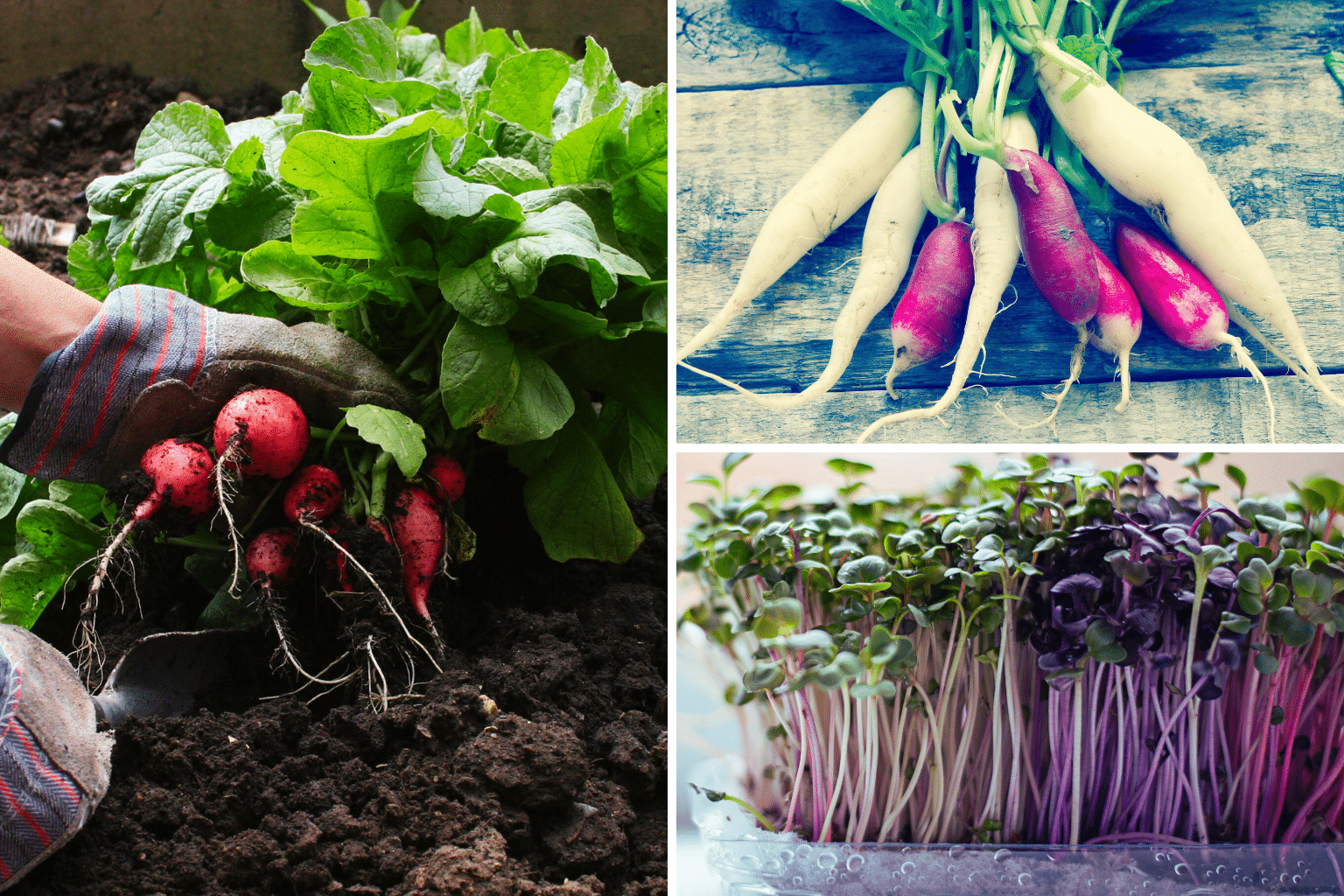
Radish (Raphanus sativus) Datasheet
-
Common Name: Radish
-
Scientific Name: Raphanus sativus
-
Family: Brassicaceae
-
Origin: Native to Southeast Asia, Mediterranean region; cultivated globally
-
Zone Hardiness: USDA Zones 2–10 (annual crop, tolerates cool weather)
-
Light Requirements: Full sun; tolerates light shade
-
Water Needs: Consistent moisture; keep soil evenly moist to avoid cracks or woody roots
-
Soil Preferences: Prefers loose, well-drained sandy to loamy soil, pH 6.0–7.0; avoid heavy clay
-
"Ponics" Compatibility:
• Aquaponics: Fairly compatible
• Aeroponics: Fairly compatible
• Hydroponics: Fairly compatible
• Preferred Method: Nutrient Film Technique (NFT) or media bed with good aeration -
Growth Habit: Annual herbaceous plant with basal leaf rosette and a swollen taproot
-
Height & Spread: Foliage height ~6–12 inches (15–30 cm); taproot diameter varies (1–7 cm)
-
**Time from Germination to Harvest:** Quick-maturing:
• Small radishes: 21–30 days
• Daikon/winter types: 50–70 days -
Flowering Time: Bolting may occur in 4–6 weeks; flowers appear if left in ground longer
-
Edible Parts: Taproot (raw or cooked); young leaves, seed pods, and seeds (sprouted or culinary)
-
Medicinal Uses: Traditionally used for digestive aid, diuretic properties; black radish variety supports liver and bile health
-
Companion Plants: Lettuce, peas, cucumbers, nasturtiums; deters pests and serves as trap crop for cucumber beetles
-
Pest & Disease Resistance: Generally pest-resistant; watch for flea beetles, cabbage root flies, swede midge; avoid crusted soil and overcrowding
-
Harvest Time: Harvest small radishes at 3–4 weeks; daikon at 50–70 days. Store in fridge for 2–3 days at room temp or 1–2 months at 0 °C with high humidity
-
Propagation Methods: Direct-sow seed ½–1 in deep; germinates in 3–7 days; seed spacing 1–2 in, rows 10–12 in apart
-
Sustainability Features: Great as a quick cover crop; taps and redistributes nutrients, breaks soil compaction, suppresses weeds
-
Culinary Uses: Added to salads, garnishes, soups; daikon is used in pickles and Asian dishes; pods (rat-tailed) cooked or pickled
-
Fun Fact: Winter black radishes were served at Bavarian Oktoberfest and known historically since 1548
Radish Type Overview
Radishes are broadly grouped by their form and growing season:
-
Spring/Summer types: Quick-growing (3–5 weeks), small root varieties like Cherry Belle and French Breakfast.
-
Winter/Storage types: Larger, slower-growing radishes that store well—includes Black Spanish and Daikon
Spring/Summer Radish Varieties
These radishes grow quickly and prefer cool spring or fall weather but not freezing or high heat. Best when harvested young.
Cherry Belle (Raphanus sativus 'Cherry Belle')
Flavor Profile: Mildly spicy, crisp, and refreshing.
Culinary Uses: Excellent raw in salads, crudités, or pickled.
Notes: Round bright red roots with white flesh; very uniform.
Planting Tip: Sow directly in full sun; thin to 1 inch apart. Avoid high temperatures to prevent bolting.
Days to Maturity: 22–30 days
French Breakfast (Raphanus sativus 'French Breakfast')
Flavor Profile: Mellow and mild with a subtle peppery snap.
Culinary Uses: Traditionally eaten raw with butter and salt.
Notes: Elongated roots with red upper and white tip; elegant heirloom.
Planting Tip: Prefers well-drained loamy soil; consistent moisture is key for tender roots.
Days to Maturity: 25–30 days
White Icicle (Raphanus sativus 'White Icicle')
Flavor Profile: Subtle pepper with a crisp bite.
Culinary Uses: Ideal for slicing into slaws or stir-frying.
Notes: Long tapered white root; looks like a small daikon.
Planting Tip: Ensure soil is free of stones; water evenly to prevent woody texture.
Days to Maturity: 28–35 days
Watermelon Radish (Raphanus sativus 'Red Meat')
Flavor Profile: Mild, lightly sweet with a slight pepper finish.
Culinary Uses: Best sliced thin for visual appeal in salads and pickles.
Notes: Pale green outside with deep magenta center; round shape.
Planting Tip: Prefers a longer growing window than typical summer radishes; sow in late summer for fall harvest.
Days to Maturity: 50–60 days
Winter/Storage Radish Varieties
These varieties are sown in late summer and harvested in late fall. They tend to grow larger, store longer, and have stronger flavor.
Black Spanish Round (Raphanus sativus var. niger)
Flavor Profile: Bold and spicy; earthy and intense.
Culinary Uses: Grated raw, roasted, or fermented.
Notes: Hard black skin with white flesh; very pungent and firm.
Planting Tip: Sow in late summer to early fall; don’t let soil dry out.
Days to Maturity: 55–70 days
Daikon / Mooli (Raphanus sativus var. longipinnatus)
Flavor Profile: Juicy and mild, slightly peppery.
Culinary Uses: Used in Asian cuisine—pickled (takuan), in soups, or stir-fried.
Notes: Long white roots up to 24 inches; can grow very large.
Planting Tip: Requires deep, loose soil for straight growth; mulch to retain moisture.
Days to Maturity: 50–70 days
China Rose (Raphanus sativus var. longipinnatus 'China Rose')
Flavor Profile: Juicy, sweet-crisp with a pleasantly peppery undertone.
Culinary Uses: Ideal for winter salads, pickling, roasting, or stir-frying.
Notes: Oblong, carrot-shaped roots with rose-pink skin and white flesh; heirloom variety introduced to Europe in the 1800s.
Planting Tip: Sow in late summer; provide deep, loose soil and consistent moisture; mulch to prevent bolting and retain even temperatures.
Days to Maturity: 50–60 days
🌱 Reasons Red Radishes Don't Store Long-Term:
-
Thin skins: These varieties have tender, thin skins that dehydrate or shrivel quickly.
-
High water content: This leads to rapid moisture loss and softening post-harvest.
-
Designed for speed, not storage: Spring radishes are bred to mature fast and be eaten fresh within a few days to a week.
✅ Best Storage Radishes:
For overwintering or root-cellar storage, use winter radish types, including:
-
Black Spanish Round (stores 2–3 months in ideal conditions)
-
Daikon (especially Korean or Japanese winter types)
-
Green/China Rose (thick-skinned, dense-flesh)
-
Watermelon radish (shorter storage life than black/daikon, but still better than red types)
📦 Storage Tips:
-
Harvest before hard frost.
-
Store unwashed in a perforated plastic bag or layered in damp sand.
-
Keep in a root cellar or fridge at 32–40°F (0–4°C) with 95% humidity.
Let me know if you’d like a comparison chart of storage potential by variety.
Audio
Video
- Text Reading
27
Rosemary (Salvia rosmarinus)

Rosemary (Salvia rosmarinus) Datasheet
-
Common Name: Rosemary
-
Scientific Name: Salvia rosmarinus (formerly Rosmarinus officinalis)
-
Family: Lamiaceae
-
Origin: Native to the Mediterranean region—Spain, Italy, Greece, Tunisia, etc.
-
Zone Hardiness: USDA Zones 7–10 (perennial); grown as annual or container in colder zones
-
Light Requirements: Full sun (6–8 hrs/day); tolerates partial shade in hot climates
-
Water Needs: Low–moderate; drought-tolerant once established; avoid poorly drained soil
-
Soil Preferences: Well-drained loam or sandy soil; pH 6.0–7.8
-
"Ponics" Compatibility:
• Aquaponics: Compatible
• Aeroponics: Compatible
• Hydroponics: Compatible
• Preferred Method: Media-bed or container with good drainage and air flow -
Growth Habit: Evergreen, woody perennial shrub; erect or spreading/creeping habit
-
Height & Spread: Upright types 3–6 ft tall; prostrate types spread wider, 1–3 ft tall depending on cultivar
-
Time from Germination to Harvest: ~90–120 days for usable foliage; full maturity in 2–3 years
-
Flowering Time: Spring and summer (pale blue, lavender, pink, or white); occasional blooms year-round in mild climates
-
Edible Parts: Leaves and flowers; aromatic herbal flavor
-
Medicinal Uses: Traditionally used for memory, digestion, circulation, headaches, muscle pain, and respiratory issues; contains antioxidants and anti-inflammatory compounds
-
Companion Plants: Pairs well with thyme, sage, lavender, marigolds, carrots, cherries, beans; deters pests like bean beetles and carrot flies. Avoid cucumbers, fennel, mint
-
Pest & Disease Resistance: Generally pest-resistant; watch for root rot in poor drainage and whiteflies; deer-resistant
-
Harvest Time: Trim 2–3″ sprigs year-round; best before flowering; dry or freeze for storage
-
Propagation Methods: Seeds (slow to germinate), cuttings, or division; softwood/semihardwood cuttings root readily
-
Sustainability Features: Perennial, drought-tolerant, supports pollinators, low maintenance; woody stems suitable for biomass or mulch
-
Culinary Uses: Flavoring for meats, soups, breads, oils, teas; sprigs used as skewers or garnish; essential in Mediterranean cooking
-
Fun Fact: Rosemary was historically worn at weddings and funerals as a symbol of remembrance and fidelity; quoted in Shakespeare’s Hamlet: “That’s for remembrance.”
Arp (Salvia rosmarinus 'Arp')
Flavor Profile: Strong, piney, lemony.
Culinary Uses: Excellent for roasting meats and vegetables.
Notes: Extremely cold-hardy (down to -10 °F); upright growth habit; gray-green foliage.
Planting Tip: Ideal for Zones 6–10; give full sun and excellent drainage.
Days to Maturity: ~120 days to usable harvest.
Tuscan Blue (Salvia rosmarinus 'Tuscan Blue')
Flavor Profile: Rich, resinous, less sharp than common types.
Culinary Uses: Ideal for marinades, oils, and baked dishes.
Notes: Tall (up to 6 ft), upright habit; vivid blue flowers; very ornamental.
Planting Tip: Great for hedges or vertical planting spaces.
Days to Maturity: ~100–120 days.
Prostratus / Creeping Rosemary (Salvia rosmarinus 'Prostratus')
Flavor Profile: Mild and aromatic.
Culinary Uses: Light flavor for salads and fish; attractive edible garnish.
Notes: Low-growing, trailing form; excellent groundcover or cascading from walls.
Planting Tip: Ideal for containers or erosion control.
Days to Maturity: ~90–100 days.
Barbecue (Salvia rosmarinus 'Barbeque')
Flavor Profile: Bold, piney, slightly smoky.
Culinary Uses: Hardy stems are perfect as natural skewers for grilling.
Notes: Upright and woody; thick stems support cooking use.
Planting Tip: Requires full sun; best in well-drained sandy soils.
Days to Maturity: ~120 days.
Benenden Blue (Salvia rosmarinus 'Benenden Blue')
Flavor Profile: Mild, aromatic classic rosemary scent.
Culinary Uses: Ideal for garnish, oils, and general cooking.
Notes: Compact upright (~2–3 ft); dark green foliage; RHS Award of Garden Merit
Planting Tip: Great in containers or small garden beds.
Days to Maturity: ~100–120 days
Gorizia (Salvia rosmarinus 'Gorizia')
Flavor Profile: Rich and aromatic with broad, flavorful leaves.
Culinary Uses: Excellent for grilling, marinades, and roasting.
Notes: Upright (~4–5 ft); foliage twice as wide as standard; striking blue flowers
Planting Tip: Use as specimen or hedge hedging plant.
Days to Maturity: ~120 days
Majorca Pink (Salvia rosmarinus 'Majorca Pink')
Flavor Profile: Similar to classic rosemary but with a light floral hint.
Culinary Uses: Both leaves and blooms are edible—fine in treats and teas.
Notes: Semi-prostrate (~2 ft tall); pink blooms; ornamental and edible
Planting Tip: Perfect in mixed flower beds or rock gardens.
Days to Maturity: ~100 days
Blue Boy (Salvia rosmarinus 'Blue Boy')
Flavor Profile: Delicate, mild rosemary flavor.
Culinary Uses: Great garnish; use fresh due to small leaf size.
Notes: Dwarf (~2 ft), compact; tiny leaves; suitable for herb gardens and containers
Planting Tip: Ideal for raised beds or container herbs collection.
Days to Maturity: ~90–100 days
Golden Rain (Salvia rosmarinus 'Aureus'/'Golden Rain')
Flavor Profile: Mild—less intense than standard rosemary.
Culinary Uses: Leaves can be used; blooms as colorful garnish.
Notes: Upright (~2 ft); golden variegated foliage; blue flowers
Planting Tip: Use for visual contrast in garden designs.
Days to Maturity: ~100 days
🌿 Rosemary Cultivar Comparison
| Variety | Type | Habit | Height | Use | Days to Maturity |
|---|---|---|---|---|---|
| Arp | Upright | Shrub | 4–5 ft | Culinary & cold-hardy | 120 |
| Tuscan Blue | Upright | Shrub | 6–7 ft | Cooking, topiary, ornamental | 120 |
| Gorizia | Upright | Shrub | 4–5 ft | Culinary, specimen planting | 120 |
| Benenden Blue | Upright | Compact shrub | 2–3 ft | Container, general cooking | 110 |
| Majorca Pink | Semi-prostrate | Groundcover/shrub | 2 ft | Edible flowers, ornamental | 100 |
| Blue Boy | Compact Subshrub | 2 ft | 2 ft | Container, garnish | 100 |
| Golden Rain | Upright | Shrub | 2 ft | Ornamental foliage contrast | 10 |
Audio
Video
- Text Reading
28
Spinach (Spinacia oleracea)

Spinach (Spinacia oleracea) Datasheet
-
Common Name: Spinach
-
Scientific Name: Spinacia oleracea
-
Family: Amaranthaceae
-
Origin: Native to Central & Western Asia, first recorded in Mesopotamia; introduced to Europe via Persia and the Arab world
-
Zone Hardiness: USDA Zones 3–9; cool-season annual, occasionally perennial in mild climates
-
Light Requirements: Full sun to partial shade; thrives in cooler weather (50–60 °F)
-
Water Needs: Moderate; evenly moist soil required, especially during germination
-
Soil Preferences: Rich, well-drained loam; pH 6.0–7.5
-
"Ponics" Compatibility:
-
Aquaponics: Compatible
-
Aeroponics: Compatible
-
Hydroponics: Compatible – thrives in nutrient-film and deep-water culture systems
-
Preferred Method: NFT or DWC for high yields in compact systems
-
-
Growth Habit: Fast-growing annual forming rosettes of large leaves; dioecious with male/female flowers on separate plants
-
Height & Spread: Up to ~12″ (30 cm); leaves 2–30 cm long
-
Time from Germination to Harvest: 30–50 days for baby leaves; full leaves ready in 45–60 days
-
Flowering Time: June to September in warm seasons; wind-pollinated inconspicuous flowers
-
Edible Parts: Leaves are eaten fresh or cooked; tender stems occasionally used
-
Medicinal Uses: High in vitamins A, C, K, folate, iron, magnesium, and antioxidants like lutein and flavonoids; supporting bone health, eye health, and anti-inflammatory benefits
-
Companion Plants: Good with strawberries, peas, radishes, and carrots; repels pests like aphids and slugs
-
Pest & Disease Resistance: Susceptible to downy mildew, leaf miners, and bolting; use crop rotation, good drainage, and disease-resistant varieties
-
Harvest Time: Begin when leaves are 4–6″; successive cut-and-come-again harvesting every 1–2 weeks; refrigerate up to one week, blanch and freeze for long-term
-
Propagation Methods: Direct sow ½″ deep, 1–4″ apart; germinates in 7–14 days depending on temperature
-
Sustainability Features: Low-input crop rich in nutrition; can be grown year-round in controlled environments; recycles nutrients well in hydroponic systems
-
Culinary Uses: Eaten raw in salads and smoothies; cooked in sautés, soups, quiches, omelets, curries, lasagna, and dips
-
Fun Fact: China produced about 93% of the world’s 33 million tonnes of spinach in 2022!
Acadia (Semi‑Savoy Hybrid)
Flavor Profile: Tender, medium‑green leaves with mild spinach flavor.
Culinary Uses: Perfect for baby-leaf salads and sandwiches.
Notes: Fast-growing; harvest in 27 days; resistant to bolting and downy mildew
Planting Tip: Ideal for early spring or fall; succession plant every few weeks.
Days to Maturity: ~27 days (baby leaves), ~45 days (full size)
Bloomsdale Longstanding (Savoy-Type Heirloom)
Flavor Profile: Rich and earthy with thick crinkled leaves.
Culinary Uses: Sauté, soups, hearty dishes.
Notes: Slow-bolting savoy heirloom; glossy dark-green leaves; well-liked for flavor .
Planting Tip: Great for late spring; can overwinter with mulch.
Days to Maturity: ~48 days
Space (Smooth-Leaf Hybrid)
Flavor Profile: Mild and slightly sweet with smooth texture.
Culinary Uses: Freezing, salads, baby-leaf mixes.
Notes: Fast-growing; moderately bolt-resistant; smooth medium-dark leaves .
Planting Tip: Succession planting extends harvest season.
Days to Maturity: ~25–30 days
Teton (Semi‑Savoy Heirloom)
Flavor Profile: Deep green with classic spinach taste.
Culinary Uses: Salads, cooking, freezing.
Notes: Upright plant; mildew-resistant; slow to bolt .
Planting Tip: Early spring sowing for best performance.
Days to Maturity: ~42–46 days
Regiment (Savoy Hybrid)
Flavor Profile: Sweet and tender savoy texture.
Culinary Uses: Baby leaf harvests, gourmet salads.
Notes: Dense plant; downy mildew resistant; good for tight spacing .
Planting Tip: Ideal for baby greens; space at 3–4″ for microgreens.
Days to Maturity: ~30 days
Hammerhead (Savoy F1 Hybrid)
Flavor Profile: Bold savory taste with dark, crinkled leaves.
Culinary Uses: Sautéing, soups, hearty dishes.
Notes: Fast-growing; downy mildew resistance; round cupped leaves .
Planting Tip: Succession sowing every 2–3 weeks.
Days to Maturity: ~27 days
Auroch (Smooth F1 Hybrid)
Flavor Profile: Rich, mild spinach flavor in smooth-textured leaves.
Culinary Uses: Baby leaves for salads and garnishes.
Notes: Upright, fast; bolt-prone; excellent downy mildew resistance .
Planting Tip: Plant in cooler weather to avoid bolting.
Days to Maturity: ~24 days
America (Savoy Heirloom)
Flavor Profile: Classic spinach taste with dense savoy texture.
Culinary Uses: Cooking and freezing.
Notes: Heat-tolerant, slow to bolt; ideal for spring plantings .
Planting Tip: Great for early succession and warmer climates.
Days to Maturity: ~40–45 days
Melbar (Malabar) Spinach (Basella alba / Basella rubra)
Flavor Profile: Mild spinach-like taste with a subtly peppery, citrus hint.
Culinary Uses: Great in stir-fries, soups, salads, steamed dishes, or smoothies—acts as a spinach substitute in hot weather.
Notes: A heat-loving tropical vine reaching 6–10 ft; green-stemmed (alba) or red-stemmed (rubra) types; thick, succulent leaves and attractive berries
Planting Tip: Sow after frost when soil is warm; provide sturdy trellis; needs regular moisture and rich soil.
Days to Maturity: ~60–70 days for cutting; full maturity in tropical/perennial conditions .
🌱 Updated Spinach Variety Comparison Table
| Variety | Leaf Type / Form | Habit | Bolt Resistance | Days to Maturity |
|---|---|---|---|---|
| Acadia | Semi‑savoy (hybrid) | Medium rosette | High | 27 (baby), 45 (full) |
| Bloomsdale Longstanding | Savoy (heirloom) | Large rosette | Moderate | ~48 |
| Space | Smooth (hybrid) | Compact upright | Medium | ~25–30 |
| Teton | Semi‑savoy (heirloom) | Upright rosette | High | ~42–46 |
| Regiment | Savoy (hybrid) | Compact dense | High (disease-resistant) | ~30 |
| Hammerhead | Savoy F1 (hybrid) | Fast rosette | Disease-resistant | ~27 |
| Auroch | Smooth F1 (hybrid) | Upright | Good | ~24 |
| America | Savoy (heirloom) | Medium rosette | High (heat-tolerant) | ~40–45 |
| Melbar (Malabar) Spinach | Succulent vine leaves | Climbing vine | Heat-tolerant (no bolt) | ~60–70 cutting stage |
Audio
Video
- Text Reading
29
Sweet Corn (Zea mays)
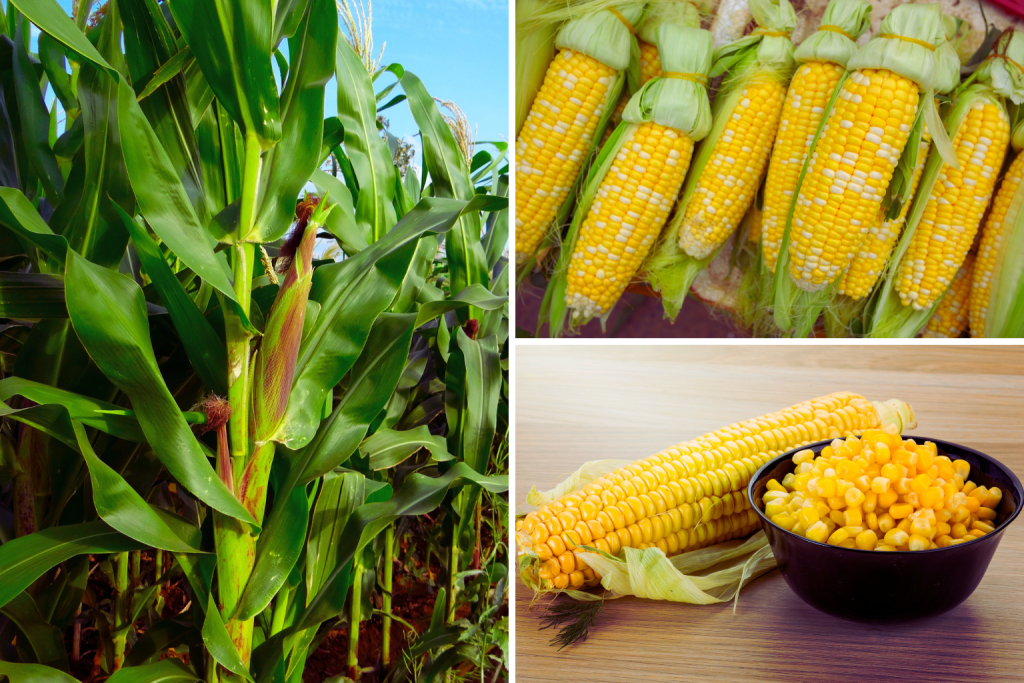
Sweet Corn (Zea mays)
-
Common Name: Sweet Corn
-
Scientific Name: Zea mays var. saccharata
-
Family: Poaceae
-
Origin: Southern Mexico
-
Zone Hardiness: USDA Zones 3a–11b
-
Light Requirements: Full sun (6–8 hours daily)
-
Water Needs: High; requires 1–1.5 inches (2.5–3.8 cm) per week, especially during tasseling and ear development
-
Soil Preferences: Prefers fertile, well-drained loamy soil with a pH between 6.0 and 6.8
-
"Ponics" Compatibility:
• Aquaponics: Not compatible
• Aeroponics: Not compatible
• Hydroponics: Not compatible
• Preferred Method: Not applicable -
Growth Habit: Upright annual grass
-
Height & Spread: Height: 6–8 feet (1.8–2.4 meters); Spread: 1–2 feet (30–60 cm)
-
Time from Germination to Harvest: 60–100 days, depending on variety
-
Flowering Time: Mid to late summer
-
Edible Parts: Kernels (seeds)
-
Medicinal Uses: Corn silk has been used traditionally as a diuretic and for urinary tract health
-
Companion Plants: Beans, squash, cucumbers, melons, peas, pumpkins, sunflowers, dill, marigolds
-
Pest & Disease Resistance:
• Susceptible to corn earworm, aphids, and fungal diseases
• Companion planting and crop rotation can help mitigate pest issues -
Harvest Time: Harvest when silks turn brown and kernels exude a milky liquid when punctured; best consumed fresh or can be blanched and frozen for long-term storage
-
Propagation Methods: Propagated by seed; sow seeds directly into warm soil (above 60°F/15.5°C); seeds germinate in 7–10 days
-
Sustainability Features: Provides structural support in companion planting (e.g., "Three Sisters" method); attracts beneficial insects; contributes to soil health through biomass
-
Culinary Uses: Eaten fresh (on the cob), boiled, grilled, or steamed; kernels used in soups, salads, salsas, and baked goods; can be processed into cornmeal or corn syrup
-
Fun Fact: An average ear of corn has about 800 kernels arranged in 16 rows
Specific Varieties
Silver Queen (SU)
Flavor Profile: Very sweet, tender, snow-white kernels.
Culinary Uses: Ideal for fresh consumption, freezing, and canning.
Notes: Late-season variety; matures in 92 days; plants reach 8 feet tall.
Kandy Korn (SE)
Flavor Profile: Sweet and tender, golden-yellow kernels.
Culinary Uses: Excellent for freezing and canning.
Notes: Matures in 89 days; stalks grow 8–9 feet tall; adapts to a wide range of climates.
Ruby Queen (SE)
Flavor Profile: Exceptionally sweet, deep red kernels.
Culinary Uses: Best steamed or microwaved to preserve color and flavor.
Notes: Matures in 75 days; stalks reach 7 feet tall; visually striking with red tassels and stalks.
Peaches and Cream (SE)
Flavor Profile: Sweet and tender with bi-color kernels.
Culinary Uses: Suitable for fresh eating, freezing, and canning.
Notes: Matures in 70 days; plants grow to 6 feet tall; ears average 8 inches with 18–20 rows of kernels.
Illini Xtra Sweet (SH2)
Flavor Profile: Extremely sweet, golden-yellow kernels.
Culinary Uses: Excellent for fresh consumption and freezing.
Notes: Matures in 85 days; plants reach 6½ feet tall; requires isolation from other corn types to maintain sweetness.
Ambrosia (SE)
Flavor Profile: Plump and sweet with white and yellow kernels.
Culinary Uses: Ideal for fresh consumption, freezing, and canning.
Notes: Matures in 75 days; plants average 6.5 feet tall; ears are 8 inches long with 14 rows of kernels.
Golden Bantam (Heirloom, SU)
Flavor Profile: Sweet with an old-fashioned corn flavor.
Culinary Uses: Suitable for fresh eating and canning.
Notes: Introduced in 1902; matures in 80 days; plants average 5 feet tall; ears are 6 inches long with 12–14 rows of yellow kernels.
Honey Select (SE)
Flavor Profile: Sweet, tender yellow kernels.
Culinary Uses: Ideal for fresh eating, freezing, and canning.
Notes: Matures in 79 days; plants grow to 7 feet tall; ears are 8 inches long with 16–18 rows of kernels.
Country Gentleman (Heirloom, SU)
Flavor Profile: Creamy white kernels with a sweet flavor.
Culinary Uses: Excellent for roasting and canning.
Notes: Known as "shoepeg corn"; kernels are irregularly spaced; matures in 90 days; plants reach 8 feet tall.
Early Sunglow (SU)
Flavor Profile: Sweet yellow kernels.
Culinary Uses: Good for fresh consumption and freezing.
Notes: Matures in 63 days; plants average 4.5 feet tall; ears are 7 inches long with 12 rows of kernels; suitable for cooler climates.
Bodacious (SE)
Flavor Profile: Very sweet and juicy golden-yellow kernels.
Culinary Uses: Excellent for fresh consumption, freezing, and canning.
Notes: Matures in 75 days; plants average 7 feet tall; ears are 8 inches long with 18 rows of kernels; good disease resistance.
Sugar Buns (SE)
Flavor Profile: Plump and sweet golden-yellow kernels.
Culinary Uses: Suitable for fresh eating, freezing, and canning.
Notes: Matures in 72 days; plants average 6.5 feet tall; ears are 7 inches long with 18 rows of kernels; moderate disease resistance.
Quickie (SE)
Flavor Profile: Sweet with white and pale yellow kernels.
Culinary Uses: Good for fresh consumption and freezing.
Notes: Matures in 68 days; plants average 5 feet tall; ears are 7 inches long with 12–14 rows of kernels; suitable for cool climates.
Avalon (SE)
Flavor Profile: Sweet white kernels.
Culinary Uses: Ideal for fresh eating, freezing, and canning.
Notes: Matures in 82 days; ears are 8 inches long with 16 rows of kernels; plants grow to 6 feet tall.
Jubilee (SU)
Flavor Profile: Sweet, tender yellow kernels.
Culinary Uses: Excellent for fresh eating and processing.
Notes: Matures in 83 days; plants grow to 7–7.5 feet tall; ears are 8–9 inches long with 16 rows of kernels; resists smog and smut.
Butter and Sugar (SU)
Flavor Profile: Good flavor with bicolor white and yellow kernels.
Culinary Uses: Ideal for fresh consumption.
Notes: Matures in 73 days; ears are 7–8 inches long; resists bacterial wilt and southern corn leaf blight.
How Sweet It Is (SE)
Flavor Profile: Sweet, crisp, tender white kernels.
Culinary Uses: Suitable for fresh eating and storage.
Notes: Matures in 87 days; ears are 8 inches long with 18–22 rows of kernels; plants grow to 6.5 feet tall; All-America Selections winner; resists most diseases.
Sweetie (SH2)
Flavor Profile: Exceptionally sweet, tender, and crisp deep golden-yellow kernels.
Culinary Uses: Excellent for fresh consumption and storage.
Notes: Matures in 82 days; ears are 7–8 inches long with 14–18 rows of kernels; plants grow to 6 feet tall; retains sweetness for a long period; 30% fewer calories than regular corn.
Early Xtra Sweet (SH2)
Flavor Profile: Extra sweet golden-yellow kernels.
Culinary Uses: Ideal for fresh eating.
Notes: Matures in 71 days; ears are 7–9 inches long with 12–16 rows of kernels; plants grow to 5–6 feet tall; All-America Selections winner; resists most diseases.
Butterfruit Original Early (SH2)
Flavor Profile: Bright yellow kernels with a savory flavor.
Culinary Uses: Suitable for fresh consumption.
Notes: Matures in 72 days; ears are tightly packed; plants grow to 5 feet tall; matures extra early.
Early Golden Bantam (SU)
Flavor Profile: Sweet yellow kernels.
Culinary Uses: Ideal for fresh eating.
Notes: Introduced in 1902; matures in 80 days; heirloom variety.
Understanding Sweet Corn Types:
-
SU (Standard Sweet): The traditional sweet corn type. It has a classic corn flavor but should be eaten soon after harvest, as it quickly loses its sweetness. Varieties like 'Golden Bantam' and 'Silver Queen' fall into this category.
-
SE (Sugary Enhanced): Offers more sweetness and tenderness than SU types and holds its flavor longer after harvest. Ideal for home gardens and fresh eating. Examples include 'Ambrosia' and 'Peaches and Cream'.
-
SH2 (Super Sweet or Shrunken-2): These are the sweetest corn varieties with excellent storage life. They require isolation from other types to prevent cross-pollination that could reduce quality. Examples include 'Sweetie' and 'Early Xtra Sweet'.
Wrapping Up Your Journey Towards Off-Grid Living
Remember the Importance of Simplifying Life
As you consider the pros, cons, and various options related to transitioning to an off-grid lifestyle, keep in mind that the ultimate goal is to simplify your life. Achieving this simplification can lead to significantly reduced stress and clutter, helping you create a more peaceful and fulfilling daily experience.
If you feel the need to revisit any part of this lesson, please do so to ensure you have a clear understanding of all aspects involved. Additionally, don’t hesitate to explore the other lessons in this course to deepen your knowledge and support your journey toward a more intentional and simplified way of living.
Audio
Video
- Text Reading
30
Thyme (Thymus vulgaris)

Thyme (Thymus vulgaris) Datasheet
-
Common Name: Thyme
-
Scientific Name: Thymus vulgaris
-
Family: Lamiaceae
-
Origin: Native to southwestern Europe (Spain, France, Italy)
-
Zone Hardiness: USDA Zones 5–9 (evergreen subshrub; cold-hardy)
-
Light Requirements: Full sun; best with at least 6 hrs direct sunlight
-
Water Needs: Low to moderate; drought-tolerant once established; avoid overwatering
-
Soil Preferences: Well-drained, gritty or sandy loam; pH neutral to slightly alkaline
-
"Ponics" Compatibility:
• Aquaponics: Compatible
• Aeroponics: Compatible
• Hydroponics: Compatible
• Preferred Method: Media-bed or container system to ensure good drainage and airflow -
Growth Habit: Woody evergreen subshrub forming compact mounds
-
Height & Spread: 6–15 in (15–40 cm) tall; spreads 15–18 in (40–45 cm)
-
Time from Germination to Harvest: ~90–120 days to established greenery; full maturity in 1–2 years
-
Flowering Time: Late spring to early summer; tiny purple, pink, or white flowers
-
Edible Parts: Leaves, flowering tops; excellent fresh or dried as seasoning
-
Medicinal Uses: Antiseptic, antitussive, digestive aid; rich in thymol—a natural antimicrobial compound
-
Companion Plants: Good with rosemary, sage, cabbage, tomatoes, and lavender; deters pests
-
Pest & Disease Resistance: Generally resilient; watch for fungal issues in poor air circulation—prune to promote airflow
-
Harvest Time: Snip leaves before or during flowering; hang in bunches or dry quickly; shear plants after flowering to maintain vigor
-
Propagation Methods: Seed (spring), stem cuttings (late spring), division or layering (early spring)
-
Sustainability Features: Drought-tolerant, attracts pollinators, low-maintenance groundcover; ideal for rock gardens and permaculture systems
-
Culinary Uses: Central herb in bouquet garni, herbes de Provence; pairs with meats, stews, fish, and vegetables; fresh or dried
-
Fun Fact: Thyme’s name goes back to Greek “thymos,” meaning courage; historically placed under pillows for bravery and warding off nightmares
Common Thyme (Thymus vulgaris)
Flavor Profile: Classic robust thyme—earthy, savory, slightly minty.
Culinary Uses: Versatile seasoning for meats, stews, sauces, poultry and fish.
Notes: The most popular culinary variety—woody subshrub with purple flowers; hardy and aromatic
Planting Tip: Prune annually to avoid woodiness.
Days to Maturity: ~90 days to strong foliage
Lemon Thyme (Thymus × citriodorus 'Lemon')
Flavor Profile: Bright, zesty citrus flavor atop thyme's herbal base.
Culinary Uses: Ideal for fish, chicken, teas, and desserts.
Notes: Mat-forming with lemon-scented foliage; perfect groundcover in sunny spots .
Planting Tip: Ensure full sun and excellent drainage.
Days to Maturity: ~90 days
French Thyme (Thymus vulgaris var. gracilis)
Flavor Profile: Milder, sweeter variant of common thyme.
Culinary Uses: Great in salads, soups, lighter dishes.
Notes: Also called Summer thyme; fine, petite leaves; tender compared to Common Thyme .
Planting Tip: Best in warm climates with less frost.
Days to Maturity: ~90 days
German / Winter Thyme (Thymus vulgaris var. germanicus)
Flavor Profile: Strong, earthy—slightly more pungent than French thyme.
Culinary Uses: Perfect for hearty meals and winter dishes.
Notes: Larger, more cold-hardy form of culinary thyme; durable in cool climates .
Planting Tip: Ideal for colder regions; prune lightly to maintain form.
Days to Maturity: ~90 days
Caraway Thyme (Thymus herba-barona)
Flavor Profile: Aromatic thyme with distinctive caraway notes.
Culinary Uses: Excellent in roasts, breads, and seed blends.
Notes: Low-growing, coastal species with glossy leaves and magenta blooms .
Planting Tip: Use as lawn substitute or rockery cover.
Days to Maturity: ~90 days
Orange Balsam Thyme (Thymus × citriodorus 'Orange Balsam')
Flavor Profile: Citrusy thyme with bright orange undertones.
Culinary Uses: Teas, desserts, marinades, and aromatherapy.
Notes: Highly fragrant variety with small, aromatic leaves and pale blooms .
Planting Tip: Harvest before flowering for peak scent.
Days to Maturity: ~90 days
Mother of Thyme (Thymus praecox 'Coccineus')
Flavor Profile: Mild thyme fragrance, attractive earthy hint.
Culinary Uses: Mild seasoning; often used more ornamentally.
Notes: Creeping groundcover with vibrant pink flowers; excellent for rock gardens .
Planting Tip: Thrives in full sun; spreads quickly—ideal between stones.
Days to Maturity: ~60–90 days
Silver Queen Thyme (Thymus × citriodorus 'Silver Queen')
Flavor Profile: Lemony, subtle thyme flavor.
Culinary Uses: Light seasoning; attractive garnish or tea herb.
Notes: Variegated silver-edged foliage; pink blooms; RHS-awarded .
Planting Tip: Best in sunny, well drained spots; remove green shoots to maintain variegation.
Days to Maturity: ~90 days
🌿 Thyme Variety Comparison Table
| Variety | Flavor Profile | Habit | Height & Spread | Primary Use | Days to Maturity |
|---|---|---|---|---|---|
| Common Thyme | Earthy, savory thyme | Upright, woody subshrub | 6–12″ tall, 6–16″ spread | General cooking | ~90 |
| Lemon Thyme | Bright citrus-thyme | Mat-forming groundcover | 2–4″ tall, spread wide | Fish, chicken, desserts | ~90 |
| French Thyme | Mild, sweet thyme | Upright but delicate | ~6–8″ tall | Salads, light dishes | ~90 |
| German (Winter) Thyme | Strong, robust and pungent | Upright, cold-hardy | ~6–12″ tall | Hearty dishes | ~90 |
| Caraway Thyme | Caraway-scented thyme | Creeping subshrub | ~4″ tall, mat-forming | Roasts, breads, groundcover | ~90 |
| Orange Balsam Thyme | Citrus-orange thyme | Compact groundcover | ~4–6″ tall | Teas, aromatherapy | ~90 |
| Mother of Thyme | Mild thyme + earthy | Creeping groundcover | 2–3″ tall, wide spread | Ornamental, rock gardens | ~60–90 |
| Silver Queen Thyme | Lemon-thyme mild flavor | Upright groundcover | ~8–10″ tall | Teas, garnish, ornament | ~90 |
Off-grid living offers unique opportunities for gardening and farming that can be both rewarding and challenging. One of the primary benefits is the ability to cultivate your own food, which promotes self-sufficiency and reduces reliance on external food supply chains. With control over your land and resources, you can implement organic practices, experiment with heirloom seeds, and tailor your garden to suit your dietary preferences and climate conditions.
Additionally, off-grid homesteads often have access to ample outdoor space, allowing for diverse planting and the possibility of raising livestock. This can enhance food variety and sustainability, providing fresh produce, eggs, and meat. The connection to nature and seasonal cycles can also be deeply fulfilling and educational for individuals and families.
However, there are significant challenges to consider. Without connection to municipal water and power, irrigation and soil management require careful planning. Water sources may depend on rain catchment, wells, or nearby streams, which can be limited or inconsistent. Energy for pumps, lighting, and tools might rely on solar panels, wind turbines, or generators, demanding an upfront investment and ongoing maintenance.
Furthermore, the isolation of off-grid living can limit access to gardening supplies, expert advice, and emergency services. Pest control and soil fertility must be managed without commercial inputs, which can require advanced knowledge and experience. Seasonal changes and extreme weather may impact crop success, and there is often a steeper learning curve to achieve consistent yields compared to conventional farming.
Ultimately, evaluating these benefits and challenges helps prospective off-grid homesteaders develop realistic expectations and strategies for sustainable gardening and farming. Effective planning, resource management, and adaptability are key to turning the opportunities of off-grid living into a productive and rewarding homestead.
When developing a homestead as part of your transition to an off-grid lifestyle, it's essential to choose a setup that aligns with your local climate and the size of your available land. Different environments and land capacities require tailored approaches to maximize sustainability and productivity.
Small Land Homesteads: For those with limited space, such as a quarter-acre or less, intensive gardening methods like raised beds, vertical gardening, and container planting are highly effective. Small livestock such as chickens or rabbits can be integrated for fresh eggs and meat without requiring extensive pasture. In colder climates, utilizing greenhouses or cold frames extends the growing season, while in warmer areas, shade structures and drip irrigation help conserve water and protect plants.
Medium-Sized Homesteads: On 1 to 5 acres, you have more flexibility to diversify your homestead. You can incorporate larger vegetable gardens, orchards, and small-scale animal husbandry including goats, sheep, or bees. Climate considerations are crucial here: in arid regions, water harvesting systems and drought-resistant plants are key, while in humid climates, focus on disease-resistant crops and proper ventilation in animal shelters.
Large Homesteads: With 10 acres or more, you can develop a fully integrated homestead that includes crop rotations, larger livestock herds, agroforestry, and renewable energy systems such as solar or wind power. In colder climates, plan for winter feed storage and insulated animal housing. In tropical or subtropical zones, consider permaculture designs that support biodiversity and soil health, using natural shade and water management to maintain productivity.
Ultimately, the best homestead setup balances your land's natural characteristics with your personal goals and resources. Taking time to assess your climate patterns, soil quality, and water availability will guide you in selecting the most suitable homestead model. This thoughtful approach leads to a more resilient and rewarding off-grid living experience.
When developing a homestead off-grid, identifying and securing essential resources and infrastructure for a productive garden and farm is crucial. Water is the most critical resource; you will need a reliable source such as a well, rainwater catchment system, or nearby natural water body. Installing storage tanks and irrigation systems like drip irrigation can help efficiently manage water use, especially during dry periods.
Soil quality directly impacts your ability to grow healthy crops and raise livestock. Conduct a soil test to determine nutrient levels and pH balance, then amend the soil with organic matter such as compost or manure. Building raised beds or using permaculture techniques can improve soil fertility and drainage.
Sunlight and proper shelter are also essential. Choose a location with ample sunlight exposure for your garden and farm. Constructing greenhouses or cold frames can extend your growing season, protect plants from harsh weather, and increase productivity.
For infrastructure, consider fencing to protect crops from wildlife and livestock, as well as pathways for easy access to planting areas. Storage facilities for tools, seeds, and harvested produce are necessary to maintain organization and protect your investment.
Additionally, integrating systems such as compost bins and rain gardens can recycle nutrients and manage water runoff effectively. Planning for energy needs, such as solar panels for powering pumps or greenhouse fans, will support sustainable operations without reliance on the grid.
By carefully identifying these essential resources and building the right infrastructure, you can establish a resilient and productive garden and farm that supports your off-grid homestead goals.
Optimizing soil health and water management is fundamental to developing a successful off-grid homestead. Sustainable practices help maintain productive land and conserve precious water resources, ensuring long-term viability and resilience.
To enhance soil health, consider implementing crop rotation and cover cropping. Rotating different plant families in your garden reduces pest buildup and replenishes soil nutrients naturally. Cover crops, such as clover or rye, protect soil from erosion, improve organic matter, and encourage beneficial microbial activity.
Composting organic waste is another key practice that enriches soil with essential nutrients and improves its structure. Integrating compost into your planting beds increases water retention and promotes healthy root growth. Avoid synthetic fertilizers which can degrade soil over time and disrupt natural ecosystems.
For water management, rainwater harvesting systems can capture and store precipitation for irrigation and household use. Combining gutters, storage tanks, and simple filtration allows you to maximize water availability during dry periods. Additionally, mulching garden beds with straw or wood chips reduces evaporation, moderates soil temperature, and suppresses weeds.
Implementing drip irrigation or soaker hoses targets water directly to plant roots, minimizing waste compared to overhead watering. Contour planting and swales, shallow, water-catching ditche, help slow runoff, encouraging water infiltration and reducing erosion on sloped land.
Integrating these sustainable soil and water management techniques not only supports plant health and productivity but also aligns with an off-grid lifestyle's emphasis on self-reliance, conservation, and ecological balance.
Developing a personalized plan for transitioning to an off-grid homestead with a focus on gardening and farming begins with assessing your available land and resources. Consider the size of your property, soil quality, sunlight exposure, and water availability. These factors will heavily influence what types of crops and livestock you can sustainably manage.
Next, outline your goals for food production. Do you want to grow enough to be self-sufficient year-round, or supplement your diet with fresh produce and some livestock products? Defining your desired scale helps you prioritize which gardening and farming methods to adopt.
Start by selecting crops suited to your climate and soil conditions. Incorporate a variety of vegetables, fruits, and herbs that provide nutrition, storage potential, and seasonal variety. Plan for crop rotation and companion planting to maintain soil health and reduce pests naturally.
Integrate sustainable water management techniques such as rainwater harvesting, drip irrigation, or swales to maximize water efficiency in your garden and farm areas. Consider how you will collect, store, and distribute water to meet the needs of your plants and animals.
Include a plan for composting and soil amendment to build fertility over time without relying on external inputs. Establish areas for compost bins or piles and identify organic waste sources from your household and garden.
If incorporating livestock, choose animals that match your land's capacity and your level of experience. Start small with poultry, goats, or rabbits, which can provide eggs, milk, and meat with relatively low maintenance. Plan for shelter, fencing, feeding, and waste management to keep your animals healthy and your land productive.
Create a seasonal calendar to map out planting, harvesting, and maintenance tasks throughout the year. This helps you stay organized and anticipate labor and resource needs, making the transition more manageable.
Finally, build flexibility into your plan to adapt as you gain experience and learn what works best on your homestead. Regularly review and adjust your goals, crops, and livestock choices to optimize productivity and sustainability over time.
Wrapping Up
Keep Your Goal in Focus
As you consider the pros, cons, and various options involved in transitioning to an off-grid lifestyle, remember the importance of developing a homestead. This goal is key to unlocking opportunities for gardening and farming, which can bring greater self-sufficiency and fulfillment. If you need to, feel free to revisit this lesson to reinforce your understanding and insights.
Additionally, exploring the other lessons in this course can provide valuable information and support as you plan your off-grid journey. Taking the time to absorb all the resources available will help you make informed decisions and move confidently toward your homesteading aspirations.
Audio
Video
- Text Reading
31
Tomato (Solanum lycopersicum)
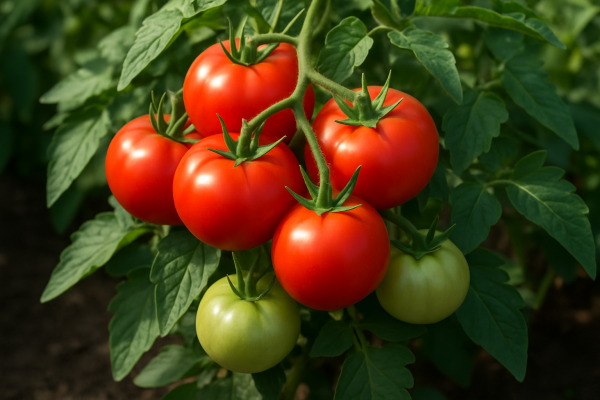
Tomato (Solanum lycopersicum) Datasheet
-
Common Name: Tomato
-
Scientific Name: Solanum lycopersicum
-
Family: Solanaceae
-
Origin: Native to western South America and Central America
-
Zone Hardiness: USDA Zones 10–11; grown as an annual in cooler zones
-
Light Requirements: Full sun; requires 6–8 hours of direct sunlight daily
-
Water Needs: Consistent moisture; deep watering 1–2 times per week, more frequently in containers or during hot weather
-
Soil Preferences: Well-drained loamy soil with a pH of 6.2–6.8
-
"Ponics" Compatibility:
-
Aquaponics: Very compatible
-
Aeroponics: Very compatible
-
Hydroponics: Very compatible
-
Preferred Method: Deep Water Culture (DWC), Nutrient Film Technique (NFT), and Dutch Bucket systems are commonly used for hydroponic tomato cultivation
-
-
Growth Habit: Tender perennial often grown as an annual; growth habit varies by cultivar: determinate (bushy) or indeterminate (vining)
-
Height & Spread: Height: 1.5–2.5 meters; Spread: 0.5–1 meter
-
Time from Germination to Harvest: 65–85 days, depending on variety and growing conditions
-
Flowering Time: Typically blooms in summer; flowers are yellow, star-shaped, and appear in clusters
-
Edible Parts: Fruit is edible; leaves and stems contain tomatine and are generally considered inedible
-
Medicinal Uses: Rich in lycopene, an antioxidant linked to reduced risk of certain cancers and heart disease; traditionally used for treating burns and sunburns
-
Companion Plants: Basil, marigold, asparagus, chives, and nasturtium; these companions can deter pests and improve growth
-
Pest & Disease Resistance: Susceptible to pests like aphids, whiteflies, and hornworms; diseases include blight and wilt. Resistant cultivars are available, denoted by codes such as V (Verticillium), F (Fusarium), N (Nematodes), and T (Tobacco Mosaic Virus)
-
Harvest Time: Harvest when fruits are fully colored and slightly soft to the touch; store at room temperature for best flavor
-
Propagation Methods: Primarily grown from seeds; germination occurs in 7–14 days. Can also be propagated from cuttings
-
Sustainability Features: Tomatoes can be grown in various systems, including hydroponics and aquaponics, allowing for water-efficient cultivation. They can also be part of crop rotation systems to manage soil health
-
Culinary Uses: Consumed raw in salads, cooked in sauces, soups, and stews; also used in juices and dried products
-
Fun Fact: Although botanically a fruit, the U.S. Supreme Court ruled in 1893 that tomatoes are vegetables for tariff purposes
Brandywine (Solanum lycopersicum 'Brandywine')
-
Flavor Profile: Rich, sweet, and slightly tangy; classic "old-fashioned" tomato taste.
-
Culinary Uses: Ideal for slicing, sandwiches, and fresh eating.
-
Notes: Large pink fruits; indeterminate heirloom variety with potato-leaf foliage; late-maturing but highly prized for flavor.
Cherokee Purple (Solanum lycopersicum 'Cherokee Purple')
-
Flavor Profile: Sweet, complex, and slightly smoky.
-
Culinary Uses: Excellent for slicing, salads, and caprese.
-
Notes: Dusky purplish-red fruit with green shoulders; indeterminate heirloom with consistently high flavor ratings.
San Marzano (Solanum lycopersicum 'San Marzano')
-
Flavor Profile: Sweet with low acidity and few seeds.
-
Culinary Uses: Premier choice for sauces, pastes, and canning.
-
Notes: Traditional Italian plum tomato; long, firm fruits; indeterminate and very prolific.
Sun Gold (Solanum lycopersicum 'Sun Gold')
-
Flavor Profile: Exceptionally sweet and fruity.
-
Culinary Uses: Best fresh; perfect for snacking and salads.
-
Notes: Bright orange cherry tomatoes; indeterminate and very productive.
Green Zebra (Solanum lycopersicum 'Green Zebra')
-
Flavor Profile: Tangy, zesty, and slightly tart.
-
Culinary Uses: Great for salads and color contrast in fresh dishes.
-
Notes: Green with yellow stripes; indeterminate heirloom with good disease resistance.
Black Krim (Solanum lycopersicum 'Black Krim')
-
Flavor Profile: Rich, savory, and slightly salty.
-
Culinary Uses: Ideal for slicing and gourmet presentations.
-
Notes: Deep reddish-purple with green shoulders; heirloom from Crimea; thrives in heat.
Early Girl (Solanum lycopersicum 'Early Girl')
-
Flavor Profile: Balanced sweet-acidic tomato flavor.
-
Culinary Uses: Great for salads, sandwiches, and general use.
-
Notes: Early maturing hybrid; determinate and dependable producer.
Roma (Solanum lycopersicum 'Roma')
-
Flavor Profile: Mild, with low moisture and few seeds.
-
Culinary Uses: Ideal for sauces, pastes, and roasting.
-
Notes: Determinate plum tomato with thick flesh; widely grown for preservation.
Yellow Pear (Solanum lycopersicum 'Yellow Pear')
-
Flavor Profile: Mild and subtly sweet.
-
Culinary Uses: Best in salads, pickling, and for visual appeal.
-
Notes: Small, pear-shaped, bright yellow fruits; indeterminate and very prolific.
Mortgage Lifter (Solanum lycopersicum 'Mortgage Lifter')
-
Flavor Profile: Meaty and sweet with minimal seeds.
-
Culinary Uses: Great for slicing and fresh use.
-
Notes: Large pink fruits; heirloom with a backstory of being sold to pay off the breeder’s mortgage.
Juliet (Solanum lycopersicum 'Juliet')
-
Flavor Profile: Sweet, firm, and juicy.
-
Culinary Uses: Great for salads, roasting, and fresh snacking.
-
Notes: Grape tomato hybrid; crack-resistant; highly productive indeterminate.
Costoluto Genovese (Solanum lycopersicum 'Costoluto Genovese')
-
Flavor Profile: Rich, tangy, and old-fashioned.
-
Culinary Uses: Excellent for sauce, slicing, and grilling.
-
Notes: Deeply ribbed Italian heirloom; striking appearance with excellent flavor.
Big Beef (Solanum lycopersicum 'Big Beef')
-
Flavor Profile: Classic beefsteak flavor, balanced and full-bodied.
-
Culinary Uses: Best for sandwiches, burgers, and thick slices.
-
Notes: Hybrid variety with high disease resistance; large red fruits; indeterminate and reliable.
Audio
Video
- Text Reading
32
Zucchini (Cucurbita pepo)

Zucchini (Cucurbita pepo) Datasheet
-
Common Name: Zucchini (also Courgette)
-
Scientific Name: Cucurbita pepo
-
Family: Cucurbitaceae
-
Origin: Domesticated Central & South America; modern zucchini bred in 19th‑century northern Italy
-
Zone Hardiness: USDA Zones 3–10 (frost-tender annual)
-
Light Requirements: Full sun; needs 6–8 hours of direct light
-
Water Needs: Moderate to high; consistent moisture increases yield; avoid drought stress
-
Soil Preferences: Well-drained fertile loam or sandy soil; pH 6.0–7.5
-
"Ponics" Compatibility:
-
Aquaponics: Compatible
-
Aeroponics: Compatible
-
Hydroponics: Compatible
-
Preferred Method: Media-bed systems; ensure adequate root space and pollination
-
-
Growth Habit: Bushy annual; non-vining; large palmate leaves
-
Height & Spread: 1–2 ft tall; spread 2–3 ft per plant
-
Time from Germination to Harvest: 45–60 days to first harvest; fruit production continues throughout summer
-
Flowering Time: Summer; produces separate male and female flowers daily
-
Edible Parts: Fruits (immature), flowers, seeds, tender leaves/stems
-
Medicinal Uses: Rich in vitamins A & C, antioxidants, dietary fiber; traditional uses include urinary, respiratory support
-
Companion Plants: Corn, beans, marigolds, nasturtiums; avoid potatoes and aromatic herbs that inhibit growth
-
Pest & Disease Resistance: Susceptible to squash vine borer, cucumber beetles, powdery mildew; control via row covers, crop rotation, and good airflow
-
Harvest Time: Harvest when fruits are 6–8" long; store 1 week refrigerated; for long-term, grate and freeze or preserve
-
Propagation Methods: Direct sow 1″ deep after frost; seedlings ready in ~1 week; transplant carefully to avoid root disturbance
-
Sustainability Features: High-yield, annual crop that rapidly produces biomass; flowers offer pollinator support; seed saving possible
-
Culinary Uses: Sautéed, grilled, baked, stuffed; flowers deep-fried; grated in breads and fritters; both raw and cooked applications across cuisines
-
Fun Fact: The world record zucchini measured nearly 70 inches long and 65 lb!
Black Beauty (Cucurbita pepo 'Black Beauty')
Flavor Profile: Classic mild zucchini taste—sweet and tender.
Culinary Uses: Versatile: sautéed, grilled, baked, fritters.
Notes: Dark green heirloom bush type; fruits 6–8″ long; prolific yield
Planting Tip: Direct-sow or transplant after frost; space 3–4′ apart; harvest young for best texture.
Days to Maturity: ~50–55 days
Cocozelle (Cucurbita pepo 'Cocozelle')
Flavor Profile: Nutty-sweet with firm flesh.
Culinary Uses: Grilling, roasting, stuffing; blossoms are edible.
Notes: Italian heirloom vine with green and white striped fruits; graceful shape .
Planting Tip: Provide space or trellis; harvest before 12″.
Days to Maturity: ~55 days
Costata Romanesco (Cucurbita pepo 'Costata Romanesco')
Flavor Profile: Dense, pronounced zucchini flavor—rich and firm.
Culinary Uses: Ideal for slicing and stuffing; holds shape well when cooked.
Notes: Ribbed Italian heirloom; strong flower attachment; resilient .
Planting Tip: Space 3′ apart; semi-vining habit.
Days to Maturity: ~55 days (typical heirloom)
Tromboncino (Cucurbita moschata 'Tromboncino')
Flavor Profile: Sweet, nutty—similar to butternut.
Culinary Uses: Pick young as summer squash; mature for winter use.
Notes: Long, climbing Italian heirloom; solid stems resist borers .
Planting Tip: Needs trellis or ground space; harvest early at 8–12″.
Days to Maturity: ~60 days for summer use; 90+ days if matured
Round Zucchini ('Eight Ball')
Flavor Profile: Mild, creamy—ideal for stuffing.
Culinary Uses: Perfect for stuffing, grilling, baking.
Notes: Compact bush type producing 2–3″ round fruits; decorative and space-saving .
Planting Tip: Harvest small; space 2′ apart.
Days to Maturity: ~45–55 days
Yellow Zucchini ('Gold Rush' / 'Lemon')
Flavor Profile: Slightly sweeter, tender flesh.
Culinary Uses: Adds color to sauté, bread, and salads.
Notes: Bright yellow heirloom; harvesting often maintains productivity .
Planting Tip: Harvest when small for best taste.
Days to Maturity: ~50–60 days
Spineless Perfection (Cucurbita pepo 'Spineless Perfection')
Flavor Profile: Classic zucchini taste with tender skin.
Culinary Uses: Excellent for slicing, sautéing, and steaming.
Notes: F1 hybrid with fewer spines; high disease resistance (PM, WMV, ZYMV) .
Planting Tip: Great for easy handling; space per guidelines.
Days to Maturity: ~55–60 days
Benning's Green Tint (Cucurbita pepo 'Benning's Green Tint')
Flavor Profile: Mild, creamy flavor in pattypan form.
Culinary Uses: Ideal for frying, grilling, and early-season harvests.
Notes: Old-fashioned scallop (pattypan) type; compact and early .
Planting Tip: Harvest at 2–3″ wide; space accordingly.
Days to Maturity: ~50 days
🌿 Zucchini Cultivar Comparison Table
| Variety | Habit | Height & Spread | Key Feature | Days to Maturity |
|---|---|---|---|---|
| Black Beauty | Bush | ~2 ft tall/spread | Dark green, prolific heirloom | 50–55 |
| Cocozelle | Semi-vine | ~3–4 ft spread | Striped, nutty Italian heirloom | ~55 |
| Costata Romanesco | Semi-vine | ~3–4 ft spread | Ribbed, firm, rich-flavored fruits | ~55 |
| Tromboncino (vining) | Vine (moschata) | Climbing (~8 ft) | Long, borer-resistant fruit | 60 (summer stage) |
| Round Zucchini ('Eight Ball') | Compact bush | ~1–2 ft spread | Decorative, round & space-saving | 45–55 |
| Yellow Zucchini | Bush | ~2 ft spread | Bright color, sweet flavor | 50–60 |
| Spineless Perfection | Bush (F1 hybrid) | ~2 ft spread | Easy-harvest, disease-resistant | 55–60 |
| Benning’s Green Tint | Bush pattypan | ~3–4 ft spread | Early scallop type, compact | ~50 |
Audio
Video
- Text Reading