
Hugelkultur Basics: Building a Thriving Garden from Wood
Imagine a garden bed that not only requires less watering and fertilization but also becomes more fertile over time. That’s the promise of hugelkultur, a gardening technique that’s gaining popularity for its sustainability and efficiency. Rooted in centuries-old European practices, hugelkultur, German for mound culture, transforms decaying wood into a nutrient-rich, moisture-retentive foundation for your plants.
What is Hugelkultur?
At its core, hugelkultur involves building raised garden beds filled with woody material, such as logs, branches, and twigs. As this wood decomposes, it acts like a sponge, absorbing and retaining water, and slowly releases nutrients into the soil. This creates a self-sustaining ecosystem that benefits plant growth and reduces reliance on external inputs.
Benefits of Hugelkultur
Hugelkultur offers a multitude of advantages for both the gardener and the environment:
- Water Retention: The decomposing wood acts like a sponge, holding significant amounts of water, reducing the need for frequent irrigation.
- Improved Soil Fertility: As the wood breaks down, it releases essential nutrients into the soil, enriching it and promoting healthy plant growth.
- Reduced Need for Fertilization: The slow release of nutrients from the decomposing wood minimizes the need for synthetic fertilizers.
- Carbon Sequestration: Hugelkultur beds sequester carbon in the soil, helping to mitigate climate change.
- Waste Reduction: It provides a productive way to utilize fallen branches, logs, and other woody debris.
- Increased Growing Surface: Raised beds offer a larger growing surface, maximizing space utilization, especially in areas with poor soil quality.
- Warmer Soil Temperatures: The decomposition process generates heat, extending the growing season, particularly in cooler climates.
- Habitat Creation: Hugelkultur beds create a diverse habitat for beneficial insects, earthworms, and microorganisms, enhancing soil health.
Hugelkultur vs. Traditional Gardening
Traditional gardening often relies on tilling, frequent watering, and synthetic fertilizers. Hugelkultur offers a more sustainable and less labor-intensive alternative. Unlike traditional methods, hugelkultur:
- Requires less tilling, preserving soil structure and beneficial microorganisms.
- Reduces water consumption due to the water-retentive properties of the wood.
- Minimizes the need for synthetic fertilizers by providing a slow-release nutrient source.
- Sequester carbon in the soil, contributing to a healthier environment.
Planning Your Hugelkultur Bed
Before you start building, consider these factors:
Location
Choose a location that receives adequate sunlight, typically at least six hours per day. Consider the slope of the land, as hugelkultur beds can help prevent erosion on sloping areas. Also, think about proximity to a water source, even though hugelkultur reduces watering needs, it’s still important to have access to water during initial establishment.
Size and Shape
Hugelkultur beds can be any size or shape you desire. A typical bed is 3-6 feet wide and 4-6 feet tall, but this can be adjusted based on your space and preferences. Consider the types of plants you intend to grow when determining the size and shape of your bed. A taller bed will offer better drainage and be easier to work with, while a wider bed provides more growing space.
Materials
Gather the necessary materials, including:
- Woody Material: Logs, branches, twigs, and wood chips of varying sizes. Avoid using woods that are known to be toxic, such as black walnut.
- Green Material: Grass clippings, leaves, compost, and other green organic matter.
- Soil: Topsoil or garden soil to cover the bed.
- Optional: Manure, bone meal, or rock dust for added nutrients.
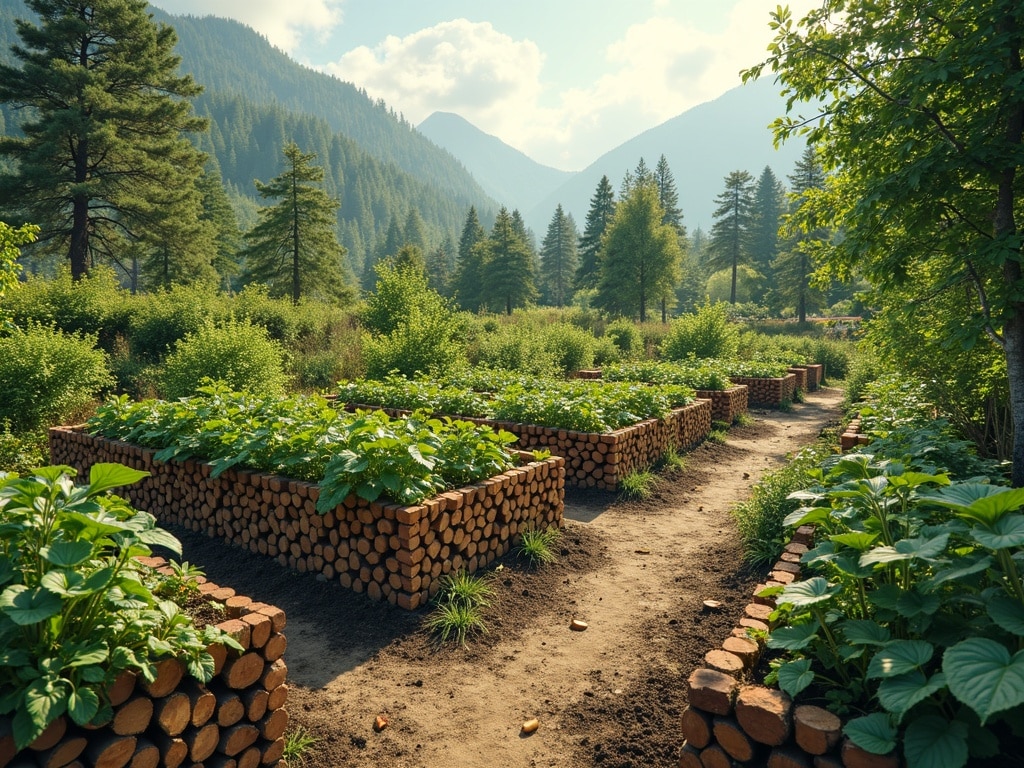
Building Your Hugelkultur Bed: Step-by-Step
Building a hugelkultur bed is a relatively straightforward process:
- Prepare the Site: Clear the area of any vegetation or debris. You can dig a shallow trench to bury the base layer of wood, which will help retain moisture.
- Layer the Wood: Place the largest logs at the bottom of the bed, followed by smaller branches and twigs. The goal is to create a stable and well-draining foundation. Pack the wood tightly to prevent excessive settling.
- Add Green Material: Cover the wood with a layer of green material, such as grass clippings, leaves, and compost. This layer will provide nitrogen to help break down the wood.
- Incorporate Amendments (Optional): If desired, add manure, bone meal, or rock dust to provide additional nutrients.
- Cover with Soil: Top the bed with a thick layer of topsoil or garden soil. The soil will provide a growing medium for your plants and help retain moisture.
- Water Thoroughly: Water the bed thoroughly to help settle the materials and initiate the decomposition process.
- Mulch (Optional): Add a layer of mulch, such as straw or wood chips, to help retain moisture and suppress weeds.
Planting Your Hugelkultur Bed
Once the bed is built, you can start planting right away. Choose plants that are well-suited to the growing conditions in your area. Consider companion planting to maximize yields and minimize pest problems. For example, planting nitrogen-fixing plants, like beans or peas, can help enrich the soil.
Hugelkultur Tips and Tricks
- Use a Variety of Wood: Different types of wood decompose at different rates, providing a sustained release of nutrients.
- Bury the Base Layer: Burying the base layer of wood helps retain moisture and prevents the bed from drying out.
- Water Regularly During Establishment: While hugelkultur reduces watering needs, it’s important to water regularly during the first few weeks to help the plants establish themselves.
- Add Compost Regularly: Adding compost to the bed each year will help maintain soil fertility.
- Monitor Soil pH: Over time, the decomposition of wood can lower the soil pH. Monitor the pH and adjust as needed to ensure optimal growing conditions.
Hugelkultur for Different Climates
Hugelkultur can be adapted to various climates by adjusting the materials and construction techniques. For example:
- Dry Climates: Focus on using materials that retain moisture, such as large logs and plenty of compost. Bury the base layer deeper to minimize water loss.
- Wet Climates: Ensure good drainage by using a higher proportion of woody material and building the bed on a slope.
- Cold Climates: Build taller beds to take advantage of the heat generated by decomposition. Choose cold-hardy plants.
- Hot Climates: Provide shade during the hottest part of the day to prevent the soil from drying out. Use drought-tolerant plants.
Common Hugelkultur Mistakes to Avoid
- Using Untreated Wood: Avoid using treated wood, as it can leach harmful chemicals into the soil.
- Using Too Much Green Material: While green material provides nitrogen, too much can lead to anaerobic conditions and foul odors.
- Not Watering Enough During Establishment: Neglecting to water the bed during the first few weeks can prevent the wood from properly absorbing moisture.
- Planting the Wrong Plants: Choose plants that are well-suited to the growing conditions in your area.
Hugelkultur: A Sustainable Gardening Solution
Hugelkultur is a sustainable gardening technique that offers numerous benefits for both the gardener and the environment. By utilizing decaying wood to create a nutrient-rich, moisture-retentive growing medium, hugelkultur [externalLink] reduces the need for watering, fertilization, and tilling. It’s a productive way to reuse organic waste, supports healthy soil, and adds to the overall health of your garden.
Embrace the Mound
So, grab your shovel, gather your logs, and embrace the magic of hugelkultur. You’ll be amazed at how this simple technique can transform your garden into a thriving ecosystem, one mound at a time.