
Solar Power Seasonal Sizing: How to Design Systems That Work Year-Round
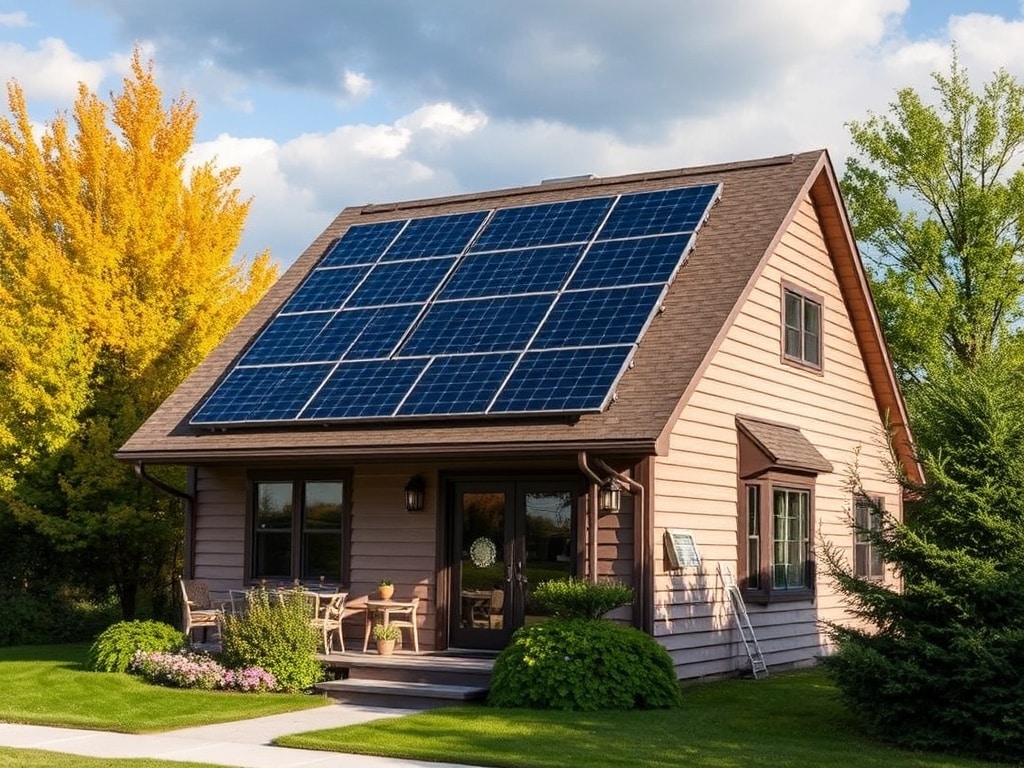
Most solar power systems fail not because the panels stop working, but because someone sized them for average conditions instead of worst-case reality. A system that works beautifully in July can leave you powerless in December, and that’s a expensive lesson to learn after installation.
This guide walks through the engineering logic behind seasonal solar sizing, showing you exactly how to model your worst periods, quantify the gaps, and build backup strategies that actually work.
Why Average Sunlight Will Betray You
Solar irradiance varies dramatically by season. A location might receive 6.5 peak sun hours daily in summer but only 2.1 hours in winter—a 3:1 ratio. If you size your system around annual averages (say, 4.3 peak hours), you’ll have excess power eight months of the year and blackouts the other four.
The principle is simple: your system must meet demand during the worst energy production period, not the average period. This is called “designing to the critical month” or “worst-case sizing.”
Think of it like designing a bridge. You don’t calculate the average weight of traffic—you design for the heaviest truck that will ever cross it. Solar works the same way.
Understanding Your Energy Production Curve
Before you can size anything, you need to map how much energy your location actually produces month by month.
Finding Your Peak Sun Hours
Peak sun hours (PSH) represent the equivalent hours per day that solar irradiance equals 1,000 W/m². It’s the standard metric for comparing solar potential.
Sources for PSH data:
- NREL’s PVWatts Calculator (pvwatts.nrel.gov) – US locations
- NASA POWER Data Access Viewer – Global coverage
- European Commission’s PVGIS – Europe and Africa
- Your local meteorological service
Get monthly average PSH for your specific latitude and tilt angle. Don’t use data from a city 100 miles away—irradiance varies significantly with local climate, altitude, and weather patterns.
The Reality Check: Derating Factors
Theoretical panel output never equals real-world performance. You need to apply derating factors:
- Temperature losses: 10-15% (panels lose efficiency when hot)
- Soiling and dust: 2-5% (dirt accumulation)
- Wiring and connection losses: 2-3%
- Inverter efficiency: 4-6% loss (most inverters are 94-96% efficient)
- Shading: Highly variable, requires site-specific analysis
- Aging: 0.5-0.8% per year degradation
A reasonable overall derate factor is 0.75-0.80 for well-maintained systems. This means a 1,000W array produces 750-800W under real conditions.
The Seasonal Sizing Worksheet
Here’s the step-by-step method for sizing your system around seasonal variability.
Step 1: Calculate Monthly Energy Demand
List every electrical load in your home or facility:
Example household:
- Refrigerator: 150W × 24h = 3,600 Wh/day
- LED lighting: 60W × 5h = 300 Wh/day
- Laptop/devices: 50W × 8h = 400 Wh/day
- Water pump: 800W × 1h = 800 Wh/day
- Washing machine: 500W × 0.5h = 250 Wh/day (weekly average)
- Total: 5,350 Wh/day or 5.35 kWh/day
Note any seasonal variations. Heating and cooling loads can swing dramatically. In this example, let’s add winter heating (space heater):
- Winter months: Add 1,500W × 4h = 6,000 Wh/day
- Winter total: 11,350 Wh/day or 11.35 kWh/day
Step 2: Map Monthly Solar Production Potential
Using your PSH data, create a month-by-month table:
| Month | PSH | Days | Monthly Irradiance |
|---|---|---|---|
| Jan | 2.1 | 31 | 65.1 PSH |
| Feb | 2.8 | 28 | 78.4 PSH |
| Mar | 4.2 | 31 | 130.2 PSH |
| Apr | 5.5 | 30 | 165.0 PSH |
| May | 6.3 | 31 | 195.3 PSH |
| Jun | 6.8 | 30 | 204.0 PSH |
| Jul | 6.5 | 31 | 201.5 PSH |
| Aug | 5.8 | 31 | 179.8 PSH |
| Sep | 4.9 | 30 | 147.0 PSH |
| Oct | 3.5 | 31 | 108.5 PSH |
| Nov | 2.4 | 30 | 72.0 PSH |
| Dec | 1.9 | 31 | 58.9 PSH |
January is clearly our critical month with only 2.1 PSH daily.
Step 3: Calculate Required Array Size
For the critical month (January), we need to produce 11.35 kWh/day with only 2.1 PSH available.
Formula: Array Size (kW) = Daily Energy Need (kWh) ÷ (PSH × Derate Factor)
Using a 0.78 derate factor:
- Array Size = 11.35 kWh ÷ (2.1 PSH × 0.78)
- Array Size = 11.35 ÷ 1.64
- Array Size = 6.92 kW (round up to 7 kW)
This means installing seven 1,000W panels (or equivalent combinations).
Step 4: Verify Summer Overproduction
Now check what this 7 kW array produces in peak months:
June production:
- Daily: 7 kW × 6.8 PSH × 0.78 = 37.1 kWh/day
- Daily consumption: 5.35 kWh/day
- Surplus: 31.75 kWh/day
This massive overproduction is normal and expected. Options for excess energy:
- Grid-tie with net metering (sell back to utility)
- Battery storage for nighttime use
- Load shifting (run water heating, EV charging, etc. during day)
- Accept the waste (if off-grid with no storage expansion)
Step 5: Calculate Battery Storage Needs
Battery storage must cover nighttime usage plus provide autonomy for cloudy days.
Nighttime loads (no solar production for ~14 hours in winter):
- Refrigerator: 150W × 14h = 2,100 Wh
- Lighting: 60W × 5h = 300 Wh
- Devices: 50W × 4h = 200 Wh
- Nighttime need: 2,600 Wh or 2.6 kWh
Autonomy calculation (days of backup): For off-grid systems, 2-3 days of autonomy is standard. Let’s use 2 days:
- Daily consumption: 11.35 kWh
- 2-day autonomy: 11.35 × 2 = 22.7 kWh
Depth of discharge consideration: Lead-acid batteries should only discharge to 50% (0.5 DoD max), while lithium can go to 80-90% (0.85 DoD typical).
For lithium batteries:
- Required capacity = 22.7 kWh ÷ 0.85
- Battery bank: 26.7 kWh minimum
In practice, you’d install something like a 30 kWh lithium battery bank (allowing for some aging and safety margin).
Modeling Variability: The Monte Carlo Approach
Real weather doesn’t follow monthly averages. You might get a week of cloudy days right when you least expect it. More sophisticated sizing uses historical weather data to model variability.
Creating a Stochastic Model
- Gather multi-year hourly data: NASA POWER or NREL NSRDB provides 20+ years of hourly irradiance data
- Simulate daily production: Run your array size through each historical day
- Track shortfall events: Count how many days your batteries would fully deplete
- Calculate loss-of-load probability (LOLP): Percentage of days with unmet demand
A well-designed system typically targets LOLP of 1-5%, meaning you accept 4-18 days per year where you might need backup power.
Spreadsheet Method
If you don’t have programming skills, a simplified spreadsheet approach works:
- Input daily PSH data for the worst three months over 5 years (90 days total)
- Calculate daily production for your proposed array
- Subtract daily consumption
- Track battery state-of-charge day by day
- Count days where battery hits 0%
If you see too many depletion events, either increase array size, add battery capacity, or plan for backup generation.
Building Your Backup Plan
Even a perfectly sized solar system needs backup for extended low-production periods. Here are three proven strategies:
Strategy 1: Generator Backup
Sizing a backup generator: Your generator only needs to cover critical loads plus charge batteries, not total load.
Critical loads example:
- Refrigerator: 150W
- Minimum lighting: 30W
- Phone charging: 20W
- Well pump (if applicable): 800W
- Critical load total: 1,000W
Battery charging requirement: If your battery bank is 30 kWh and needs to go from 20% to 80% (18 kWh charge), and your charger is 80% efficient:
- Energy needed: 18 kWh ÷ 0.80 = 22.5 kWh
- Over 5 hours charging: 22.5 ÷ 5 = 4.5 kW
Generator size needed: 1 kW (critical) + 4.5 kW (charging) = 5.5 kW minimum
A 6-7 kW generator provides appropriate headroom. Plan to run it 4-6 hours during worst-case days.
Fuel calculations: A 6 kW gasoline generator uses roughly 0.6 gallons/hour at 50% load:
- 5 hours/day × 0.6 gal = 3 gallons/day
- 10 worst days/winter = 30 gallons storage needed
Propane offers longer shelf life if you use backup infrequently.
Strategy 2: Demand Response
Demand response means reducing consumption during low-production periods rather than increasing supply.
Load prioritization tiers:
Tier 1 – Non-negotiable:
- Refrigeration
- Critical medical equipment
- Minimal lighting
- Communication
Tier 2 – Important but flexible:
- Water heating (can delay)
- Washing machine (can schedule)
- Entertainment systems
Tier 3 – Deferrable:
- EV charging
- Power tools
- High-power cooking appliances
Install automatic load controllers that shed Tier 3 loads when battery state-of-charge drops below 40%, and Tier 2 loads below 25%.
Example automation:
- Battery at 40%: Disable EV charger, water heater shifts to timer mode
- Battery at 25%: Delay dishwasher and laundry until solar production resumes
- Battery at 15%: Alert occupants to minimize all non-critical usage
This approach can reduce your worst-case demand from 11.35 kWh/day to 7-8 kWh/day, potentially eliminating the need for generator backup entirely.
Strategy 3: Thermal Storage
Thermal storage captures excess summer energy as heat or cold, reducing winter electrical demand.
Hot water storage:
- Install an oversized water heater (120-gallon vs. 50-gallon)
- Add solar heating coils or resistance heating powered by excess solar
- Insulate aggressively to maintain temperature 24+ hours
- Reduction: 2-4 kWh/day in winter heating demand
Phase-change thermal mass:
- Install thermal mass inside building envelope (water tanks, concrete, masonry)
- Heat during peak solar production hours
- Mass radiates heat overnight
- Works best in climates with high diurnal temperature swings
Cold storage (for cooling climates):
- Make ice during off-peak solar hours
- Use ice to provide cooling during evening peak
- Particularly effective in hot climates with high AC loads
Thermal storage has the advantage of no maintenance, no fuel costs, and decades-long lifespan, but requires careful design integration into your building.
Complete Worked Example
Let’s size a complete system for a small off-grid cabin in Vermont.
Location: Burlington, VT (44.5°N) Annual consumption: 4,500 kWh (12.3 kWh/day average)
Monthly consumption breakdown:
- Winter (Nov-Mar): 15 kWh/day (heating load)
- Shoulder (Apr-May, Sep-Oct): 11 kWh/day
- Summer (Jun-Aug): 9 kWh/day
Monthly PSH data (south-facing, 45° tilt):
- December (worst): 2.2 PSH
- January: 2.5 PSH
- June (best): 5.8 PSH
Step 1: Array sizing Critical month: December
- Demand: 15 kWh/day
- Production: 2.2 PSH
- Derate: 0.77 (northern climate, more snow)
- Array = 15 ÷ (2.2 × 0.77) = 8.86 kW array
Round up to 9 kW (thirty 300W panels).
Step 2: Battery sizing
- 3-day autonomy target
- 15 kWh/day × 3 = 45 kWh
- Lithium at 85% DoD: 45 ÷ 0.85 = 53 kWh battery bank
Specify 56 kWh to account for aging (two 28 kWh units).
Step 3: Backup generator
- Critical loads: 800W
- Battery charging: 56 kWh × 0.6 (from 20% to 80%) ÷ 5 hours = 6.7 kW
- Generator size: 7.5 kW unit
Fuel storage: 50 gallons propane (approximately 10 days worst-case backup).
Step 4: Demand response Install smart load controller:
- Water heater (3 kW): Heats only when battery >60% or solar producing
- Block heater (1.5 kW): Disabled when battery <40%
- Reduces worst-case demand to 12.5 kWh/day
Equipment list:
- 30× 300W solar panels: $6,000
- Racking and mounting: $1,500
- 56 kWh lithium battery: $28,000
- 9 kW hybrid inverter/charger: $4,500
- 7.5 kW propane generator: $2,500
- Automatic transfer switch: $800
- Smart load controller: $600
- Wiring, breakers, installation: $5,000
- Total system cost: $49,900
Performance analysis:
- June production: 9 kW × 5.8 PSH × 0.77 = 40.2 kWh/day
- June consumption: 9 kWh/day
- Surplus: 31.2 kWh/day (used for thermal storage)
This system meets 95%+ of annual demand from solar, using the generator approximately 15-20 days per winter.
Optimizing System Economics
The worksheet method produces a functional system, but may not be the most economical approach. Here’s how to optimize:
Trade-off Analysis
Option A: Large array, minimal backup
- 9 kW array, 56 kWh battery, 7.5 kW generator
- Cost: $49,900
- Generator use: 15-20 days/year
Option B: Moderate array, regular backup
- 6 kW array, 40 kWh battery, 10 kW generator
- Cost: $38,200
- Generator use: 45-60 days/year
- Annual fuel cost: $400-600
Option C: Small array, demand response focus
- 5 kW array, 30 kWh battery, aggressive load management
- Cost: $31,500
- Lifestyle impact: Moderate (scheduled appliance use, temperature setbacks)
The financially optimal choice depends on your fuel costs, grid interconnection options, and tolerance for backup system use.
Grid-Tied Optimization
If grid connection is available, net metering dramatically changes the equation:
- Size array for annual production equal to annual consumption
- No battery needed (grid acts as infinite storage)
- System cost drops 60-70%
- Typical payback: 7-12 years vs. 20+ years for off-grid
For our Vermont example:
- Annual consumption: 4,500 kWh
- Average PSH: 3.8
- Array size: 4,500 ÷ (3.8 × 365 × 0.77) = 4.2 kW
- System cost: $12,000-15,000
However, grid-tied systems offer no backup during utility outages unless you add a battery system.
Advanced Considerations
Climate Change Adaptation
Historical solar data may not reflect future conditions. Consider:
- Increasing cloud cover in some regions
- More frequent extreme weather events
- Shifting seasonal patterns
Build in 10-15% oversizing margin if designing for 20+ year lifespan.
Load Growth
Don’t size only for current consumption. Factor in:
- EV adoption (add 7-12 kWh/day per vehicle)
- Family expansion
- Electrification of heating (adds 15-40 kWh/day in cold climates)
If load growth is likely, oversize the array and battery capacity by 25-50% initially, even if it seems excessive.
Hybrid Inverter Selection
Your inverter must handle:
- Peak solar input (9 kW)
- Peak load (typically 2-3× average: 30-40A at 240V = 7-10 kW)
- Battery charging rate (typically 0.3-0.5C: 17-28 kW for 56 kWh battery)
For our Vermont example, specify a 10 kW continuous / 12 kW surge hybrid inverter with integrated 30A charger.
Conclusion: From Worksheet to Reality
Seasonal sizing fundamentally recognizes that solar energy is not constant, and pretending it is leads to failed systems and disappointed owners. The worksheet method outlined here gives you a reality-based approach:
- Identify your critical month using local PSH data
- Size the array to meet worst-case demand with appropriate derating
- Add battery storage for nighttime loads plus 2-3 days autonomy
- Install backup generation sized for critical loads and battery charging
- Implement demand response to reduce backup system runtime
- Consider thermal storage to shift loads away from electrical demand
The resulting system may seem oversized in summer and expensive upfront, but it will reliably meet your needs year-round. That reliability is worth the investment—far better than discovering your undersized system leaves you without power during a January cold snap.
Start with the worksheet, run the numbers honestly, and remember that solar power is a 25-year commitment. Get the sizing right the first time.