
Unleash Your Inner Wild: The Unexpected Benefits of Barefoot Walking
Have you ever kicked off your shoes and socks and felt the cool earth between your toes? It’s more than just a fleeting moment of freedom – it’s an invitation to reconnect with our natural world and unlock a surprising array of health benefits. Barefoot walking, or earthing as it’s sometimes called, is experiencing a resurgence as people rediscover its potential to improve everything from posture to mental well-being. So, ditch the footwear and let’s explore the fascinating science and ancient wisdom behind this simple, yet profound practice.
The Ground Beneath Our Feet: A History of Barefoot Living
For millennia, humans walked barefoot. Shoes, as we know them today, are a relatively recent invention. Our feet evolved to interact directly with the ground, receiving sensory information and adapting to varied terrains. Think about indigenous cultures who thrive barefoot, their feet strong, agile, and resilient. Somewhere along the way, we traded this natural connection for cushioned soles and arch support. But at what cost?
The Modern Shoe: A Double-Edged Sword
While shoes offer protection, they also alter our gait, weaken foot muscles, and limit sensory input. High heels, in particular, can wreak havoc on posture and alignment. Even seemingly innocuous sneakers can restrict natural foot movement. By constantly relying on shoes, we essentially disable some of the foot’s inherent capabilities. Barefoot walking, in contrast, encourages our feet to function as nature intended.
The Science of Barefoot Walking: What the Research Says
The benefits of barefoot walking extend beyond anecdotal evidence. Scientific studies suggest a range of positive effects:
- Improved Foot Strength: Walking barefoot strengthens the intrinsic muscles of the foot, leading to better arch support and reduced risk of foot problems like plantar fasciitis.
- Enhanced Proprioception: Proprioception is the body’s awareness of its position in space. Barefoot walking stimulates nerve endings in the feet, improving balance and coordination.
- Better Posture and Gait: Without the artificial support of shoes, our bodies naturally align themselves for optimal movement. This can lead to improved posture and a more efficient gait.
- Reduced Risk of Injury: While it seems counterintuitive, barefoot walking can actually reduce the risk of certain injuries. By strengthening foot muscles and improving proprioception, it helps prevent ankle sprains and other lower limb problems.
- Stress Reduction: Studies have shown that direct contact with the earth can reduce cortisol levels (the stress hormone) and improve sleep quality. This is linked to the transfer of free electrons from the earth into the body, which can have antioxidant effects. You can learn more about grounding and earthing [externalLink insert].
The Physical Advantages: Reconnecting with Your Body
One of the most immediate benefits of barefoot walking is the increased sensory feedback. You become more aware of the ground beneath your feet – the texture of the grass, the coolness of the sand, the unevenness of the trail. This heightened awareness translates into improved balance and coordination.
Strengthening Your Foundation
Think of your feet as the foundation of your body. When they’re weak or misaligned, it can affect everything up the chain, from your ankles and knees to your hips and back. Barefoot walking helps strengthen the muscles in your feet, providing a more stable and supportive base for your entire body.
Re-educating Your Gait
Shoes often encourage us to heel strike, which sends a jarring impact up the leg. Barefoot walking, on the other hand, naturally promotes a mid-foot strike, which is a more efficient and less stressful way to move. This can help reduce joint pain and improve overall mobility.
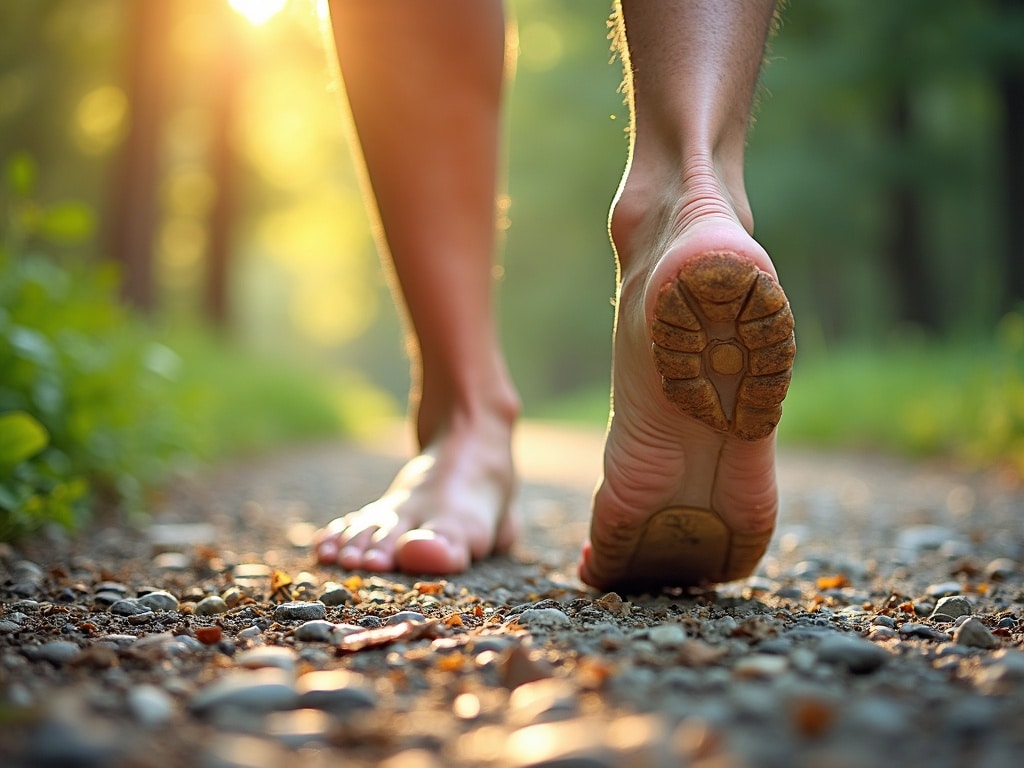
The Mental and Emotional Perks: Grounding for Well-being
Beyond the physical benefits, barefoot walking can have a profound impact on your mental and emotional well-being.
Stress Relief and Grounding
The act of connecting with the earth can be incredibly grounding. It helps to quiet the mind, reduce stress, and promote a sense of calm. Walking barefoot in nature allows you to fully immerse yourself in your surroundings, fostering a deeper connection with the natural world.
Improved Sleep
As mentioned earlier, studies have linked barefoot walking to reduced cortisol levels and improved sleep quality. By grounding yourself during the day, you can help regulate your body’s natural rhythms and promote more restful sleep at night.
A Mood Booster
Spending time outdoors, especially in natural environments, is a well-known mood booster. Combine that with the sensory stimulation of barefoot walking, and you have a recipe for happiness. The simple act of feeling the earth beneath your feet can be surprisingly uplifting.
Getting Started: A Guide to Safe and Enjoyable Barefoot Walking
Ready to embrace the barefoot life? Here are a few tips to get you started:
- Start Slowly: Don’t try to walk miles barefoot on your first attempt. Begin with short walks on soft surfaces like grass or sand.
- Choose Your Terrain Wisely: Avoid walking barefoot on hot pavement, sharp rocks, or areas with broken glass or other hazards.
- Listen to Your Body: If you experience pain or discomfort, stop and rest. It’s important to gradually build up your tolerance.
- Check Your Feet Regularly: Inspect your feet for cuts, blisters, or other injuries. Treat any problems promptly.
- Be Mindful of Your Surroundings: Pay attention to where you’re walking and avoid distractions like your phone.
Building a Barefoot Habit
Incorporate barefoot walking into your daily routine. Walk around your yard, stroll on the beach, or practice yoga outdoors. The more you do it, the more comfortable and natural it will become. Consider investing in minimalist shoes as a transition tool. These shoes offer some protection while still allowing your feet to move naturally. You might also find some helpful information about foot health .
Addressing Concerns: Safety and Hygiene
It’s natural to have concerns about safety and hygiene when considering barefoot walking. Here are some things to keep in mind:
- Risk of Injury: As mentioned earlier, it’s important to choose your terrain wisely and avoid hazardous areas.
- Infection: While the risk of infection is relatively low, it’s important to keep your feet clean and treat any cuts or abrasions promptly.
- Parasites: In some areas, hookworm and other parasites can be transmitted through the soil. Wear shoes in areas where these parasites are prevalent.
- Hygiene: Wash your feet thoroughly after walking barefoot, especially before going indoors.
By taking precautions and being mindful of your surroundings, you can minimize the risks associated with barefoot walking and enjoy its many benefits.
The Future of Footwear: Embracing Natural Movement
The barefoot movement is gaining momentum as more people recognize the importance of natural movement. Minimalist shoes, which mimic the feel of barefoot walking while offering some protection, are becoming increasingly popular. Perhaps, in the future, we’ll see a shift towards footwear that supports natural foot function rather than hindering it.
Ultimately, the decision of whether or not to walk barefoot is a personal one. However, the evidence suggests that it can be a powerful way to improve your physical and mental well-being. So, kick off your shoes, feel the earth beneath your feet, and experience the joy of barefoot walking for yourself. Your body (and your feet) will thank you for it.