
The Unseen Architects: Exploring the Role of Microorganisms in Soil
Imagine a world teeming with life, too small to see, yet powerful enough to shape the very ground beneath our feet. This isn’t science fiction; it’s the reality of soil, home to a universe of microorganisms whose tireless work sustains plant life and, ultimately, our own. These microscopic marvels – bacteria, fungi, archaea, protozoa, and viruses – are the unseen architects of a healthy, thriving ecosystem. They drive nutrient cycles, decompose organic matter, and protect plants from disease, all while remaining largely invisible to the naked eye. Let’s delve into the fascinating role of microorganisms in soil and unlock the secrets of this hidden world.
The Soil Food Web: A Microscopic Metropolis
The soil food web is a complex network of interactions between different organisms, from the smallest bacteria to larger creatures like earthworms. Microorganisms occupy the base of this web, forming the foundation for all other life in the soil. They obtain energy by decomposing organic matter, such as dead leaves, roots, and animal waste. This decomposition process releases nutrients that plants can then absorb, fueling their growth.
Think of it like a bustling city: bacteria and fungi are the sanitation workers, breaking down waste and recycling valuable resources. Protozoa are the predators, feeding on bacteria and releasing nutrients in a plant-available form. Nematodes are the recyclers, consuming bacteria, fungi, and other nematodes, contributing to the ongoing cycle of nutrient release and availability. It’s a continuous process of eating and being eaten, creating a dynamic and balanced ecosystem.
Key Players in the Soil Food Web
**Bacteria:These single-celled organisms are the most abundant microorganisms in soil. They play a crucial role in nitrogen fixation, nutrient cycling, and decomposition.
**Fungi:Fungi are multicellular organisms that form extensive networks of hyphae (thread-like structures) in the soil. They are important decomposers, particularly of tough organic materials like lignin.
**Archaea:Similar to bacteria, archaea are single-celled organisms that thrive in a variety of environments, including extreme conditions. They play a role in nitrogen cycling and other biogeochemical processes.
**Protozoa:These single-celled eukaryotes (organisms with a nucleus) feed on bacteria, fungi, and other microorganisms, contributing to nutrient cycling and the regulation of microbial populations.
**Nematodes:These microscopic roundworms feed on bacteria, fungi, plants, and other nematodes. They play a complex role in the soil food web, acting as both predators and prey.
Nutrient Cycling: Microorganisms as Nature’s Recyclers
One of the most critical roles of microorganisms in soil is nutrient cycling. Plants require a range of essential nutrients, such as nitrogen, phosphorus, and potassium, to grow and thrive. Microorganisms help to convert these nutrients into forms that plants can readily absorb.
**Nitrogen Fixation:Nitrogen is an essential element for plant growth, but plants cannot directly use atmospheric nitrogen gas (N2). Certain bacteria, known as nitrogen-fixing bacteria, convert N2 into ammonia (NH3), a form of nitrogen that plants can use. Some of these bacteria live freely in the soil [externalLink insert], while others form symbiotic relationships with plants, such as legumes (e.g., beans, peas, and clover).
**Phosphorus Solubilization:Phosphorus is another essential nutrient for plant growth, but it is often present in soil in forms that are not readily available to plants. Certain bacteria and fungi can solubilize phosphorus, converting it into a form that plants can absorb.
**Decomposition:Microorganisms decompose organic matter, releasing nutrients that are locked up in dead plants and animals. This decomposition process is essential for maintaining soil fertility and preventing the accumulation of organic waste.
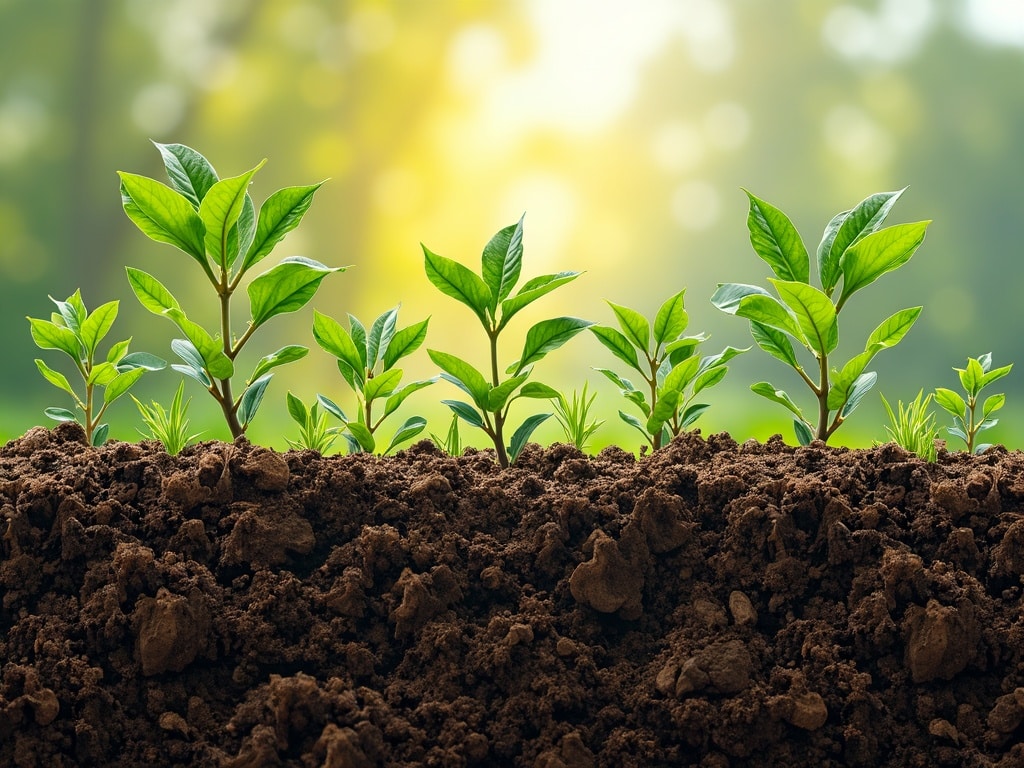
Improving Soil Structure: Binding Soil Particles Together
Beyond their role in nutrient cycling, microorganisms also contribute to soil structure improvement. Soil structure refers to the arrangement of soil particles into aggregates, which are clusters of particles that are held together by organic matter and microbial byproducts. Good soil structure is important for water infiltration, aeration, and root growth.
**Aggregation:Fungi, in particular, play a crucial role in soil aggregation. Their hyphae bind soil particles together, creating stable aggregates. These aggregates improve soil porosity, allowing for better water infiltration and aeration.
**Organic Matter Stabilization:Microorganisms also help to stabilize organic matter in the soil. As they decompose organic matter, they produce humic substances, which are complex organic molecules that bind to soil particles and improve soil structure. A healthy soil structure is essential for plant growth as it allows roots to penetrate easily and access water and nutrients.
Protecting Plants from Disease: A Biological Shield
Microorganisms act as a biological shield, protecting plants from harmful pathogens. They can suppress diseases through various mechanisms:
**Competition:Beneficial microorganisms compete with pathogens for nutrients and space, limiting the pathogens’ ability to infect plants.
**Antibiosis:Some microorganisms produce antibiotics or other antimicrobial compounds that inhibit the growth of pathogens.
**Induced Systemic Resistance (ISR):Certain microorganisms can trigger ISR in plants, enhancing their natural defenses against pathogens. ISR is a phenomenon where exposure to a beneficial microorganism makes the plant more resistant to subsequent infection by a pathogen.
This natural disease suppression is a critical component of sustainable agriculture, reducing the need for synthetic pesticides that can harm the environment.
The Impact of Human Activity on Soil Microorganisms
Human activities can have a profound impact on soil microorganisms, both positive and negative. Intensive agriculture, pollution, and deforestation can disrupt the delicate balance of the soil food web, while sustainable practices can enhance microbial activity and improve soil health.
**Intensive Agriculture:Excessive use of synthetic fertilizers and pesticides can harm beneficial soil microorganisms, reducing soil fertility and increasing the risk of plant diseases. Tillage can also disrupt soil structure and reduce microbial biomass.
**Pollution:Soil pollution from heavy metals, industrial chemicals, and other pollutants can inhibit microbial activity and reduce the diversity of the soil food web.
**Deforestation:Deforestation can lead to soil erosion and loss of organic matter, reducing microbial biomass and disrupting nutrient cycles.
Promoting Beneficial Microorganisms
Fortunately, we can take steps to promote beneficial microorganisms and improve soil health:
**Organic Amendments:Adding organic matter to the soil, such as compost, manure, or cover crops, provides food for microorganisms and enhances their activity.
**Reduced Tillage:Reducing or eliminating tillage can help to preserve soil structure and protect microbial habitats.
**Crop Rotation:Rotating crops can help to diversify the soil food web and reduce the buildup of pathogens.
**Cover Cropping:Planting cover crops can help to protect the soil from erosion, suppress weeds, and provide food for microorganisms.
**Composting:Composting is a great way to recycle organic waste and create a valuable soil amendment that is rich in beneficial microorganisms like those found at .
The Future of Soil Microbiology: Harnessing the Power of the Unseen
The field of soil microbiology is rapidly advancing, with new discoveries being made all the time. Researchers are exploring the potential of microorganisms to improve crop yields, reduce the use of synthetic fertilizers and pesticides, and remediate contaminated soils.
**Biofertilizers:Biofertilizers are microbial inoculants that contain beneficial microorganisms that can enhance plant growth. These biofertilizers can improve nutrient uptake, promote root growth, and protect plants from disease.
**Biopesticides:Biopesticides are biological control agents that use microorganisms or their products to control pests and diseases. These biopesticides are often more environmentally friendly than synthetic pesticides.
**Bioremediation:Bioremediation is the use of microorganisms to clean up contaminated soils and water. Microorganisms can break down pollutants, such as petroleum hydrocarbons and heavy metals, into less harmful substances.
By understanding the role of microorganisms in soil, we can harness their power to create more sustainable and productive agricultural systems, ensuring food security for future generations. The unseen architects of the soil are essential partners in our quest for a healthier planet.
In conclusion, the world beneath our feet is far more vibrant and complex than we often realize. Microorganisms in soil are not just tiny inhabitants; they are the engines driving essential processes, from nutrient cycling to disease suppression. By understanding and nurturing this hidden world, we can unlock the secrets to healthier soils, thriving plants, and a more sustainable future for all.