
What You Need to Know About Climate Change so You Can be Prepared.
Global Climate Change Impacts and Projections
(1975–2075)
Introduction: Over the past half-century, human-induced climate change has fundamentally altered the Earth’s climate system, with every continent experiencing warming and an uptick in climate extremes ipcc.chipcc.ch. Global surface temperature in 2011–2020 was about 1.1 °C higher than pre-industrial levels, and warming since 1970 has been unprecedented in at least 2000 years ipcc.ch. These changes are not uniform – land areas have warmed roughly 70% faster than oceans carbonbrief.org, and high latitudes (especially the Arctic) warmed over twice as fast as the global average ipcc.ch. In tandem, the atmosphere and oceans have witnessed shifting precipitation patterns, more frequent extreme events, rising sea levels, and ecosystem disruptions. Below, we break down the historical climate impacts (1975–2025) by continent and region (coastal vs. inland, northern vs. southern, highland vs. lowland), focusing on key variables. We then project the next 50 years (2025–2075) under best- and worst-case scenarios based on current mitigation efforts, and identify likely stages of climate disruption. Finally, we discuss which regions are projected to remain most resilient and habitable by 2075, considering factors like water availability, arable land, and disaster risk.
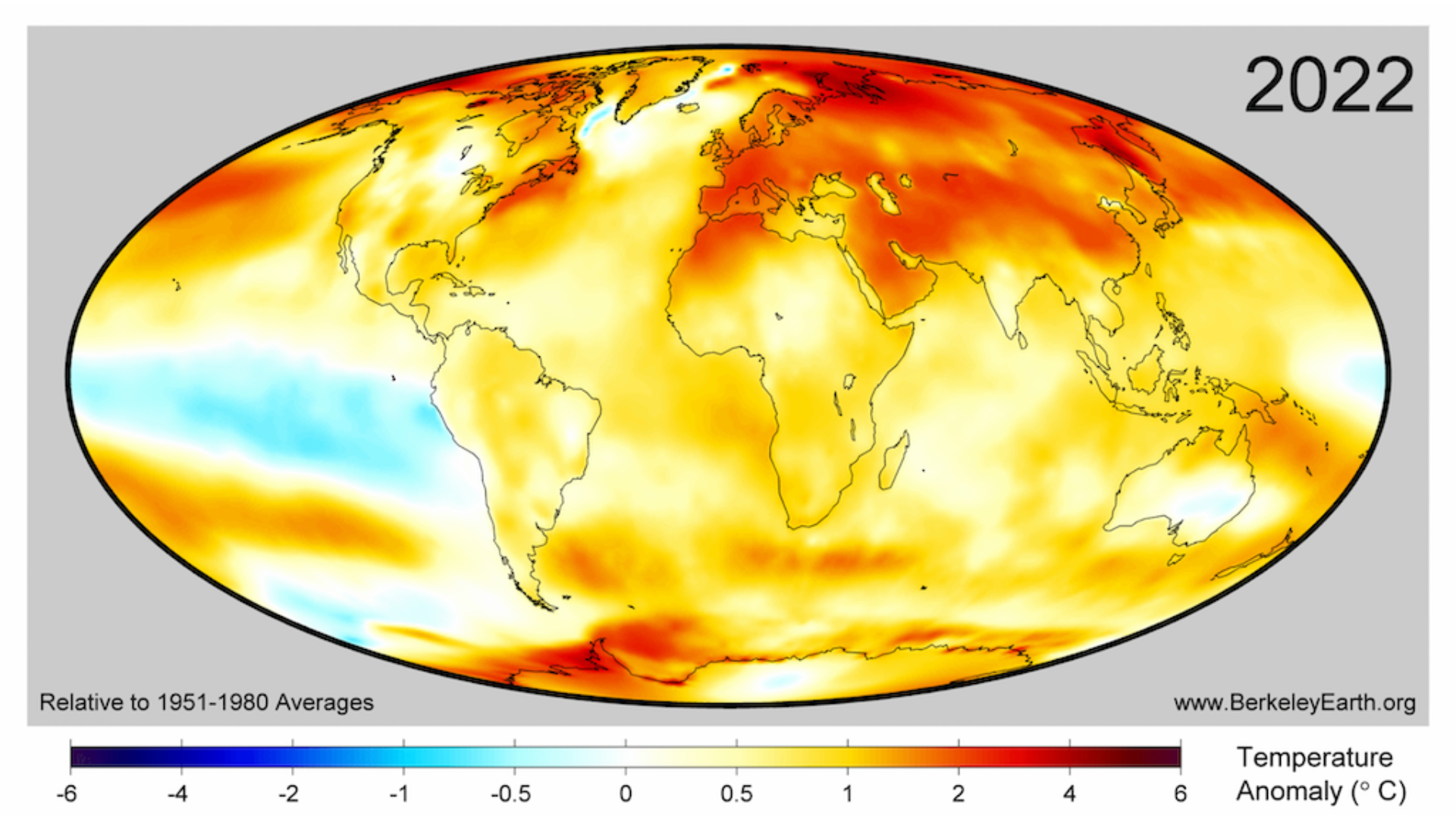
Global surface temperature anomalies in 2022 (relative to 1951–1980). All continents have warmed markedly (reds) in recent decades, with the fastest warming in northern latitudes carbonbrief.orgipcc.ch. Cooler-than-average areas (blue) are limited and often reflect regional oceanic variability.
Historical Climate Changes by Region (1975–2025)
Climate change has affected every region on the globe in the last 50 years, though impacts vary by location ipcc.chipcc.ch. Table 1 summarizes observed changes by continent, including temperature deviations from past norms, shifts in ecosystems and agriculture, habitability concerns, and changes in extreme weather and sea level.
| Region | Temperature & Seasons | Environmental & Agricultural Shifts | Extreme Events & Disasters | Sea Level & Oceans |
|---|---|---|---|---|
| North America | Warming > global avg (especially north); longer growing seasons. Winters warmed, fewer cold extremes. | Plant hardiness zones moved northward as minimum temperatures rose. High-latitude crop yields increased slightly, while heat stress slowed yields in southern areas. | Western NA: more frequent droughts and severe wildfire seasons. Eastern NA: heavier rainfall and flooding events. Stronger Atlantic hurricanes (more Category 4–5 storms) impacting Gulf/SE coasts. | Sea level rising along most coasts (~15 cm since 1900); enhanced coastal flooding and erosion already observed. Arctic sea-ice loss amplified warming in Alaska/Canada Arctic. |
| Europe | Warming above global rate across all Europe. Extreme heat waves have become more frequent (e.g. 2003, 2010, 2019). Fewer frost days and shorter winters. | Growing season lengthened in north. Some crop shifts northward (e.g. grapes in England). Southern Europe seeing more summer drought stress. Alpine glaciers lost substantial mass (50%+ of volume since 1900 in some areas). | Increased heatwave deaths (e.g. 70,000 in 2003 Europe heatwave). Heavy rain events intensified in Central & Northern Europe, causing more flash floods. Mediterranean region drier – more droughts and wildfires in summers. | Sea level up ~0.2 m since 1900 on European coasts. More frequent coastal flooding (e.g. Venice). Exception: Baltic Sea sees less rise due to land uplift. Marine heatwaves in North Atlantic and Mediterranean have damaged marine ecosystems (e.g. coral in Med). |
| Asia | Clear warming across all Asia beyond natural variability. More hot extremes and fewer cold extremes. Southwest Asia (Middle East) warming rapidly with harsher summers. The Indian subcontinent and China have hotter summers and record heat waves. | Glacier retreat in Himalayas and Tibetan Plateau since 1970s – glacier mass loss threatens long-term water supply for rivers (Indus, Ganges, etc.). Permafrost thawing in Siberia, causing ground subsidence. Growing seasons lengthened in cool parts of Asia; crop productivity slowed in tropical parts due to heat. Monsoon patterns shifted: South Asian monsoon rainfall decreased in late 20th century (linked to aerosol pollution). | More frequent extreme rainfall causing deadly floods (e.g. 2017 South Asia floods, 2020 China floods). More intense tropical cyclones in the West Pacific and North Indian Ocean, with poleward shift of typhoon tracks. Severe long-term droughts in the Middle East and Central Asia since 1980s. East Asia: both heavy rains and droughts increased (central China now wetter, north China drier). Heat waves reached new highs (e.g. 50°C in Middle East, deadly 2015 and 2022 heatwaves in India/Pakistan) – some approaching the limits of human tolerance. | Regional sea level rose faster than global avg around Asia. Low-lying megadeltas (Bangladesh, Mekong) see amplified flooding and saline intrusion. Repeated marine heatwaves have damaged coral reefs (e.g. mass bleaching of Australia’s Great Barrier Reef in 2016, 2017). Ocean acidification is harming Pacific shellfish fisheries. Arctic Siberia’s coastal erosion accelerated with sea-ice decline. |
| Africa | Continent warmed more rapidly than global mean (0.3°C/decade in many regions). Hot extremes emerged beyond historical range in all African regions. Fewer cold nights. Sahel (West Africa) saw a warming and rainfall variability (a severe drying in 1970s–80s followed by partial rainfall recovery). | Growing seasons under heat/water stress in many areas. Climate change has slowed agricultural productivity growth across Africa (medium confidence). Increased aridity in North Africa and parts of Southern Africa. Longer dry seasons and more erratic rains hurt crops/pasture in East and Southern Africa, contributing to food insecurity. Some highland areas in East Africa saw slight yield benefits from warmer temperatures. | More frequent droughts in many regions (e.g. recurrent Horn of Africa drought in 2010s/2020s). Extreme rainfall events increased in frequency, leading to floods and landslides (e.g. Mozambique 2019 cyclones, West Africa floods). Tropical cyclones occasionally strike southeast Africa with greater intensity (Idai in 2019 was one of the strongest on record in Mozambique). Heatwaves and heat-related deaths on the rise. Wildfire seasons lengthened in dry savanna regions and the Sahel. | Sea level around Africa rising slightly faster than global rate in recent decades, worsening coastal erosion and flooding in low-lying coastal cities (Lagos, Alexandria, etc.). Saltwater intrusion threatens deltas (Nile, Niger). Coral reefs off East Africa and Indian Ocean suffered bleaching from warmer, more acidic waters. |
| Central & South America | Significant warming across Latin America, with Amazon and Arctic-adjacent areas warming fastest. Andes glaciers warmed and retreated. More warm nights, fewer cool days throughout the region. | Andes glaciers lost ~30–50% of their mass, reducing dry-season water supply for cities and farms. Amazon rainforest stressed by higher temperatures and shifting rainfall – parts of the eastern Amazon show signs of drying (longer dry seasons) and increased fire vulnerability. Agricultural zones shifted south/upwards: e.g. some temperate crops now viable at higher altitudes/latitudes in South America. Overall, climate change has slowed yield gains in tropical Latin America (heat stress), even as CO₂ fertilization and farming improvements increased yields. | Amazon basin: more frequent extreme heat and droughts (e.g. 2005, 2010 mega-droughts) leading to wildfires and forest dieback. Central America & Caribbean: more intense droughts and heatwaves, plus stronger hurricanes (e.g. Category 5 hurricanes hit the Caribbean with devastating effect – Dorian 2019, Maria 2017). Andes: extreme rainfall events have caused landslides (e.g. in Colombia, Peru). Southern Brazil & Argentina: heavier downpours and flooding in recent decades, while Chile and southwest South America face a drying trend (persistent drought in Chile since 2010). | Sea levels rising 0.3–0.4 cm/year in tropical Atlantic (faster than global avg), worsening flooding in low-lying states (Guyana, Caribbean islands). Pacific Central America saw a slightly lower rise rate, but still experienced damaging coastal floods (e.g. high tides plus El Niño events). Ocean warming and acidification hit tropical fisheries – e.g. coral bleaching in the Mesoamerican reef and declining fish catches off Peru/Chile due to warmer oceans and shifting currents. |
| Oceania (Australia & Pacific) | Australia warmed ~1.4 °C since 1910 (most since 1975). More extremely hot days and longer heatwaves, especially inland. New Zealand warmed ~1 °C with more mild winters. Fewer cold nights region-wide. | Southern Australian agricultural zones shifted southward as rainfall declined in the southwest and southeast. Prolonged droughts (e.g. Millennium Drought 1997–2009) reduced farm output. In contrast, parts of northern Australia saw slight rainfall increases. Coral atolls in the Pacific face saltwater encroachment harming crops. Overall, some shifts in growing seasons: e.g. earlier harvests for wine grapes in Australia. | Australia has suffered more frequent severe droughts and record-breaking wildfires (notably the 2019–2020 Black Summer fires fueled by heat and drought). Heavy rainfall events increased in intensity, causing severe floods (e.g. Eastern Australia 2011 and 2022 floods). Pacific Islands experience more Category 4–5 cyclones (e.g. Cyclone Winston 2016 in Fiji). Heatwaves have strained infrastructure (melting roads, buckling railways in Australia’s summer heat). | Sea-level rise in the western Pacific has been high (some areas ~5 mm/yr), flooding low-lying atolls (Kiribati, Marshall Is.). King tides now regularly inundate neighborhoods. Coastal erosion is visibly eating away at islands. Marine heatwaves have caused mass coral bleaching on the Great Barrier Reef in 2016, 2017, 2020, with ~50% reef mortality in some sections. Pacific Ocean acidification also threatens shellfish and coral growth. |
| Polar Regions (Arctic & Antarctic) | Arctic: Warmed more than twice as fast as global average. Annual mean Arctic temperature rose ~2–3 °C in 50 years, with declining winter cold extremes (Arctic winters now much milder than before). Antarctic Peninsula/West Antarctica: significant warming since the 1950s (some parts +3 °C). East Antarctica interior: relatively small change, even slight cooling in some areas due to ozone effects, but overall slight warming trend. | Arctic: Rapid loss of snow and ice. Spring snow cover shrank ~50% in extent since 1967, and permafrost is thawing widely – destabilizing roads and buildings (in some Russian Arctic towns “there isn’t a single building not deformed by thawing ground”). Tundra greening is occurring as shrubs colonize warming areas. Greenland Ice Sheet melting at record rates (contributing ~0.7 mm/yr to sea level). Antarctica: Coastal West Antarctica’s glaciers are retreating; overall Antarctic ice sheet mass loss has begun (particularly West AIS). Some increase in East Antarctic snowfall (warmer air holds more moisture) observed, but not enough to offset ice losses. | Arctic: Extreme warmth drives events like tundra wildfires in Alaska/Siberia (fire seasons expanding into the tundra). Thawing permafrost has caused landslides and ground collapse. Loss of sea ice has led to more open-water storms eroding Arctic coastlines. Indigenous communities face greater storm surge risk and disrupted hunting/fishing. Antarctica: No significant increase in storm frequency, but ice shelf collapses (e.g. Larsen B in 2002) highlight warming impacts. | Sea Ice & Sea Level: Arctic summer sea-ice extent declined ~13% per decade (now at lowest in at least 150 years; nearly ice-free summers expected by <2050). Antarctic sea ice showed no clear declining trend until a sharp drop after 2016 (high variability). Sea Level: Global sea level rose ~20 cm since 1900, with accelerating rise (now ~3.7 mm/yr). Greenland and Antarctic ice melt now dominant contributors. Polar ice melt has added ~1.8 cm to SLR since the 1990s, and is accelerating. Ocean waters are also acidifying (surface pH drop of ~0.1 units, a 30% increase in acidity since 1800s), impacting polar marine food webs (shellfish, plankton). |
Key Observations: In summary, global temperature has increased ~0.85–1.0 °C since 1970, with land areas and high latitudes warming fastest ipcc.chcarbonbrief.org. The frequency of extreme heat events is up in all continents, while cold extremes have declined ipcc.chipcc.ch. Climate change has already slowed agricultural productivity growth globally over the last 50 years (medium confidence), particularly in low-latitude countries where heat and drought have hit yields (while higher latitudes saw some gains) ipcc.ch. Many plant and animal species ranges are shifting toward higher latitudes/altitudes in response to warming, and planting zones (like USDA hardiness zones in North America) have migrated poleward as winters have warmed climatecentral.orgclimatecentral.org. Habitability is increasingly strained in the tropics – regions of West Asia, the Persian Gulf, and South Asia now experience occasional wet-bulb temperatures near the 35 °C threshold of human survivability (briefly reached in Pakistan and the Gulf) science.nasa.gov. Climate-related disasters have become more frequent and intense: heavy rainfall events and flooding are up in most regions ipcc.ch; droughts are more intense or prolonged in traditionally arid regions (Mediterranean, southern Africa, southwest US, etc.) ipcc.chipcc.ch; wildfire activity has increased with hotter, drier conditions (e.g. record fires in North America, Australia, Mediterranean) ipcc.chvox.com; and the proportion of major tropical cyclones (Category 4–5) has risen (linked to warmer oceans) ipcc.ch. Ocean heat content is at record highs (the oceans have absorbed >90% of excess heat), fueling marine heatwaves that bleach coral reef sipcc.ch. Global sea level rose about 15 cm during the 20th century and the rate has tripled in recent decades (from ~1.3 mm/yr early 1900s to 3.7 mm/yr recently) ipcc.ch, resulting in more frequent coastal flooding even on calm days. These observed changes set the stage for future disruption.
Table 2. Projected Mid-Century Climate Changes (≈2075) – Best vs. Worst Case Scenarios (assuming current mitigation pledges for best case, and high-emission continuation for worst case):
| Region | Best-Case (roughly 2 °C global warming) | Worst-Case (3–4+ °C global warming) |
|---|---|---|
| North America | Warming: +2 °C (above 2000) on avg; less in S, more in Arctic. Disasters: Manageable increase in heatwaves, some very hot days but networks hold; Western drought persists but not exponentially worse; hurricane damages rise moderately. Sea Level: +0.3–0.5 m on coasts by 2075. Major coastal cities protected by adaptive infrastructure. | Warming: +4 °C or more (north Canada/Alaska winters +6 °C). Disasters: Extreme heat becomes common (more 45 °C days in US South, occasional 35 °C wet-bulb in Midwest). Multi-decade megadrought in SW US, widespread wildfires annually in West. Strong hurricanes regularly devastate Gulf/Florida. Sea Level: ~+0.6–0.8 m by 2075; some low-lying areas of U.S. East/Gulf Coast inundated or abandoned. |
| Europe | Warming: ~+2.5 °C (N Europe) to +2 °C (S Europe) vs 1850. North: wetter winters, intense rain/floods but societies adapt (improved drainage, etc.). South: hotter/drier summers but partial irrigation/adaptation maintains some agriculture. Fewer cold deaths but more heat stress in summers. Alpine ski industry nearly gone (low snow). Sea Level: +0.3–0.4 m on European coasts; extensive coastal protections in place. | Warming: +4–5 °C in Med summers, +3–4 °C in N. Europe. North: Frequent winter storms, flooding (e.g. major North Sea flood risk as defenses tested). South: Severe summer heat (45–50 °C peaks in Italy/Greece), drought becomes semi-permanent – southern Spain, Italy may largely convert to scrub/desert. Many climate-induced wildfires each summer around Med. Water shortages cause out-migration from worst-hit rural areas. Sea Level: ~0.5–0.7 m rise; combined with subsidence, parts of the Netherlands, Venice, etc. struggle to keep water out. |
| Asia | Warming: ~+2 °C in S/SE Asia, +2.5 °C China, +3 °C Arctic Siberia. Monsoons: Begin recovering (stronger rains) as aerosol pollution cuts and warming drives moisture – generally improving water supply but with more variability (flood/drought swings). Fewer people exposed to lethal heat, though still frequent hot spells (India/Pakistan periodically hit 30–33°C wet-bulb). Glaciers: Many Himalayan glaciers persist in high elevations, though reduced; water flows steady till mid-century. Sea Level: +0.3–0.5 m threatens some low delta areas (e.g. Bangladesh), but ambitious adaptation (e.g. embankments, mangrove restoration) limits harm. Extreme events: Tropical cyclones slightly stronger but countries improve early warnings; heatwave deaths mitigated by expanded cooling infrastructure. | Warming: +4 °C in India, +3.5 °C in China, +7 °C in Arctic Russia. Monsoons: Highly erratic – possibility of consecutive extreme floods and dire droughts. South Asia faces annual deadly heatwaves; by 2070s over a billion people in South Asia and Middle East could routinely experience >35 °C wet-bulb conditions without mitigation – a humanitarian crisis unless massive adaptation. Glaciers: <20% of 2020 glacier mass left in Himalayas; summer water shortages hit Pakistan, northwest India strongly as glacial runoff dwindles post-2050. Sea Level: ~0.6 m rise; combined with stronger typhoons, cities like Mumbai, Guangzhou severely flood-prone – potential partial retreat from some coastal zones. Extreme events: Super typhoons (Category 5+) strike East Asia regularly; megafloods inundate Chinese/Indian mega-river basins more often. Crop failures and heat stress substantially undermine food security in poorer parts of Asia. |
| Africa | Warming: +1.5–2.5 °C across most of Africa (lower in coastal tropics, higher in interior). Rainfall: Slight Sahel rainfall increase (greening) possible, improving pasture in some areas, but high variability remains; Southern Africa continues drying slightly. Agriculture: With adaptation (drought-tolerant crops, irrigation), some yield gains in higher elevations, but low-lying tropical crops still challenged. Extreme Heat: More hot days but somewhat manageable with expanded use of cooling, if development allows. Extreme events: Continued rise in heavy rain events – need for improved flood management, but overall disasters are less severe than in worst case. Sea Level: +0.3 m around African coasts; major adaptation efforts (e.g. protective sea walls in Egypt’s Nile Delta, mangrove restoration in West Africa) hold back worst impacts. Some low islands (e.g. Seychelles coastal areas) relocate but wholesale loss of land limited. | Warming: +3–4 °C average, with interior parts (e.g. Sahara fringe) up to +5 °C. Rainfall: Sub-Saharan Africa sees more frequent extreme droughts – e.g. multi-year Horn of Africa droughts become the norm. Any Sahel rainfall gains are offset by extreme heat and evaporation. Southern Africa dries substantially, pushing the Kalahari desert climate outward. Agriculture: Widespread collapse of rain-fed farming in parts of Sahel, Southern Africa – without massive irrigation or drought crops, food insecurity skyrockets. Livestock in many regions suffer from lack of fodder/water. Extreme Heat: Routine 45–50 °C daytime highs in many countries; in tropical Africa humidity makes even 35–38 °C dangerous. Productivity outdoors plummets; high excess mortality projected without adaptation. Extreme events: Floods and landslides increase in intensity (e.g. West/Central African rainy season floods worsen). Some coastal cities (Lagos, Mombasa) face chronic flooding and possibly partial abandonment by late century if defenses fail. Sea Level: ~0.5–0.7 m rise; Nile Delta farmland largely lost to salinization; many low-lying African islands significantly eroded or submerged. |
| Central & South America | Warming: +2–3 °C. Precipitation: Amazon somewhat resilient – western Amazon stays wet, eastern Amazon slightly drier but forest largely remains intact. Southeast South America (Argentina/Brazil Pampas) continues wetter trend, benefiting agriculture (with adaptation). Extreme events: Fewer cold spills (Andes highlands warm); more heavy rain in La Plata Basin (flood risk) but societies adapt with improved dams and planning. Atlantic hurricane impacts continue, but Caribbean nations bolster building codes and mangroves, reducing fatalities. Sea Level: +0.3–0.4 m; some coastal retreat needed in low deltaic areas (Orinoco, Amazon delta) but proactive measures limit disaster. Habitability: Generally maintained, though parts of NE Brazil struggle with periodic drought – mitigated by irrigation projects. Mountain cities cope with water via reservoirs as glaciers shrink. | Warming: +4–5 °C regionally. Precipitation: Possible Amazon tipping point – eastern Amazon transitions to savanna, releasing carbon and further reducing regional rainfall (a self-reinforcing dieback). Central America enters chronic drought (rainfall down ~10–20%), worsening wildfires and pushing subsistence farmers out. Extreme events: More Category 5 hurricanes slam Caribbean and Gulf of Mexico coasts; combined with 0.6 m SLR, some small islands and low coasts become untenable. Heat extremes become severe – e.g. parts of inland Brazil regularly above 45 °C; the Amazon sees over 5 months/year of >35°C days, stressing even rainforest-adapted species. Wildfire incidences in Amazon and Pantanal explode during dry years, further damaging ecosystems. Sea Level: ~0.6–0.8 m rise; major coastal cities (Buenos Aires, Rio, Lima (though Lima is uplifted somewhat), etc.) require massive floodworks; poorer coastal communities and island states face displacement. Habitability: Large-scale climate-induced migration possible – e.g. rural Central Americans fleeing drought to cities/North; some Caribbean populations relocating after repeated hurricane devastation or as atolls disappear. |
| Oceania | Warming: +2 °C Aus/NZ. Australia: More hot days but still within adaptation capacity (e.g. 45 °C days in Sydney remain rare). SW Australia dry-out continues but irrigation and farming shifts maintain food output. Extreme events: Severe but intermittently manageable – e.g. bad fire seasons every 5–10 years instead of every year, due to some wetter interludes. Coral reefs: at +2 °C, ~<10–30% of reef area might survive in cooler refuges – intensive conservation could save fragments of Great Barrier Reef. Pacific Islands: SLR of ~0.3 m forces some coastal evacuation, but international support helps build storm surge protections for key atolls (buying time). Cyclones increase slightly in intensity, but improved early warning and shelters reduce death tolls. NZ: Milder climate (south island glaciers much reduced though), ample rain; could become a food export haven. | Warming: +4 °C Aus. Australia: Sweltering – many places see +5–6 °C summer temperature rise, making 50 °C days in major cities plausible. This severely tests the power grid and outdoor work viability. Multi-year droughts become common in Murray-Darling Basin, crippling agriculture in those years. The “Black Summer” fires of 2019–20 become a frequent occurrence (every 2–3 years), possibly even larger. Extreme events: Megafires, megadroughts, and also occasional megafloods (when rains do come, they come in torrents). Coral reefs: Functionally extinct in Australia – most reefs eroded, biodiversity collapsed, impacting fisheries and tourism. Pacific Islands: +0.6 m SLR plus more super-cyclones – several low-lying atolls likely evacuated by 2075 after repeated disasters (cultural and humanitarian crisis). Higher islands suffer coastal damage but populations retreat to interior if possible. NZ: +3 °C warming, more heavy rain in north, but overall less extreme than elsewhere – NZ (along with perhaps Tasmania) stands out as a relatively cool, wet refuge; likely faces influx of climate migrants. |
| Polar | Arctic: +4 °C vs today (at least). Late summer sea ice nearly gone around 2050, but might somewhat recover in cooler years if warming limited to 1.5–2 °C. Winter ice remains in Central Arctic but thins. Permafrost: widespread thaw of top ~10 m, but aggressive emissions cuts avoid the worst carbon feedback releases. Traditional ways of life for Arctic Indigenous peoples adapt via technology (e.g. GPS for unpredictable sea-ice travel). Antarctic: West Antarctic Ice Sheet losing mass at moderate rate – contributing ~5 cm to SLR by 2075; East Antarctica mostly stable or slight gain (more snowfall). Global SLR: ~+0.4 m by 2075, probably manageable with adaptation in most places (though nuisance flooding frequent). | Arctic: +8 °C or more vs today. No summer sea ice after ~2050 – Arctic Ocean basically navigable in late summer. Even winter ice greatly reduced and thin. Permafrost collapse widespread: infrastructure devastation in northern Siberia, Alaska, Canada (roads, pipelines, buildings ruined as ground subsides). Huge carbon release from permafrost possible, pushing warming further. Antarctic: High risk of triggering irreversible loss of West Antarctic Ice Sheet – by 2075 we might see signs of unstoppable retreat (e.g. collapse of Thwaites/Pine Island glaciers), with rapid sea-level rise on decadal timescales (worst-case could be approaching 1 m total rise by 2100). East Antarctica’s fringes start melting, though interior remains very cold. Global SLR: pushing ~0.8 m by 2075; many coastal cities globally are partially abandoned or heavily fortified. Long-term, 4 °C global warming could eventually yield 10–20 m sea rise over centuries – a stark legacy set in motion by 2075. |
Likely Stages of Disruption: In all regions, climate disruptions will intensify stage by stage. Initially, we see stress on ecosystems and agriculture (e.g. coral bleaching, crop yield dips in hot years). Next, impacts on human systems grow – heatwaves strain health and power grids, water shortages hit cities, disasters cause spikes in displacement. By the 2070s, under worst-case warming, some regions enter a stage of systemic breakdown: concurrent crop failures, infrastructural failures (e.g. rail lines, roads buckling in extreme heat vox.comvox.com; permafrost roads collapsing arctictoday.com), and habitability limits being reached on the hottest days. Conversely, aggressive mitigation (best case) would limit the disruption stages: many regions would face serious challenges but not outright unmanageability – giving more time for adaptation measures to protect communities.
Projected Climate Changes (2025–2075) by Region
Using the historical trends and the latest scientific projections, we can anticipate how each region’s climate will evolve over the next 50 years. Future changes will depend on global mitigation efforts: a best-case scenario (strong climate action, roughly corresponding to limiting warming to ~2 °C or less by 2100) versus a worst-case scenario (high emissions, ~3–4 °C or more of global warming by 2100) ipcc.ch. Here we outline likely mid-21st-century changes for each continent under these scenarios, including expected stages of climate disruption:
- North America: Temperatures will continue to rise, with northern areas warming the most (Canada and Alaska could see winter temperatures +4–6 °C above late-20th-century norms by 2075 under high emissions ipcc.ch). Best case: Warming is moderate (+2 °C or so), allowing some adaptation; the northern US and Canada become more agriculturally productive, but the Southwest remains arid. Worst case: The American Southwest enters a permanent “mega-drought” state by mid-century (similar to or worse than recent 20-year drought), severely stressing water resources like the Colorado Riveripcc.ch. Wildfire seasons in the western US and Canada lengthen further and burn larger areas (fire weather days up significantly) ipcc.chipcc.ch. The Southeast and Gulf Coast face even hotter summers and stronger hurricanes – high-end models project an increase in the frequency of Category 4–5 hurricanes with higher rainfall rates ipcc.ch. Coastal cities (New York, Miami, New Orleans, Vancouver) will see more frequent tidal flooding; by 2075 sea level along the U.S. coast is likely 0.3–0.6 m higher than 2000 (even in best case, some rise is locked in) ipcc.chipcc.ch. Inland, the Midwest and Northeast will likely get wetter in winter and spring (more heavy rain/flooding events) ipcc.ch, but also face occasional droughts in summer. Habitability: Most North American cities remain habitable, though heatwaves intensify – by 2075, parts of the Midwest (e.g. Arkansas, Missouri, Iowa) could hit the dangerous 35 °C wet-bulb threshold on the worst days science.nasa.govscience.nasa.gov under a high scenario, challenging infrastructure and human health.
- Europe: Europe is projected to warm faster than the global average in all scenarios ipcc.ch. Northern Europe will get warmer and generally wetter in winters, with more frequent winter floods ipcc.ch. Southern Europe (Mediterranean) is a hotspot of concern: by the 2050s, even in a moderate scenario, summers in the Med could be 3–4 °C hotter than late-20th-century, with much drier conditions (precipitation in summer down perhaps 10–30%) ipcc.ch. Best case: Europe manages to limit warming to ~2 °C. Northern Europe’s climate becomes milder with longer growing seasons (but more heavy rain). Southern Europe still becomes hotter and drier, pushing the climate into a semi-arid state in parts of Spain, Italy, Greece, but perhaps manageable with adaptation. Alpine glaciers would mostly disappear even in best case (losing >80% of 2000 volume by 2075). Worst case: Warming exceeds 4 °C in Europe by late century ipcc.ch. Southern Europe could see persistent drought conditions by the 2070s (multi-year droughts much more frequent) ipcc.chipcc.ch. Water scarcity and heat could significantly reduce agriculture in Spain, Italy, Balkans (many rain-fed crops may fail in summers). The Mediterranean Sea region would experience more wildfires and ecosystem shifts toward desert-like conditions ipcc.chipcc.ch. Northern Europe under worst case would also face more extreme rainfall and floods (as warmer air delivers more precipitation); coastal flooding along North Sea and Baltic will increase with ~0.5 m or more of SLR. Habitability: Europe’s biggest challenge will be extreme heat in previously temperate areas – e.g. France, Germany, UK could see summer highs well above 40 °C regularly in worst case (the UK’s unheard-of 40 °C in 2022 could become routine). Infrastructure not built for such heat (railways, roads) will require upgrades vox.comvox.com. Nonetheless, Europe’s high adaptive capacity means it can likely avoid uninhabitability, though southern coastal zones might be partly abandoned if fresh water becomes insufficient or coastlines are lost to sea rise.
- Asia: Asia’s future is crucial as it hosts billions. South Asia (India, Pakistan, Bangladesh): Worst-case scenario (≈4 °C global rise) would be devastating – by 2075, average summer highs could be +5 °C above today in parts of India, and deadly wet-bulb temperatures >35 °C could occur regularly in the Indus and Ganges valleys science.nasa.govscience.nasa.gov. This would surpass human physiological limits for outdoor activity, making parts of South Asia dangerously hot for much of the year. Best case: If global warming is held ~2 °C, South Asia still sees more frequent heatwaves, but perhaps fewer occurrences of wet-bulb 35°C (mostly avoided, though wet-bulb 31–33 °C events would still pose lethal risk without adaptation) science.nasa.gov. The South Asian monsoon is projected to strengthen overall in a warmer world (more total rain in a best-case or mid scenario) ipcc.ch, but also to become more erratic – larger year-to-year swings, and possibly later onset ipcc.ch. Expect more extreme rainfall events causing megafloods (as already seen in Pakistan 2022) as well as longer dry spells between monsoons. East and Southeast Asia: Projected to get warmer (China’s interior warming ~3–4 °C by 2075 worst-case) and generally wetter on average in the north, but with more uneven rainfall (risk of both floods and droughts). Stronger typhoons are expected to hit East Asia (China, Japan, Korea) with higher intensity and rainfall ipcc.ch. Coastal megacities like Shanghai, Bangkok, Mumbai face a triple threat: rising seas (perhaps +0.5 m by 2075 worst-case), land subsidence, and stronger storm surges – by mid-century these cities will need significant flood defenses or managed retreat. West/Central Asia and Middle East: Will get much hotter and drier. By 2075 in a high scenario, summers in the Gulf states and Iran could routinely hit 50 °C+ air temperatures, with many days of extreme humidity; parts of the Middle East may approach uninhabitable heat conditions for non-air-conditioned populations science.nasa.govscience.nasa.gov. Water scarcity will worsen in the Middle East and Central Asian republics (glaciers feeding Central Asia’s rivers will be greatly diminished by mid-century, reducing summer flows ipcc.chipcc.ch). Habitability: In worst-case scenario, parts of South Asia and the Persian Gulf region could face chronic life-threatening heat by 2075, potentially forcing seasonal migration or technological adaptation (e.g. cooled shelters) to survive science.nasa.govscience.nasa.gov. Best case would still see major challenges (e.g. a city like Karachi might see wet-bulb ~32 °C peaks instead of 35+, still extremely hazardous). High mountain communities in the Himalayas will struggle with glacier loss (affecting water and causing glacial lake outburst flood risks). East and Southeast Asian populations will adapt to more heat stress and intense storms, but wealthy nations like Japan and South Korea are better equipped to adapt than poorer rural communities in Southeast Asia.
- Africa: Africa’s future climate is one of amplified stress, especially under high emissions. The continent is highly vulnerable due to existing aridity and limited adaptive resources ipcc.ch. General warming: By 2075, Africa is projected to warm about 1.5× faster than the global rate under most scenarios ipcc.ch, meaning possibly +3–4 °C (best case +2 °C) above late 20th century in many regions. Rainfall: North Africa/Mediterranean will almost certainly get drier – continuing the trend of less cool-season rain. The Sahel zone is more complex: some models suggest increased monsoon rainfall in the central Sahel under warming (due to a northward shift of monsoons) while others suggest continued volatility ipcc.ch. Best case: Some African regions benefit from slight rainfall increases – e.g. East Africa (“long rains”) might increase, helping crops, but too much increase could also mean floods. Even best case, however, sees more frequent heatwaves in all parts of Africa and continued glacier loss (e.g. Mount Kilimanjaro’s remaining ice likely gone before 2040). Worst case: Large parts of Africa could become practically unfarmable in summer without adaptive measures. For example, West African cities could see dozens of extremely humid 35 °C wet-bulb days by late century, and the combination of heat and humidity might exceed human tolerance in the tropical parts science.nasa.gov. Crop failures would increase; even drought-adapted staples may wither under relentless heat. Natural disasters: Both best and worst cases see heavy rainfall extremes intensifying – flash floods in East, West, and Central Africa will worsen (already, with +1 °C warming, events like the 2022 Nigeria floods or 2020 East Africa floods have been catastrophic; these become more frequent). Tropical cyclones may strike the Mozambique channel region slightly more often or with greater intensity in a warmer world (though still relatively infrequent). Sea level rise will threaten Africa’s populated low-lying coasts (e.g. Nile Delta, West African coast): by 2075 worst case, Lagos, Alexandria, and other coastal megacities face chronic flooding without major sea defenses. Habitability: Parts of Africa (e.g. the Sahel, parts of the Horn) face potential partial uninhabitability in worst case due to a combination of extreme heat, water scarcity, and collapse of agricultural viability. High wet-bulb temperatures (above 32 °C) in tropical Africa will cause high heat-stress mortality without widespread adaptation (e.g. cooling centers). Best case would reduce these risks, but still requires significant adaptation as half of the world’s highly climate-vulnerable population lives in Africa ipcc.ch.
- Central and South America: Temperatures will continue to climb above the global mean rate ipcc.ch. Amazonia and Central America are projected to see some of the largest increases in extreme heat (on top of already hot climates). By 2075, the Amazon could have an additional +4–5 °C of warming in a high scenario, resulting in up to 5 extra months of the year with >35°C daily highs compared to now ipcc.ch. Rainfall: Patterns will shift: the northwestern Amazon (Colombia/Ecuador and parts of Peru) is expected to get wetter (more total rain) ipcc.ch, while the eastern Amazon and Northeast Brazil likely get drier (especially in dry season) ipcc.ch. The Central American and Caribbean dry season is projected to lengthen, and drought frequency increase (medium-high confidence) ipcc.ch. Best case: Warming kept to ~2 °C might avert a collapse of the Amazon rainforest – the forest could remain, albeit in a stressed condition, and still generate regional rainfall. Some intensification of heavy rains and floods would occur in south Brazil and Argentina (continuing the trend of wetter summers in Southeast South America) ipcc.ch. Andean glaciers would mostly vanish even in best case (many small glaciers gone by 2050, affecting communities in Peru, Bolivia). Worst case: A critical threshold could be crossed in the Amazon where large swaths, especially in the east, shift from rainforest to savanna due to heat, drought, and fire – a potential “Amazon tipping point” that models suggest could happen under ~3–4 °C warming. This would further reduce regional rainfall and release massive carbon. Central America in worst case faces chronic drought and crop failures (the “Dry Corridor” of Central America could become a near-desert, driving migration). Hurricanes hitting the Caribbean and Gulf of Mexico coasts may become even more damaging with higher sea levels and storm intensities. Sea level by 2075 (worst case +0.5 m or more) will threaten low-lying islands – some small coral islands may become uninhabitable from erosion and saltwater intrusion (many Caribbean communities already plan relocations). Habitability: In worst case, parts of coastal tropical South America (e.g. northeastern Brazil) might face combinations of extreme heat and humidity that significantly strain habitability (though generally slightly lower humidity than Asian monsoon regions, so wet-bulb extremes may top out around 31–33 °C – still lethal without precautions). High elevation cities (e.g. Andean capitals) will warm considerably but remain relatively mild compared to lowlands; however, water supply issues (due to glacier loss and changing rainfall) could challenge those cities. Best-case scenario avoids the most catastrophic outcomes, but even then livelihood disruptions (fisheries declines, increased floods and droughts) will test the region’s adaptive capacity.
- Oceania (Australia, New Zealand, Pacific Islands): Warming in Australia is projected to continue at or above the global pace. By 2075, Australian annual mean temperatures could be +2.5 °C (best case) to +4 °C (worst case) above late-20th-century averages. This means far more days above 40 °C in summer – in worst case, cities like Sydney or Melbourne might see 20–30 days/year over 40°C by late century. Rainfall: The already observed trend of winter rainfall decline in southwestern and southeastern Australia is expected to persist, especially under high emissions (further reducing cool-season rain in the Southern Agricultural areas) ipcc.ch. The Australian Monsoon in the north may intensify slightly (more wet-season rain) but come with longer dry spells. New Zealand will likely get wetter on the west coast, drier in the east, with more floods in worst case due to heavy rain bursts. Pacific Islands: will experience higher sea levels, coral reef loss, and intense cyclones. Best case: Pacific coral reefs might have a chance to partially survive (though even at +1.5 °C global, an estimated 70–90% of warm-water coral reefs could perish). Island communities may adapt with coastal defenses up to a point. Australia in a best case still contends with worse fire weather and some irreversible ecosystem shifts (e.g. loss of alpine species, more coral bleaching). Worst case: By 2075, many low-lying atoll nations (Tuvalu, Marshall Islands) could be effectively uninhabitable due to chronic flooding and groundwater salinization. Australia under high warming faces dramatically increased wildfire risk — fire seasons starting earlier, burning more area (the forested southeast could see what are currently once-in-a-century firestorms every few years). The Great Barrier Reef in this scenario would likely be functionally dead (experiencing annual bleaching, preventing recovery) ipcc.ch. Habitability: Most of Australia’s population centers remain habitable but will endure frequent extreme heat (necessitating infrastructure like heat-resilient power grids and cooling centers to prevent mass casualties). New Zealand remains relatively less affected (still a temperate refuge, though not immune to sea-level rise in coastal cities and heavier rains). Pacific islanders may need to relocate in large numbers – climate-driven displacement from atolls is a serious risk by mid-century absent aggressive adaptation and mitigation.
- Polar Regions: Changes in the polar areas by 2075 will be dramatic, especially in a high-emissions future. Arctic: The Arctic is virtually certain to continue warming at 2–4× the global rate ipcc.chipcc.ch. By mid-century, the Arctic will occasionally be summer-ice-free (an event expected at least once by 2050 under all scenarios) ipcc.ch. Best case: If warming is limited to ~1.5–2 °C, the Arctic might retain some summer sea ice most years, and permafrost loss might be somewhat constrained (though still significant). Even then, expect additional permafrost thaw to release carbon and disrupt infrastructure – by 2050, an estimated 70% of near-surface permafrost area could thaw under moderate emissions nature.com, jeopardizing roads, pipelines, and buildings (e.g. many Alaska and Siberia structures will require retrofitting or abandonment due to ground collapse). Worst case: If global warming reaches ~4 °C, Arctic warming could be 8 °C or more. This would fully transform Arctic ecosystems – virtually all late-summer sea ice gone every year, most of the top 10–15 meters of permafrost thawed, and the Arctic Ocean becoming seasonally like the Atlantic in terms of open water. The Greenland Ice Sheet melt would accelerate, potentially approaching a tipping point of irreversible loss (though that plays out over centuries, by 2075 it could be contributing >10 mm/year to sea level if rapid collapse processes kick in). Antarctic: Antarctic outcomes diverge more between scenarios. Best case (≤2 °C global) likely maintains most of the East Antarctic Ice Sheet stability and only modest loss from West Antarctica. Worst case (~4 °C) raises the risk of destabilizing West Antarctic ice, which could add multiple meters to sea level over centuries – by 2075, we might already see an abrupt uptick in ice loss. West Antarctic ice shelves will likely have substantially retreated or collapsed in a high scenario, initiating faster glacier flow. Sea level: By 2075, global sea level rise is projected to be roughly 0.4 m (best case) to 0.8 m (worst case) above 2000 levels ipcc.chipcc.ch. (The IPCC’s likely range for 2100 is 0.3–0.6 m in low scenario to ~1 m in very high scenario ipcc.ch; 2075 would be a bit less, but approaching those figures.) Such rise will dramatically increase coastal flooding frequency across the world – what used to be once-in-100-year high water levels could become annual events in many locations ipcc.chipcc.ch. Habitability: While no one “lives” permanently in the Arctic interior, these changes will profoundly impact Indigenous communities, flora/fauna, and global climate feedbacks. The potential release of carbon from permafrost and methane hydrates in a worst case could further accelerate global warming (a dangerous feedback loop). Antarctic changes mostly manifest as global sea-level rise, affecting coasts worldwide. In short, by 2075 the polar regions in any scenario look very different from today – but strong mitigation can slow the changes and avoid some worst outcomes (like preventing massive long-term ice sheet collapse).
Climate Resilience and Habitable Regions in 2075
Even as climate change affects every corner of the planet, some regions will remain more resilient and relatively habitable than others by 2075. Key factors include: moderate temperatures, reliable water supply, arable land productivity, lower exposure to sea level rise or extreme storms, and strong societal adaptive capacity. No area will be entirely untouched by climate change time.com, but differences in impact will be stark. Broadly, regions at higher latitudes (further from the equator) and higher elevations (not low-lying) are projected to fare better than the tropics in terms of avoiding extreme heat and maintaining food/water resources time.comtime.com. Also, regions with stable governments and infrastructure can more effectively implement adaptation (e.g. flood defenses, advanced agriculture), bolstering livability time.com.
Based on current projections, the most climate-resilient and habitable areas by 2075 are likely to include:
- Northern and Central Europe: Countries like Scandinavia (Norway, Sweden, Finland) and Great Britain are positioned relatively well. They will see warmer climates than today but should remain far from the unlivable heat of the tropics. These nations also have strong economies to adapt (e.g. heating demands drop while cooling demands rise modestly). Northern Europe is wet and will stay water-rich (though flood management will be crucial). Crop potential may actually improve in parts of Northern Europe with a longer growing season (assuming global food systems adapt) ipcc.ch. By 2075, southern England or southern Scandinavia may have a climate similar to today’s central Europe – still temperate. Habitable appeal: Low risk of wet-bulb extremes; abundant water (except maybe in southern Europe which is less resilient); advanced infrastructure (the Netherlands, for example, has the capacity to manage sea level rise up to a point). Nordic nations today rank among the lowest in climate vulnerability and highest in readiness time.comtime.com.
- Canada and the Northern United States: The Great Lakes region and parts of southern Canada are often cited as potential “climate havens.” They have plentiful freshwater (the Great Lakes system), rich soils, and a temperate climate that will remain relatively mild even after a couple degrees of warming. By 2075, cities like Toronto, Montreal, Minneapolis, or Chicago will be warmer than historically but generally spared the most extreme heat (with heat index occasionally high but manageable). These areas are also inland enough to avoid sea-level rise and hurricanes, and historically have fewer wildfires than the western US. New York and New England may also remain livable, though coastal cities will have to adapt to sea rise. Overall, North America’s northern tier (New England, Upper Midwest, Pacific Northwest, and most of Canada’s populated strip) could become a refuge with a longer growing season and still moderate climate, as lower-latitude areas become less hospitable time.com. Importantly, these regions’ nations have high adaptive capacity and could accommodate climate migrants given planning.
- Parts of Asia at Higher Latitudes or Elevations: Large parts of Asia will face harsh conditions, but far northern Asia (for instance, parts of northern Russia) will become much warmer than today – potentially turning permafrost tundra into seasonally productive land. However, challenges (thawing ground, lack of infrastructure, and governance issues) complicate Russia’s resilience. More promising are regions like northern Kazakhstan or areas around the Altai Mountains – currently cold, sparsely populated grasslands that could support more agriculture with warming (assuming water availability holds). In East Asia, northern Japan (Hokkaido) and northern China (Manchuria) might be relative havens – they warm but stay cooler than the rest of Asia, and could remain food baskets if water is managed. However, China’s water scarcity in the north is a concern even now, so “habitable” here assumes advances in water infrastructure. Korean Peninsula and northern Japan will have hot summers but likely can cope due to development levels. Himalayan highlands could be cooler refuges for populations escaping extreme heat, but glacier loss might dry up some of their water by late century.
- New Zealand and Southern Australia: New Zealand stands out as a highly resilient location – a temperate maritime climate (no extreme heat), ample rainfall and fertile land, isolated from large climate conflict zones. By 2075, NZ will be warmer (with north of NZ perhaps semi-subtropical), but still very moderate compared to much of the world. It also has robust governance and could support more people than its current population. Parts of southern Australia (e.g. Tasmania or cooler coastal Victoria) will remain more livable than Australia’s north, but Australia overall will be quite hot. Tasmania’s climate in 2075 might resemble today’s northern NZ – making it an attractive refuge within Australia.
- Southern South America (Patagonia): The southern tip of South America (Chile and Argentina’s Patagonia region) is currently cool and relatively dry in parts, but as the world warms it may become milder for habitation. It’s one of the few sizable landmasses in the Southern Hemisphere outside the tropics. Projections suggest parts of Patagonia could stay within a comfortable temperature range and even see increased rainfall in some areas ipcc.ch. Already, nations like Uruguay and southern Chile/Argentina have comparatively high adaptive capacity in Latin America. The limitation is that much of Patagonia is mountainous or arid – only certain pockets (the lake districts, some valley plains) are suitable for larger populations. Still, relative to sweltering Amazon or Central America, Patagonia will remain a climate haven.
In general, inland or upland regions with large freshwater resources and low exposure to sea-level rise will be the places of refuge. Examples often given include the Great Lakes-St. Lawrence basin, parts of the U.S. Pacific Northwest (though wildfire risk there is rising), the Baltic region (Scandinavia around the Baltic Sea), or mountainous regions that retain snowmelt (like perhaps the Alps or Southern Alps of NZ, albeit those have their own risks). These regions combine a historically temperate climate that shifts into the “warmer but still tolerable” range, plus generally lower incidence of the most destructive climate hazards (for instance, away from hurricane/cyclone belts, away from low-lying flood-prone coasts, and away from current desert belts) time.com.
It’s important to note that societal resilience will be as decisive as climate conditions. Some regions might be physically capable of supporting large populations under climate change but lack the political or economic stability to do so. The most resilient regions in 2075 will thus likely be those that pair favorable geography with strong governance and technology. Many of the countries in higher latitudes (Canada, Scandinavia, New Zealand, UK, etc.) not only have a cooler climate but also rank high on indices of adaptive capacity (education, infrastructure, governance) time.com. This means they can better exploit any “climate advantages” and buffer the impacts (for instance, by building sea walls, developing heat-resistant crops, etc.). Indeed, wealthier northern nations are already planning for potential influxes of people and investment due to their relative climate safety.
🌍 Final Reflections: Where You Stand—and Where You’ll Need to Stand
Now that you’ve seen the map of what’s coming—the rising heat, the shifting rains, the flooding coasts, and the creeping edge of uninhabitability—it’s time to take a hard look at where you are.
The ground beneath your feet may seem solid, but the climate clock is ticking. Many of today’s “normal” places are on track to become unstable, unsustainable, or outright unlivable within your lifetime. And it’s not just about you—it’s about your children, and theirs. The decisions we make today determine whether they will inherit resilience… or retreat.
So ask yourself:
-
Will your region still have reliable water in 20, 30, 50 years?
-
Will your crops survive summer’s worst days?
-
Will your home be above the floodline—or the heatline?
-
Will you be building in place, or planning your exit strategy?
You don’t have to pack your bags today. But you do need to start planning like the future is coming fast—because it is. This isn’t about fear—it’s about responsibility. As regenerative stewards, we don’t just respond to change. We read the land, chart the shifts, and adapt before the crisis hits.
So take what you’ve learned in this lesson and begin your climate positioning. Look at the maps. Know your zone. Know your risks. And start dreaming bigger—not just about surviving the next 50 years, but thriving in them.
Because the future will be shaped by those who prepared.
You can go through the citations below and ready their articles and information and make up your own mind. I did try to pull information from specifically places that are scientific and where the information outcome did not effect their finances, for a more accurate picture.
Caveats: No region is completely safe – even the examples above face new challenges by 2075. For instance, Scandinavia will have to manage much heavier rainfall events and potential North Sea surges; Canada’s boreal forests might suffer more wildfires and pest outbreaks in the warmth; New Zealand could get hit by stronger subtropical cyclones occasionally. But compared to regions facing existential threats (extreme heat, lack of water, inundation), these areas will remain far more livable. Governments in these regions can take actions now (like guiding development away from emerging floodplains, reinforcing infrastructure for higher temperatures, and expanding renewable fresh water storage) to enhance their future habitability.
Finally, it’s worth emphasizing that strong global mitigation (emissions cuts) improves the outlook for all regions – increasing the number of places that remain comfortably habitable and reducing the risk that any area becomes truly uninhabitable. In a low-emissions future, most of the planet’s land area can remain manageable with adaptation ipcc.ch, whereas in a high-emissions future, the “livable” zones constrict mostly to far northern and some southern fringes time.comtime.com. In either case, prudent planning suggests focusing development in those resilient regions (e.g. encouraging settlement in higher-ground, water-secure areas) and bolstering the adaptive capacity of vulnerable communities to ensure a more equitable outcome.
Conclusion: Climate change’s effects are already global and profound, and the next 50 years will bring greater regional disparities. Continents like Africa and Asia, with many low-latitude areas, face the most severe disruptions to health, food, and livelihoods, especially under insufficient mitigation ipcc.ch. Regions like Northern Europe, North America’s cooler parts, and certain Southern Hemisphere pockets emerge as relative havens, though not without issues. The trajectory we choose (best case vs worst case) has a huge influence on how many regions remain comfortably habitable. Robust international climate action now – cutting greenhouse gas emissions and investing in adaptation – can limit warming to safer levels, thereby expanding the area of the world that stays livable and minimizing the suffering in harder-hit regions ipcc.chipcc.ch. The scientific consensus is clear that with every increment of warming avoided, we retain more of the planet in a hospitable state for humanity and nature.
Sources: This analysis draws on scientifically rigorous assessments from the Intergovernmental Panel on Climate Change (IPCC) Sixth Assessment Reports, leading climate agencies (NASA, NOAA), and peer-reviewed studies. All factual statements are backed by sources such as the IPCC AR6 Working Group I report (for physical climate changes) ipcc.chipcc.ch, the IPCC AR6 Working Group II report (for impacts on ecosystems and society) ipcc.chipcc.ch, as well as specific studies on phenomena like wet-bulb temperatures science.nasa.govscience.nasa.gov, sea-level riseipcc.ch, and regional climate extremes ipcc.chipcc.ch. These sources represent the consensus of the scientific community, free of commercial bias, and provide a credible foundation for understanding past changes and future projections in Earth’s climate system.

State of the climate: How the world warmed in 2022 - Carbon Brief
Regional_Fact_Sheet_Polar_regions
Regional_Fact_Sheet_North_and_Central_America
Shifting Planting Zones | Climate Central
Regional_Fact_Sheet_North_and_Central_America
Regional_Fact_Sheet_North_and_Central_America
Regional_Fact_Sheet_North_and_Central_America
Regional_Fact_Sheet_North_and_Central_America
Regional_Fact_Sheet_Europe
Regional_Fact_Sheet_Europe
Regional_Fact_Sheet_Europe
Regional_Fact_Sheet_Europe
Regional_Fact_Sheet_Europe
Regional_Fact_Sheet_Europe
Regional_Fact_Sheet_Asia
Regional_Fact_Sheet_Asia
Regional_Fact_Sheet_Asia
Regional_Fact_Sheet_Asia
Regional_Fact_Sheet_Asia
Regional_Fact_Sheet_Asia
Regional_Fact_Sheet_Asia
Regional_Fact_Sheet_Asia
Regional_Fact_Sheet_Africa
Regional_Fact_Sheet_Africa
PowerPoint Presentation
PowerPoint Presentation
Regional_Fact_Sheet_North_and_Central_America
PowerPoint Presentation
PowerPoint Presentation
UK heat wave 2022: Europe’s roads are buckling, railways are on fire | Vox
UK heat wave 2022: Europe’s roads are buckling, railways are on fire | Vox
Regional_Fact_Sheet_Polar_regions
Permafrost thaw is threatening homes and infrastructure in Siberia and the Russian Arctic - ArcticToday
Regional_Fact_Sheet_Polar_regions
Regional_Fact_Sheet_Polar_regions
Regional_Fact_Sheet_Polar_regions
Evidence - NASA Science
Ocean acidification | European Environment Agency's home page
Ocean acidification | European Environment Agency's home page
Shifting Planting Zones | Climate Central
Too Hot to Handle: How Climate Change May Make Some Places Too Hot to Live - NASA Science
Regional_Fact_Sheet_North_and_Central_America
Too Hot to Handle: How Climate Change May Make Some Places Too Hot to Live - NASA Science
Too Hot to Handle: How Climate Change May Make Some Places Too Hot to Live - NASA Science
UK heat wave 2022: Europe’s roads are buckling, railways are on fire | Vox
UK heat wave 2022: Europe’s roads are buckling, railways are on fire | Vox
Too Hot to Handle: How Climate Change May Make Some Places Too Hot to Live - NASA Science
Too Hot to Handle: How Climate Change May Make Some Places Too Hot to Live - NASA Science
Too Hot to Handle: How Climate Change May Make Some Places Too Hot to Live - NASA Science
Regional_Fact_Sheet_Asia
Regional_Fact_Sheet_Africa
Regional_Fact_Sheet_Africa
PowerPoint Presentation
Regional_Fact_Sheet_Polar_regions
Degrading permafrost puts Arctic infrastructure at risk by mid-century
Permafrost thaw is threatening homes and infrastructure in Siberia and the Russian Arctic - ArcticToday
Where We'll End Up Living as the Planet Burns | TIME
Where We'll End Up Living as the Planet Burns | TIME
Where We'll End Up Living as the Planet Burns | TIME
Where We'll End Up Living as the Planet Burns | TIME
Where We'll End Up Living as the Planet Burns | TIME
🌍 This Authors Personal Experience
Some of you may have already noticed the shift. The weather isn’t what it used to be—not by a long shot. If you’ve lived in the same place your whole life, the changes might feel subtle. But for those of us who’ve moved around, the contrast is striking.
I grew up in the Great White North, where snowdrifts swallowed houses and blizzards were just another Tuesday. As a kid, it wasn’t unusual to wake up to 10 feet of snow overnight—so much you’d have to crawl out of an upstairs window just to start shoveling. Today, those same regions are more likely to get sleet and freezing rain than deep, insulating snow. Sure, it still snows—but the volume, the consistency, the rhythm of it... that’s all changed. And it’s not coming back.
Now I live in the South, and have for over a decade. And down here, the seasons have flipped their script, too. Summers are getting hotter every year—brutal, relentless, bone-drying heat. Winters, strangely enough, are getting colder. We used to get snow once in a blue moon. Now it shows up every year. Our planting zone officially shifted from 9A to 9B—and last year, an unexpected ice storm wiped out every citrus tree I had. Citrus. In the South. Let that sink in.
So if you’ve been paying even half an ounce of attention, you’ve seen it happening with your own eyes. The climate is not "changing" anymore. It’s already changed.
Now, I hope—deeply—that humanity gets its act together and rallies for the planet. But if I’m honest? History doesn’t make me optimistic. We’ve seen more conflict than cooperation, more delay than decisive action. That’s why I urge you to think hard about the land you choose, and the systems you build—not just for yourself, but for your children and your children’s children.
This isn’t just about where you live today. It’s about where your family can still thrive fifty years from now.
Plan wisely. The planet already gave us her warning signs. Let’s not pretend we didn’t see them.
Audio
Video